Why Are Approximately 20 Million Children in Pakistan Out of School?

Synopsis
An alarming report reveals that nearly 20 million children in Pakistan are out of school, exposing deep-rooted systemic failures. Despite claims of an 'education emergency,' progress remains painfully slow, especially for rural girls. What can be done to address this critical crisis?
Key Takeaways
Approximately 20 million children remain out of school in Pakistan.
28% of school-age children are affected.
Rural girls face significant educational exclusion.
Economic pressures hinder access to education.
Food insecurity affects educational opportunities.
Islamabad, Feb 6 (NationPress) Approximately 28 percent of school-age children in Pakistan -- which amounts to around 20 million -- are not attending school, highlighting systemic issues that cannot be resolved through mere political rhetoric, as per a recent report.
According to the latest data from the Household Integrated Economic Survey (HIES), the situation paints a grim picture of Pakistan’s educational and human development progress. Despite multiple official claims of an 'education emergency,' the fact remains that 28 percent of school-age children — or about 20 million — are still out of school,” an editorial from Pakistan's 'Business Recorder' highlighted.
“While this shows a numerical decrease from the 25.3 million reported in 2019, the progress over the past six years has been agonizingly slow and uneven, revealing structural failures that political slogans cannot mend,” it further noted.
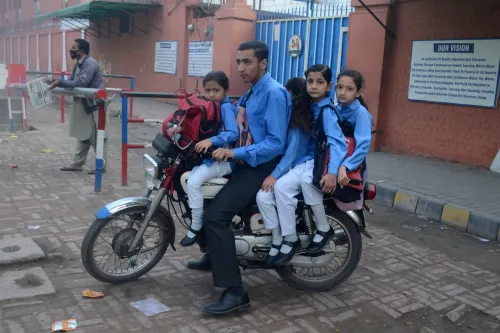
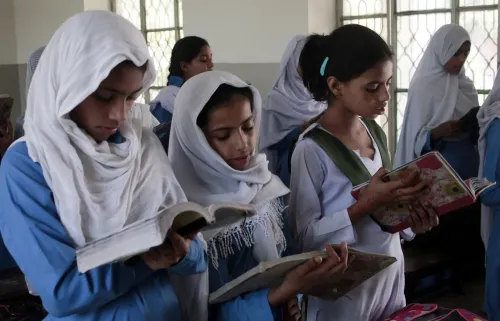
The survey also indicates a persistent inequality, with rural girls, especially in Sindh and Balochistan, facing significant exclusion. In Pakistan, one in four boys is out of school, while nearly one in three girls remains uneducated.
This gender disparity reflects deep-rooted social norms, widespread poverty, and insufficient public education resources. Economic pressures force many boys into early work, while girls are often prevented from studying due to family constraints, perceived irrelevance of education, or financial difficulties, according to the editorial.
The 20 percent of children who have never enrolled in school indicate a failing system at the initial access point, as detailed in the editorial. Punjab province has the lowest out-of-school rate at 21 percent, yet it has shown no improvement since 2019. This stagnation highlights the ineffectiveness of existing policies and the lack of innovative strategies to reach the most underserved children. Other provinces report even worse statistics, underscoring that education is still a low priority in many areas of Pakistan.
“The broader socioeconomic factors highlighted by the HIES help elucidate why progress has stalled. Rising inflation and sluggish economic growth have diminished household resilience. Nearly one-fourth of households now experience moderate to severe food insecurity, with Balochistan and Sindh being the most affected,” the Business Recorder editorial emphasized.
“Food insecurity has also significantly increased in Khyber Pakhtunkhwa, while it has almost doubled in Balochistan over six years. For families struggling to secure basic necessities, education becomes a luxury rather than a constitutionally guaranteed right,” it concluded.
Point of View
It is essential to highlight that education is a fundamental right. The alarming statistics presented in this report underscore the urgent need for a comprehensive policy overhaul and innovative solutions to ensure every child in Pakistan has access to education. The nation must unite to prioritize education and address the root causes of this ongoing crisis.
NationPress
26 Sept 2026
Frequently Asked Questions
How many children are out of school in Pakistan?
Approximately 20 million children, or 28 percent of school-age children, are out of school in Pakistan.
What are the main reasons for children being out of school?
Main reasons include entrenched social norms, poverty, gender disparities, and economic pressures that force children into early work.
Which provinces have the highest rates of out-of-school children?
In general, rural areas of Sindh and Balochistan report significant exclusion, with other provinces also facing high out-of-school rates.
What impact does food insecurity have on education?
Food insecurity forces families to prioritize basic needs over education, making schooling a luxury rather than a right.
What can be done to improve the education system in Pakistan?
Comprehensive policy reforms, innovative outreach strategies, and increased public investment in education are essential for improvement.