Pakistan's 26.2 million out-of-school children trapped by structural inequality
Synopsis
A new report exposes Pakistan's staggering education divide: 26.2 million children remain out of school, with underprivileged kids locked into a cycle of low-paying labour while wealthy peers access elite schooling. Decades after the problem was first identified, experts say government school conditions remain virtually unchanged.
Key Takeaways
An estimated 26.2 million children , including 13.4 million girls , are out of school in Pakistan .
Between 20 and 28 per cent of school-age children are not enrolled, with many prioritising survival over education.
Assistant Professor Mujeeb Ali says children from underprivileged families face the same structural barriers he witnessed decades ago.
Government schools reportedly suffer from under-resourced classrooms, limited materials, and insufficient teacher support.
Children from wealthier families are far more likely to enter professions such as medicine, engineering, and administration, according to the report.
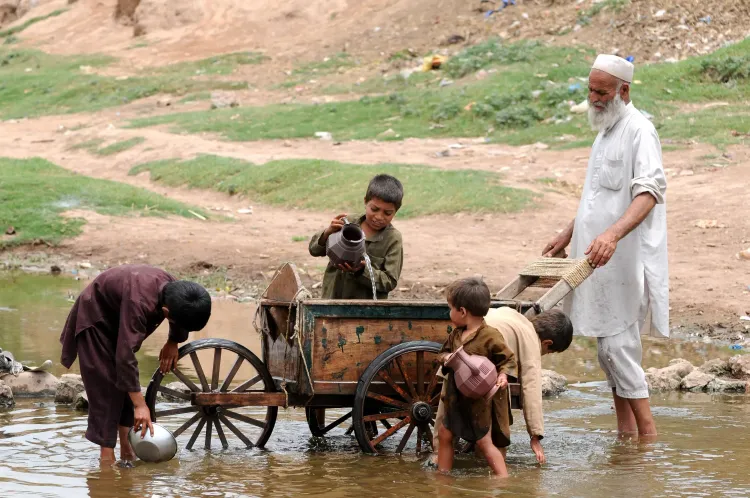
An estimated 26.2 million children — including 13.4 million girls — remain out of school in Pakistan, as a new report details how structural barriers continue to deny underprivileged children access to quality education while their wealthier peers enjoy high-quality schooling and pathways to prestigious careers. The findings, published on 29 April, underscore a deepening education divide that critics say is being inherited from one generation to the next.
Scale of the Crisis
According to the report, between 20 and 28 per cent of school-age children in Pakistan are not enrolled in school, with many forced to prioritise survival over learning. The burden falls disproportionately on girls and children from rural and under-resourced communities, who also face limited access to healthcare and meaningful social participation.
What Experts Are Saying
Mujeeb Ali, an Assistant Professor with experience in the education sector, painted a stark picture of the persistent inequality. "Children from privileged backgrounds continue to access high-quality schooling, better healthcare and better opportunities, leading to prestigious careers. Meanwhile, children from underprivileged families face the same structural barriers I witnessed decades ago," Ali was quoted as saying by leading Pakistani daily The Express Tribune.
Ali further noted that conditions in many government schools remain largely unchanged. "Under-resourced classrooms, limited materials and insufficient support for both students and teachers. Children from wealthy families are far more likely to become doctors, engineers, administrators or officers. Those from poorer backgrounds are often pushed toward low-paying, labour-intensive jobs — not because they lack talent, but because they lack opportunity," he added.
A System That Reinforces Inequality
An editorial in The Express Tribune questioned the moral foundations of the current system. "Why do some children enjoy their right to education while others are denied it? Why are quality schools reserved for those who can afford them, while millions are left with inadequate alternatives? Why do we continue to tolerate a system that reinforces inequality from one generation to the next?" the editorial asked.
The editorial further noted that children are not born with an awareness of class or hierarchy — it is society, the report argues, that instils those divisions. In early childhood, children perceive life without the political divisions, social stratification, or invisible barriers that later determine who succeeds and who struggles.
Impact on Rural and Marginalised Communities
The report highlights that children from rural and under-resourced communities are particularly vulnerable, lacking access not only to education but also to healthcare and meaningful participation in civic life. This compounding deprivation, analysts note, creates a cycle of poverty that is difficult to break without systemic intervention.
This comes amid broader concerns about Pakistan's public education infrastructure, which has long been criticised for underfunding and inadequate teacher support. With millions of children effectively locked out of quality schooling, the report calls for urgent structural reform to ensure equal educational opportunity regardless of socioeconomic background.
Point of View
Yet government school infrastructure remains, by expert accounts, virtually unchanged. The deeper problem is structural: a two-tier system that funnels the wealthy into elite institutions and the poor into labour markets is not a market outcome — it is a policy choice. Without ring-fenced public education budgets, independent learning outcome audits, and a genuine political will to close the quality gap, reports like this one will continue to document the same crisis a decade from now.
NationPress
19 Sept 2026
Frequently Asked Questions
How many children are out of school in Pakistan?
According to the report, approximately 26.2 million children — including 13.4 million girls — remain out of school in Pakistan. Between 20 and 28 per cent of school-age children are not enrolled, with many compelled to prioritise survival over education.
Why do underprivileged children in Pakistan face barriers to education?
Underprivileged children face structural barriers including under-resourced government schools, limited learning materials, and insufficient teacher support. Many also lack access to healthcare and come from rural communities where economic survival takes precedence over schooling.
What did Assistant Professor Mujeeb Ali say about Pakistan's education system?
Mujeeb Ali, quoted by The Express Tribune, said children from privileged backgrounds continue to access quality schooling and opportunities leading to prestigious careers, while underprivileged children face the same structural barriers he observed decades ago. He noted that poverty, not lack of talent, drives children into low-paying labour-intensive jobs.
Which communities are most affected by Pakistan's education inequality?
Children from rural and under-resourced communities are the most affected, along with girls, who account for 13.4 million of the 26.2 million out-of-school children. These groups also face limited access to healthcare and civic participation.
What reforms are being called for to address Pakistan's education crisis?
The report calls for urgent structural reforms to ensure equal educational opportunity regardless of socioeconomic background. Experts and editorials have highlighted the need to address underfunding of government schools, improve teacher support, and break the cycle of intergenerational inequality.