Staggering 26.2 Million Children in Pakistan Without Education, New Report Shows
Synopsis
A staggering 26.2 million children remain out of school in Pakistan, highlighting critical funding and infrastructural challenges in education. The report also reveals alarming trends in household spending on education and food insecurity.
Key Takeaways
26.2 million children in Pakistan are still out of school, including 3.4 million girls .
Funding for education has decreased, with the national budget dropping from 13% to 11% .
Only 19% of schools have digital tools, and 23% provide ramps for disabled students.
Households are now responsible for the majority of education costs .
Food insecurity is a growing issue, with one in four facing moderate to severe insecurity.
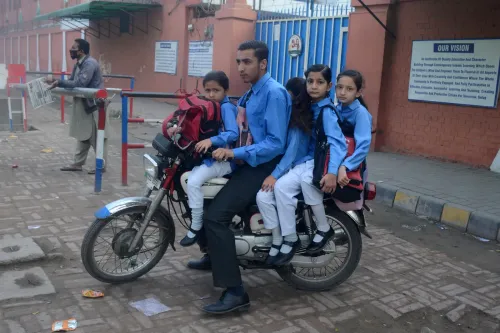
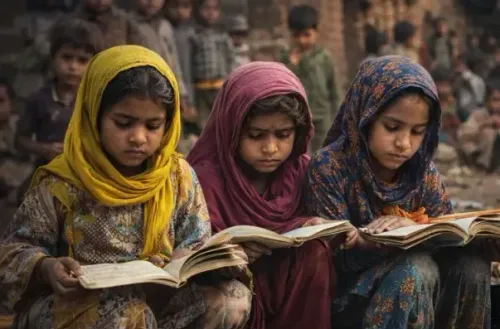
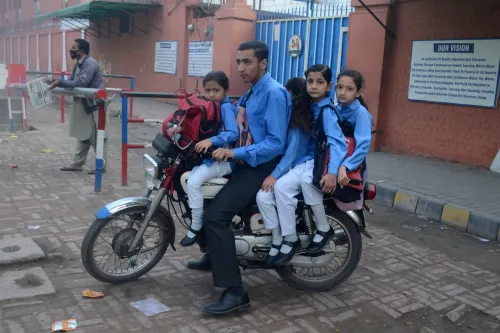
Islamabad, Feb 27 (NationPress) A recent government analysis has disclosed that 26.2 million children in Pakistan are still without access to education, as reported by local media last Friday.
The Federal Ministry of Education and Professional Training unveiled the 'Girls’ Education Statistics and Trends Report 2023-24' on Thursday, highlighting the alarming number of children who remain out of school, according to Pakistan's prominent daily 'Dawn'.
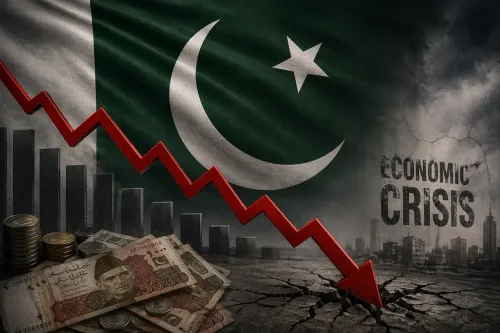
Per the findings, among the 26.2 million out-of-school children, there are 3.4 million girls. The report underscores significant funding challenges, indicating that Pakistan's education financing has diminished, with the national education budget dropping from 13% to 11% and most provinces, particularly Punjab and Sindh, slashing their educational budgets.
The analysis further revealed that only 19% of schools are equipped with digital resources. Additionally, 23% of schools have ramps for students with disabilities, yet there is a lack of sufficient specialized assistive learning materials, as reported by Dawn.
While the provinces have shown a reasonable ability to implement initiatives, the decreasing prioritization of education is a pressing concern, marking a significant shift in Pakistan's educational landscape.
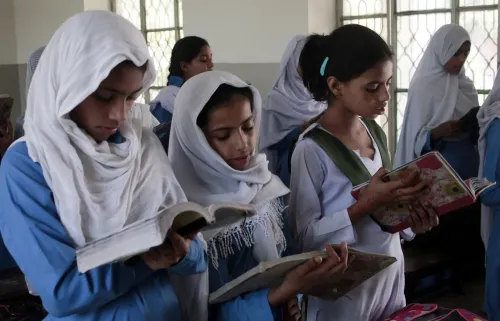
During the report's launch, Khalid Maqbool Siddiqui, Pakistan's Federal Minister, announced that the primary school completion rate for girls has risen from 75% to 89%.
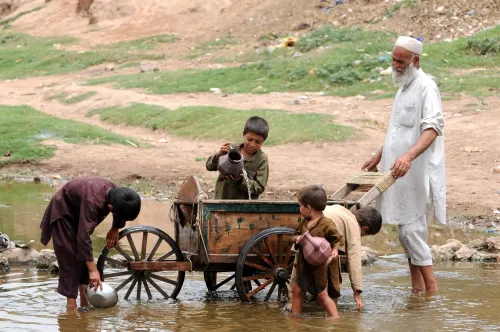
Additionally, the report indicated that malnutrition continues to pose challenges, adversely impacting students' physical development in terms of height and weight.
In a separate analysis last month, it was noted that Pakistan faces difficulties in affording both food and education. A 20-year review of household consumption patterns indicates a structural shift towards covering living costs rather than investing in food, as revealed by a new survey from Gallup Pakistan.
Data from the Household Integrated Economic Survey (HIES) show that household expenditure on food has decreased from 43% to 37% between 2005 and 2025. In contrast, spending on housing and utilities has surged from 15% to 25% of household budgets, according to an editorial in another leading daily, The News International.
The Gallup analysis suggests that with declining real incomes and shrinking food quantities, this trend likely reflects households reducing food consumption to manage rising fixed costs, rather than food becoming more affordable.
The HIES 2024-25 survey indicated that the proportion of individuals experiencing moderate to severe food insecurity has escalated from one in six to one in four between 2018-19 and 2024-25, complicating survival for many in Pakistan, with bleak future prospects.
According to the Institute of Social and Policy Science (I-SAP)’s 15th annual report on ‘Public Financing of Education’, families are now financing the largest share of education costs for the first time in the nation's history. Of the total Rs 5.03 trillion allocated for education, household contributions comprise PKR 2.8 trillion, while the public sector contributes PKR 2.23 trillion.
Households are spending PKR 1.31 trillion on private school fees, PKR 613 billion on tuition and shadow education, and PKR 878 billion on other educational expenses. This disparity arises amid a growing preference for private education and significant issues regarding the adequacy of the public education system.
Point of View
It is imperative to recognize the pressing need for enhanced educational funding and infrastructure. The statistics underscore a critical juncture in our educational landscape, where prioritization and investment in education can significantly alter the lives of millions. It's a wake-up call for both policymakers and society at large.
NationPress
26 Sept 2026
Frequently Asked Questions
How many children are out of school in Pakistan?
As per the latest report, 26.2 million children are out of school in Pakistan, including 3.4 million girls.
What is the primary school completion rate for girls in Pakistan?
The primary school completion rate for girls has increased from 75% to 89% according to the recent report.
What challenges are affecting education in Pakistan?
The report highlights funding issues, with education financing declining from 13% to 11%, and significant malnutrition affecting students' growth.
How has household spending on education changed?
Households are now bearing the majority of education costs, spending PKR 2.8 trillion compared to the public sector's PKR 2.23 trillion.
What are the implications of food insecurity in Pakistan?
Food insecurity has risen, with individuals facing moderate to severe food insecurity increasing from one in six to one in four, complicating survival for many.