Over 25 Million Children in Pakistan Denied Education: A National Crisis
Synopsis
The alarming education crisis in Pakistan affects over 25 million children, highlighting a failure in leadership and prioritization that leaves many vulnerable youth without access to schooling.
Key Takeaways
Over 25 million children in Pakistan are not in school.
Punjab and Sindh have the highest rates of out-of-school children.
Gender disparities are prevalent, with more girls missing out on education.
Chronic underfunding of education is a major contributor to the crisis.
Immediate action is essential to prevent long-term societal impacts.
Islamabad, April 2 (NationPress) The ongoing education crisis in Pakistan is regarded as a “national embarrassment”, according to a prominent human rights organization. They underline that the staggering number of children not attending school signifies untapped potential, lost aspirations, and a failing system that neglects its most vulnerable members.
Referring to statistics from the United Nations International Children's Emergency Fund (UNICEF), the Voice of Pakistan Minority (VOPM) highlighted that approximately 25.1 million children aged 5–16 are out of school, positioning Pakistan as the second-worst country globally for educational access.
This data reflects a worsening situation across various provinces in Pakistan. Punjab has the highest number of out-of-school children at 9.7 million, followed by Sindh with 7.4 million, which constitutes 44 percent of its school-age population.
In Khyber Pakhtunkhwa, the percentage of children not attending school is 34 percent, whereas Balochistan experiences the most severe impact, with nearly 69 percent of children aged 5–16 lacking access to education.
Even within Islamabad, the VOPM reported that 90,000 children are still out of school, stressing that “no region is free from this national crisis.”
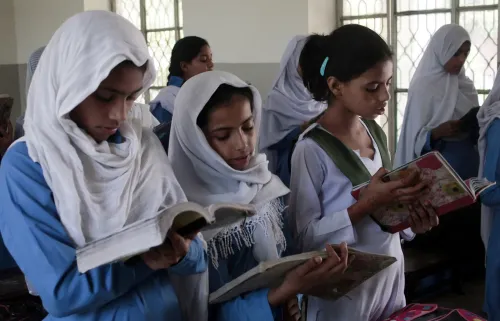
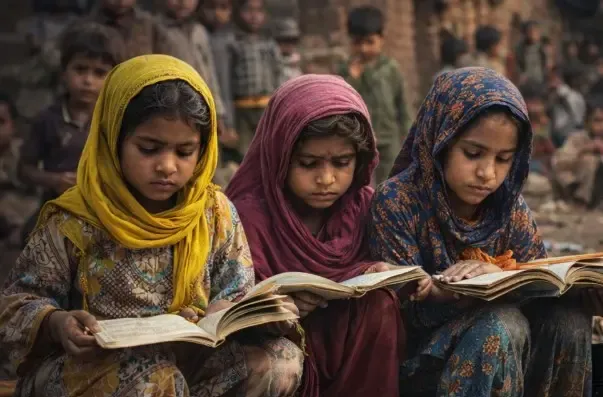
Highlighting the gender disparity as an additional layer of injustice, the VOPM referenced UNICEF findings indicating that in Sindh and Khyber Pakhtunkhwa, a greater number of girls are out of school compared to boys, unveiling deep-seated social and cultural obstacles that prevent girls from accessing education.
Factors such as early marriage, safety issues, and entrenched gender norms leave countless girls trapped in a cycle of illiteracy and poverty, squandering their potential before it can flourish, the rights organization noted.
The VOPM pointed out that this crisis is rooted in a historically underfunded education system. Pakistan has typically allocated about 1.5 percent of its GDP to education, significantly below the 4–6 percent benchmark set by the United Nations Educational, Scientific and Cultural Organisation (UNESCO) and Sustainable Development Goal 4.
Furthermore, the latest Pakistan Economic Survey for 2024–25 reveals an all-time low of 0.8 percent of GDP spent on education, with nearly 90 percent of the budget consumed by teacher salaries, leaving little for essential elements like infrastructure, educational materials, teacher training, or systemic reforms.
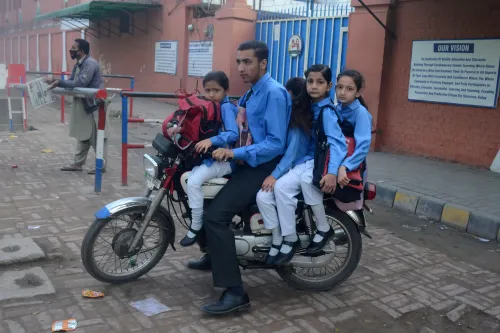
The outcome is a system that consistently fails to reach the most disadvantaged children, resulting in schools that are overcrowded, under-resourced, and often inaccessible.
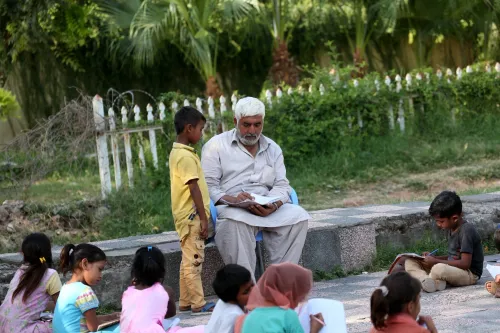
The repercussions are dire. Millions of children, especially girls and those in marginalized areas, are deprived of education, pushing them toward early labor, exploitation, and entrenched poverty. UNICEF stresses that without immediate investment and policy changes, Pakistan risks losing an entire generation.
The VOPM contended that Pakistan's sluggish progress regarding enrollment and educational outcomes is not a matter of chance but a failure of leadership, planning, and prioritization.
Point of View
It is crucial to recognize the systemic failures leading to the education crisis in Pakistan. The alarming statistics reveal a dire need for prioritized investments in education and reforms to ensure that no child is left behind.
NationPress
23 Sept 2026
Frequently Asked Questions
How many children are out of school in Pakistan?
Approximately 25.1 million children aged 5–16 are out of school in Pakistan.
Which province has the highest number of out-of-school children?
Punjab has the highest number with 9.7 million children out of school.
What are the primary causes of the education crisis in Pakistan?
The crisis is largely due to underfunding, cultural barriers, and systemic failures within the education system.
How does gender disparity affect education in Pakistan?
More girls than boys are out of school in certain regions, highlighting significant cultural and social barriers to their education.
What is the potential consequence of the education crisis?
Without urgent reform, Pakistan risks losing an entire generation to illiteracy and poverty.