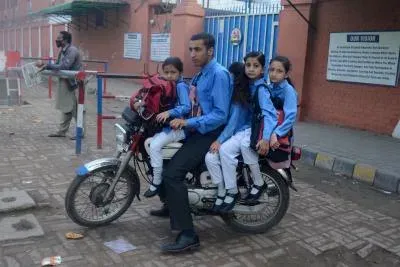
Pakistan has 2nd-highest out-of-school children globally, say UNICEF and UNESCO
Synopsis
Pakistan ranks second globally for out-of-school children — and UNICEF and UNESCO say the fix goes far deeper than building classrooms. Floods, fuel shocks, and a near-absent re-entry system are pushing more children out, while girls, the rural poor, and low-income families bear the heaviest burden.
Key Takeaways
Pakistan has the second-highest number of out-of-school children in the world, according to UNICEF .
UNESCO cites systemic gaps in education access, internal efficiency, and retention as root causes.
The crisis disproportionately affects women, rural residents, and the poor , per The News International editorial.
Low survival rates to Grade 10 and weak primary-to-lower-secondary transition are identified as structural failures.
Floods and the ongoing fuel shock from the West Asia conflict are actively worsening school access.
UNESCO recommends needs-based funding targeting high-OoSC districts, with greater investment in girls' education and non-formal pathways .
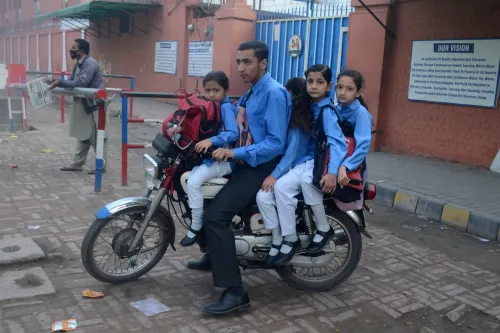
Pakistan holds the grim distinction of having the second-highest number of out-of-school children in the world, according to UNICEF. UNESCO attributes this to systemic inefficiencies across education access, internal efficiency, and retention pathways — a crisis that experts say cannot be resolved by construction and hiring alone.
Who the Crisis Hits Hardest
An editorial in Pakistani daily The News International notes that the out-of-school population is not limited to children who have never enrolled. It also includes early dropouts and late entrants — a layered demographic that complicates any single-track policy response.
'Like most of the country's social problems, it disproportionately impacts women, rural residents and the poor,' the editorial stated. 'Solving the out-of-school crisis is thus not simply about building more schools, hiring more teachers and just generally spending more on education. Though these steps are indeed necessary, they are not sufficient.'
Structural Weaknesses in the Education Pipeline
According to UNESCO, transition bottlenecks between primary and lower secondary levels, combined with persistently low survival rates to Grade 10, point to deep structural weaknesses in system progression and learning continuity. The limited integration of non-formal education (NFE), accelerated learning programmes (ALPs), and second-chance pathways within mainstream systems further constrains re-entry opportunities for those who drop out.
Notably, ensuring children remain enrolled — and have credible pathways back if they leave — is described as central to reducing the overall out-of-school count, not merely a supplementary concern.
External Shocks Compounding the Problem
Natural disasters, particularly floods, and economic pressures including the ongoing fuel shock linked to the West Asia conflict, are identified as active roadblocks to education access. The editorial warns that at the current trajectory, Pakistan should expect further school departures and must have a concrete re-integration plan in place before that happens.
What UNESCO Recommends
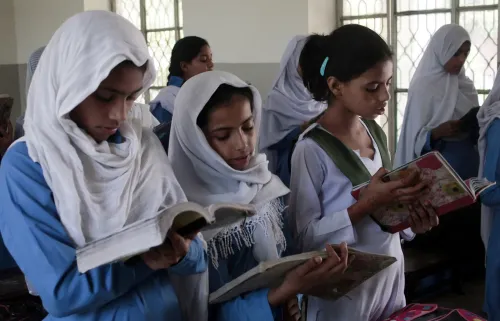
UNESCO recommends targeted, needs-based funding formulas that prioritise high out-of-school children (OoSC) districts and marginalised populations. This includes stepped-up investments in foundational education, girls' education, and post-primary transition, alongside stronger financing for non-formal and second-chance education pathways.
'All of this will require spending more resources on education and more time on planning how those resources are spent,' the editorial in The News International said. The path forward, according to both global agencies, demands not just larger budgets but smarter, more equitable allocation of every rupee spent.
Point of View
At the primary-secondary transition, and again during every economic or climate shock. What is consistently missing is a re-entry architecture: Pakistan has no credible national mechanism to bring dropouts back. Until needs-based funding is actually disbursed to the districts that need it most — rather than absorbed by better-resourced urban systems — the second-place ranking risks becoming first.
NationPress
26 Sept 2026
Frequently Asked Questions
Why does Pakistan have so many out-of-school children?
According to UNESCO, Pakistan's high out-of-school numbers stem from systemic inefficiencies in education access, internal efficiency, and retention pathways. Transition bottlenecks between primary and lower secondary levels, low survival rates to Grade 10, and limited non-formal re-entry options all contribute.
Which groups are most affected by Pakistan's education crisis?
Women, rural residents, and low-income families are disproportionately affected, according to an editorial in Pakistani daily The News International. Girls' education and post-primary transition are specifically flagged as underfunded priority areas.
What external factors are worsening school attendance in Pakistan?
Natural disasters such as floods and economic pressures including the fuel shock linked to the West Asia conflict are identified as active barriers to education access. These shocks push enrolled children out of school and make re-entry harder.
What does UNESCO recommend to fix Pakistan's out-of-school crisis?
UNESCO recommends targeted, needs-based funding formulas prioritising high out-of-school children districts and marginalised populations. It calls for increased investment in foundational education, girls' education, post-primary transition, and non-formal second-chance pathways.
Is building more schools enough to solve the problem?
No, according to The News International editorial citing UNESCO analysis. While building schools, hiring teachers, and increasing spending are necessary steps, they are not sufficient on their own. Keeping children enrolled and creating credible re-entry pathways are equally critical.