Rajnath Singh hails Basant, Shahnavaz for World Athletics medals
Synopsis
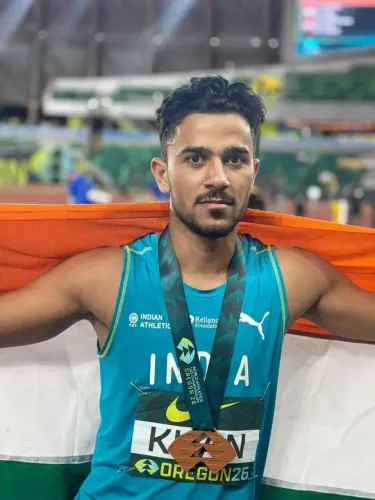
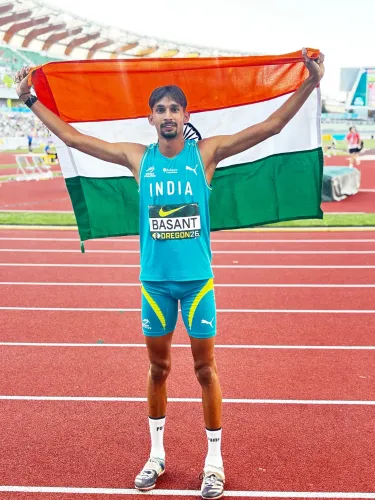
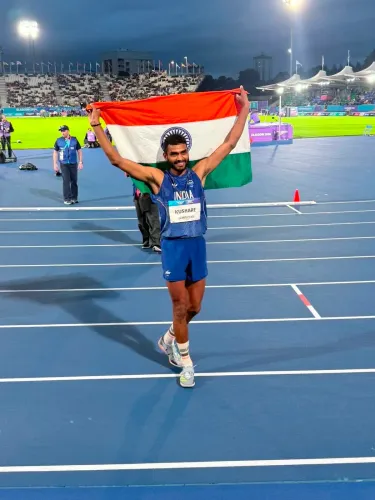
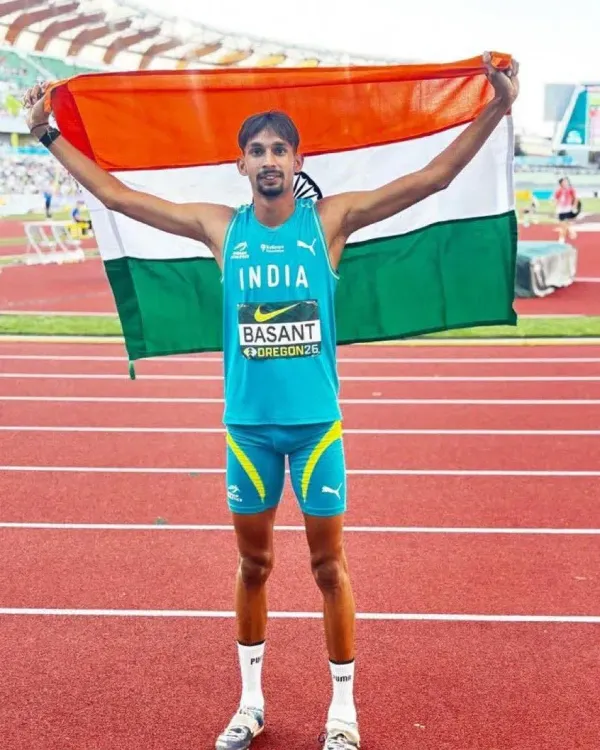
Union Defence Minister Rajnath Singh celebrated a landmark double for India at the World Athletics Championships — Basant's historic first-ever High Jump medal and Shahnavaz's Bronze — calling the performance by two armed forces athletes an inspiration to the nation's youth.
Key Takeaways
Basant won India's first-ever medal in the High Jump at the World Athletics Championships .
Shahnavaz claimed a Bronze medal at the same championships.
Both athletes are members of the Indian Armed Forces sports programme.
Union Defence Minister Rajnath Singh publicly celebrated the wins on August 9, 2026 , citing 'dedication, discipline and fighting spirit.' The Indian Armed Forces maintain dedicated sports cells that train soldiers for elite civilian and international competitions.
Two soldiers stepped onto a global athletics stage and rewrote Indian history — Basant claimed a medal in the High Jump at the World Athletics Championships, the first of its kind for India in that discipline, while Shahnavaz added a Bronze to the haul, together announcing that Indian defence-athlete programme has arrived at the highest level of the sport. Union Defence Minister Rajnath Singh took to X on Sunday, August 9, 2026 to mark the moment, calling it 'a proud moment for Indian Sports.'
Basant's historic High Jump medal — what makes it a first
India has competed at the World Athletics Championships for decades, but the High Jump podium had always remained out of reach — until now. Basant's medal is not just a personal milestone; it is the kind of barrier-breaking result that recalibrates what coaches, selectors, and the next generation of jumpers believe is possible. Historic firsts in track and field tend to cluster: once one athlete proves the ceiling can be broken, others follow.
Shahnavaz's Bronze and the defence-athlete pipeline
Shahnavaz's Bronze medal underlines that Basant's result was no fluke — this was a coordinated surge by athletes who train within the Indian Armed Forces sports infrastructure. India's military services have long run dedicated sports cells that allow soldiers to pursue elite competition alongside their duties, producing athletes in wrestling, boxing, and athletics who represent India on the world stage. Two medals from the same cohort at a single World Championships signals that the pipeline is maturing.
Rajnath Singh framed both achievements in the language of soldiering — 'dedication, discipline and fighting spirit' — connecting athletic excellence directly to the values the defence establishment cultivates. It is a deliberate signal: the armed forces are not just a talent pool for sport, they are the environment that forges champions.
What the podium means for Indian athletics
World Championship medals in field events remain rare for India, a country whose athletics programme has historically leaned on distance runners and throwers. A High Jump medal — a technical, precision discipline — expands the map of where Indian athletes can compete and win. For every young jumper watching from a district athletics track, the scoreboard just changed.
The Defence Minister's public acknowledgement also carries a practical dimension: visibility from senior political leadership tends to translate into continued institutional support for armed forces sports budgets and athlete-friendly recruitment policies — the very structures that made these medals possible.
India has its first World Athletics High Jump medal. The question now is whether the system can turn a historic first into a habit.
Point of View
Linking military discipline to athletic excellence at the highest level. The public endorsement by a senior Cabinet minister signals continued political will to fund and expand defence sports infrastructure. Historically, such moments of visibility have preceded policy reinforcement: increased budgets, expanded sports quotas in recruitment, or dedicated training facilities. Two medals from soldier-athletes at a single World Championships is precisely the kind of evidence that sustains those arguments in budget cycles.
NationPress
24 Sept 2026
Frequently Asked Questions
Who is Basant and what did he win at the World Athletics Championships?
Basant is an Indian athlete from the armed forces who won a medal in the High Jump at the World Athletics Championships — the first time India has ever medalled in that discipline at the event.
What medal did Shahnavaz win at the World Athletics Championships?
Shahnavaz won a Bronze medal at the World Athletics Championships, as celebrated by Defence Minister Rajnath Singh in his post on August 9, 2026.
Why did Rajnath Singh congratulate Basant and Shahnavaz?
Both athletes are members of the Indian Armed Forces, and Rajnath Singh, as Union Defence Minister, highlighted their medals as proof of the discipline and fighting spirit cultivated within the defence services.
How does the Indian Army support sports and athletes?
The Indian Armed Forces operate dedicated sports cells and training facilities that allow soldiers to pursue elite athletic careers alongside their military duties, producing competitors for national and international events.
Is this India's first World Athletics Championship medal in High Jump?
According to Rajnath Singh's post on August 9, 2026, Basant's medal is described as 'a first-ever for India in High Jump at the World Championships,' making it a historic milestone for Indian athletics.