Pakistan's 25 million out-of-school crisis: Decades of neglect exposed
Synopsis
Two years after declaring a National Education Emergency, Pakistan still has up to 26 million children out of school. A Civil Services Academy policy review exposes the structural fault lines: Punjab needs 35,000 new classrooms, Sindh loses 54% of students after primary school, and Balochistan's children travel up to 360 kilometres for secondary education. The gap between policy ambition and on-the-ground reality has never been wider.
Key Takeaways
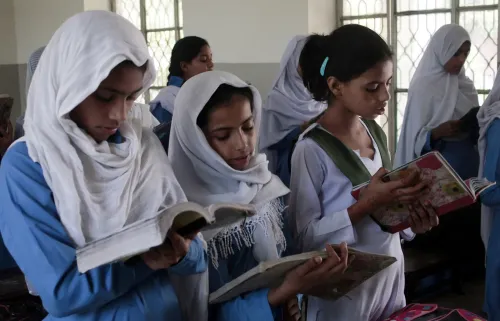
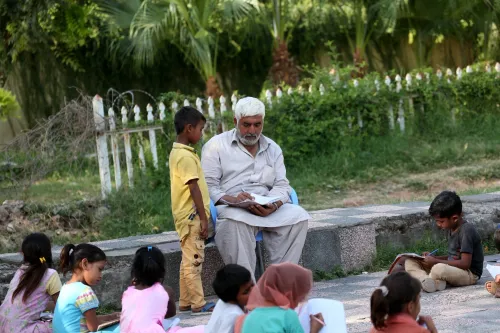
Between 25.1 million and 26 million children of school-going age remain out of school in Pakistan , two years after the National Education Emergency .
Punjab has the largest absolute burden — between 9.6 million and 10.4 million out-of-school children — and needs roughly 35,000 additional classrooms.
Sindh has 7.4 million out-of-school children, with 54% dropping out after primary school due to a severe shortage of middle and secondary schools.
Balochistan remains the most structurally disadvantaged province; children travel up to 360 kilometres for secondary education despite a fall in out-of-school rates from 69% (2023) to 45% (2025).
The Civil Services Academy (CSA) report warns that without reforms in governance, financing, and data integration, the education emergency risks remaining a symbolic declaration.
Pakistan's public education spending remains significantly below international benchmarks, according to the report.
More than 25 million children in Pakistan remain out of school, according to a comprehensive comparative policy review by the Civil Services Academy (CSA), released on 6 July — two years after the country declared a National Education Emergency. The report attributes the crisis not to a lack of policy frameworks but to chronic failures in implementation, governance, funding, and data integration across provinces.
The Scale of the Crisis
Citing data from the Pakistan Institute of Education (PIE), the CSA review estimates that between 25.1 million and 26 million children of school-going age are currently outside the formal education system. The report, compiled by five Policy Analysis Groups at the Pakistan Administrative Service Campus, evaluates education systems across Punjab, Sindh, Khyber Pakhtunkhwa (KP), Balochistan, Islamabad Capital Territory, Pakistan-occupied Gilgit-Baltistan (PoGB), and Pakistan-occupied Kashmir (PoK) against indicators of effectiveness, equity, efficiency, ethical governance, and feasibility.
According to the report, all provinces have formulated plans under the National Education Action Plan (NEAP) 2026. However, the gap between planning and execution has widened to the point where policy ambition has failed to translate into measurable improvements in educational access for millions of children.
Province-by-Province Breakdown
Punjab bears the largest absolute burden, with between 9.6 million and 10.4 million children out of school. The province reportedly requires around 35,000 additional classrooms at middle and secondary levels, while poverty, child labour, and household economic pressures continue to push children away from education.
Sindh faces a structural collapse in educational continuity beyond primary level. The province has approximately 7.4 million out-of-school children, including 4.1 million girls — representing 44% of its school-age population. With more than 36,000 primary schools but only 2,634 middle schools and 1,674 secondary schools, nearly 54% of children drop out after completing primary education.
In Khyber Pakhtunkhwa, 4.9 million children remain out of school. The report attributes this to difficult terrain, security challenges, administrative fragmentation, and acute shortages of female teachers — particularly in merged districts such as Upper Kohistan, Torghar, and Bajaur, where conservative social norms further limit female enrolment.
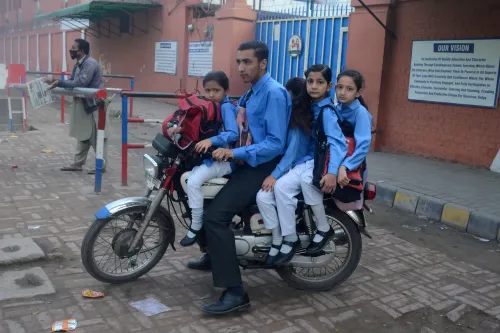
Balochistan is identified as the most structurally disadvantaged province. Despite a reported decline in out-of-school rates — from 69% in 2023 to 45% in 2025 — the province's vast geography means children often travel around 30 kilometres to reach a primary school and up to 360 kilometres for secondary education, making regular attendance largely unfeasible in many areas.
In Diamer district of PoGB, 42% of children are out of school. In PoK, nearly half of all children drop out before completing primary education.
Root Causes: Neglect Over Decades
The CSA review traces the crisis to decades of systemic neglect. Rapid population growth, persistent poverty, weak institutional capacity, and chronically low public investment in education have compounded over time. From the 1990s through the 2010s, the Academy of Educational Planning and Management (AEPAM) was responsible for tracking out-of-school children, yet state infrastructure failed to keep pace with demographic pressures. This vacuum enabled low-cost private schooling to expand without addressing underlying access inequalities.
Pakistan's overall public expenditure on education remains significantly below international benchmarks, according to the report, raising concerns that financial commitments have not kept pace with either demographic realities or constitutional obligations.
What the Report Recommends
The CSA review warns that without structural reforms in governance, accountability, financing, and data integration, the National Education Emergency risks remaining a symbolic declaration rather than a functional response to a national crisis. It identifies extremely low public investment in education as a common constraint across all provinces. The report concludes that Pakistan risks entrenching — rather than reversing — its education crisis unless concrete institutional reforms are introduced urgently.
Point of View
Not classrooms. Pakistan's education expenditure has persistently lagged constitutional obligations, yet successive governments have treated the sector as a residual budget item. With population growth outpacing institutional capacity, the 25-million figure is not a static crisis — it is an accelerating one, and no province is on a credible trajectory to reverse it.
NationPress
5 Oct 2026
Frequently Asked Questions
How many children are out of school in Pakistan?
According to the Civil Services Academy policy review, between 25.1 million and 26 million children of school-going age are currently outside Pakistan's formal education system. The figure has not meaningfully declined despite the government declaring a National Education Emergency two years ago.
What is Pakistan's National Education Emergency?
The National Education Emergency is a declaration made by Pakistan's government to address its severe out-of-school children crisis. However, the CSA report warns it risks remaining a symbolic gesture unless backed by concrete reforms in governance, financing, and institutional accountability.
Which province in Pakistan has the worst education crisis?
Balochistan is identified as the most structurally disadvantaged province, where children travel up to 360 kilometres for secondary education. Punjab has the largest absolute number of out-of-school children, between 9.6 million and 10.4 million, while Sindh loses 54% of students after primary school.
What are the root causes of Pakistan's education crisis?
The CSA review, citing Pakistan Institute of Education data, attributes the crisis to decades of systemic neglect — including rapid population growth, persistent poverty, weak institutional capacity, and chronically low public investment in education. State infrastructure has consistently failed to keep pace with demographic pressures since the 1990s.
What reforms does the CSA report recommend for Pakistan's education system?
The report calls for structural reforms in governance, accountability, financing, and data integration across all provinces. It specifically warns that without these changes, the National Education Emergency will remain a policy declaration without measurable impact on educational access.