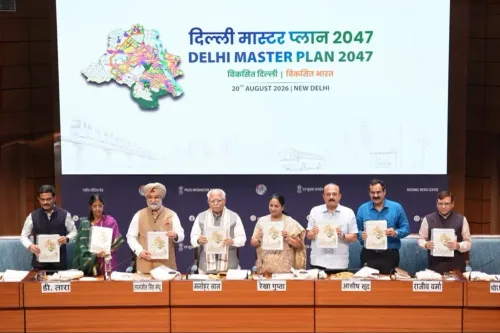
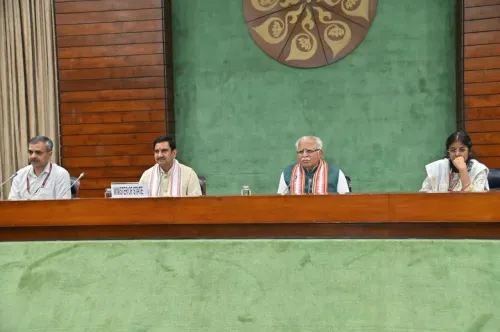
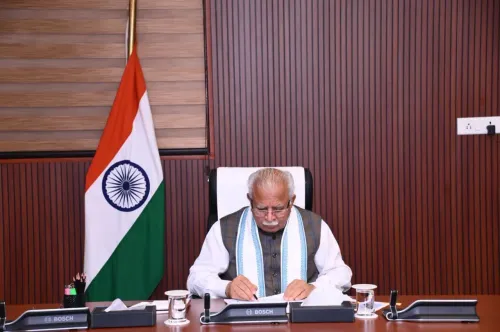
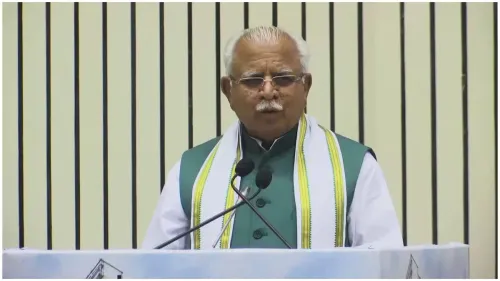
Khattar Unveils Delhi Master Plan 2047 Housing & Metro Vision
Synopsis
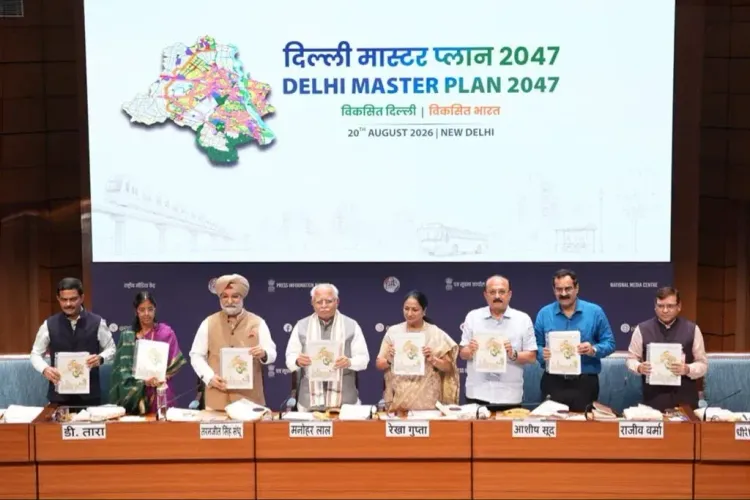
Union Minister Manohar Lal Khattar outlined Delhi Master Plan 2047 on 20 August 2026, promising 30-40 lakh new flats, metro expansion to 695 km, higher FAR for redevelopment, and in-situ slum rehabilitation under PM Modi's guidance.
Key Takeaways
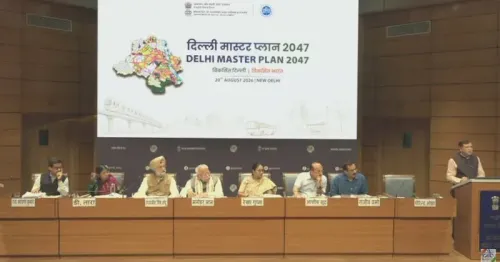
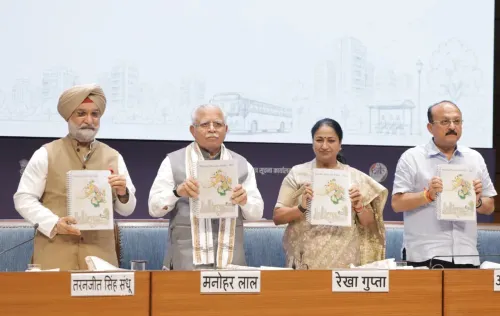
Delhi Master Plan 2047 was outlined by Union Minister Manohar Lal Khattar on 20 August 2026 as a comprehensive urban roadmap for the capital.
The plan targets addition of 30 to 40 lakh new flats , with emphasis on affordable housing and higher Floor Area Ratio (FAR) to drive redevelopment.
Delhi's metro network is planned to expand from 416 km to 695 km under the plan's transport vision.
The 'jahan jhuggi, wahan makaan' pledge commits to in-situ rehabilitation of slum dwellers rather than displacement.
Villages, unauthorised colonies, old residential areas, and market zones are all covered under the plan's redevelopment scope.
RRTS expansion is included to boost regional connectivity between Delhi and its satellite cities.
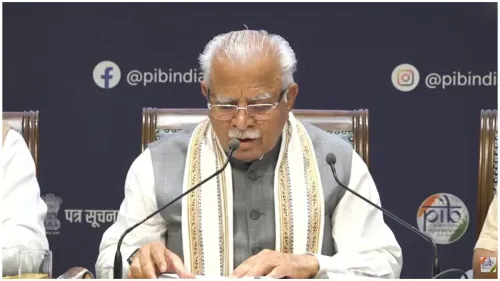
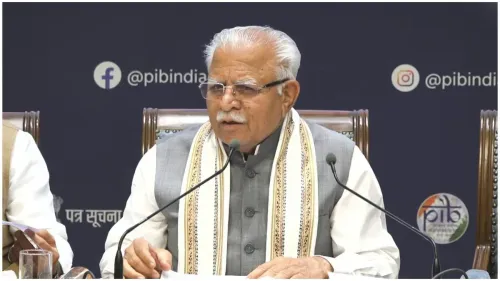
Thirty to forty lakh new flats, a metro network stretched from 416 km to 695 km, and a pledge that every slum dweller will get a proper home — Union Minister for Housing and Urban Affairs Manohar Lal Khattar laid out the sweeping ambition of the Delhi Master Plan 2047 on Thursday, 20 August 2026, calling it not just an urban expansion blueprint but a 'sankalp' — a solemn commitment — for every resident of the capital.
A Plan That Goes Beyond Zoning Maps
Khattar framed Delhi Master Plan 2047 in deliberately human terms, describing it as a roadmap for 'better housing, seamless transport, modern amenities and improved quality of life' for every Delhiite. The plan's scope is broad: it covers villages, unauthorised colonies, old residential neighbourhoods, and commercial market zones — essentially the full patchwork of informal and formal Delhi that no single planning instrument has tried to address all at once.
Central to the redevelopment push is a higher Floor Area Ratio (FAR) — the ratio of a building's total floor space to the plot size — which, when increased, allows denser construction and incentivises owners of ageing structures to rebuild. Simpler regulatory provisions are promised alongside, aimed at cutting the procedural friction that has historically stalled redevelopment in Delhi's older colonies.
'Jahan Jhuggi, Wahan Makaan' — The Slum Pledge at the Core
The minister specifically invoked the slogan 'jahan jhuggi, wahan makaan' (where the slum is, there the home will be) — a commitment to in-situ rehabilitation rather than displacement of informal settlers. This approach, where slum residents are rehoused on or near the same land rather than relocated to the urban periphery, has been a recurring aspiration in Delhi's planning history, though implementation has been uneven across successive plans.
The Master Plan for Delhi 2021, notified in 2007, similarly promoted higher FAR and in-situ slum rehabilitation, but the gap between plan targets and ground reality remained wide. The 2047 iteration is being positioned as the instrument that finally closes that gap, backed by what Khattar described as the guidance of Prime Minister Narendra Modi and the cooperation of the Delhi government.
Metro at 695 km and the RRTS Expansion
On transport, the plan envisions extending Delhi's metro network from its current 416 km to 695 km — an addition of roughly 279 km of new lines. That would make Delhi's metro one of the largest urban rail networks in the world by route length. Alongside metro expansion, Khattar flagged the Regional Rapid Transit System (RRTS) as a key lever for regional connectivity, linking Delhi to its satellite cities at higher speeds than conventional metro.
The RRTS corridors — connecting Delhi to Meerut, Gurugram, and Panipat in their various phases — are designed to ease the pressure on road and metro networks by pulling inter-city commuters onto a dedicated high-speed rail spine. Expanding that system is central to the plan's logic: you cannot house millions more people in Delhi without simultaneously building the transport infrastructure to move them.
If the targets hold, Delhi Master Plan 2047 will be the most ambitious urban planning exercise the capital has seen. The real test, as always, will be in the notifications, the land acquisition, and the construction timelines that follow the vision.
Point of View
With Khattar's ministry directly owning the narrative. The explicit invocation of in-situ slum rehabilitation and affordable housing connects to the broader 'Housing for All' arc that has defined BJP's urban governance pitch since 2014. Ambitious metro and RRTS targets also serve a dual purpose: they address real commuter demand while anchoring the BJP's claim to transformative infrastructure delivery in the national capital. The gap between plan targets and implementation — a recurring theme in Delhi's planning history — will be the metric by which this commitment is ultimately judged.
NationPress
5 Oct 2026
Frequently Asked Questions
What is Delhi Master Plan 2047?
Delhi Master Plan 2047 is a comprehensive urban development roadmap for the national capital covering housing, transport, redevelopment of unauthorised colonies, slum rehabilitation and quality-of-life improvements up to the year 2047.
How many new flats will be built under Delhi Master Plan 2047?
The plan targets the addition of 30 to 40 lakh new flats in Delhi, with a focus on affordable housing and higher FAR to incentivise redevelopment of older structures.
What is the metro expansion target under Delhi Master Plan 2047?
The plan proposes extending Delhi's metro network from 416 km to 695 km , an addition of approximately 279 km of new lines.
What does 'jahan jhuggi wahan makaan' mean in the Delhi Master Plan?
'Jahan jhuggi, wahan makaan' means 'where the slum is, there the home will be' — a commitment to rehabilitate slum dwellers on or near their existing land rather than relocating them to the urban periphery.
What is the RRTS and how does it fit into Delhi Master Plan 2047?
The Regional Rapid Transit System (RRTS) is a high-speed inter-city rail network linking Delhi to satellite cities like Meerut and Gurugram. Delhi Master Plan 2047 includes RRTS expansion to strengthen regional connectivity around the capital.