Rijiju hails Bastar's shift from guns to tricolour
Synopsis
Union Minister Kiren Rijiju hailed Bastar's transformation from a Naxalite stronghold to a region of development, invoking skill, employment, tourism and culture as the new pillars of a 'Naxal-free' Chhattisgarh under the Viksit Bharat agenda.
Key Takeaways
Union Minister Kiren Rijiju posted on 20 August 2026 celebrating Bastar 's shift away from Naxalite insurgency.
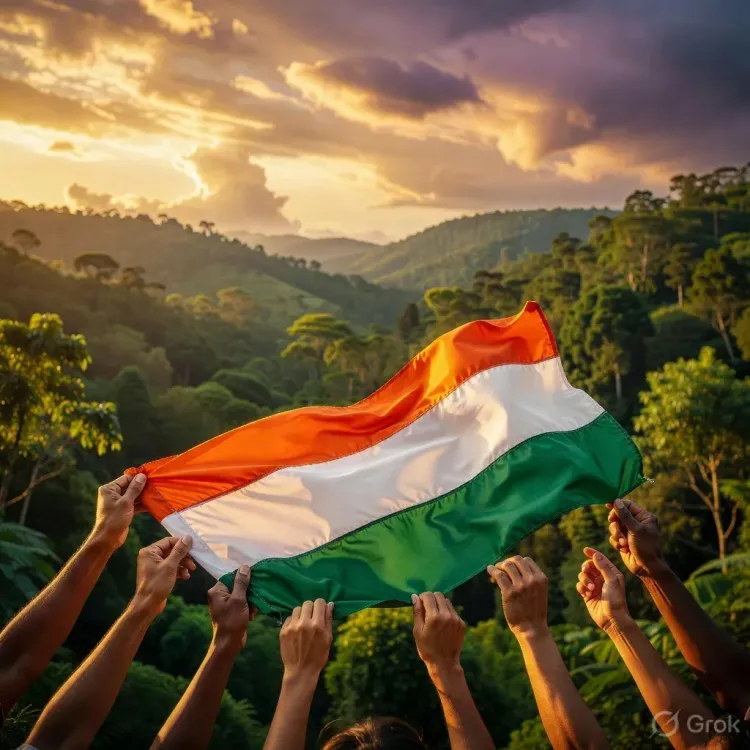
He described the change as moving from 'every hand holding a gun' to 'every hand waving the tricolour.' Bastar in southern Chhattisgarh was for decades a core zone of India's Red Corridor Maoist violence.
The post frames development through skill, employment, agriculture, tourism, and culture as the region's new identity.
The messaging aligns with the BJP government's Viksit Bharat by 2047 goal and the #NaxalFreeIndia campaign.
Central policy since 2014 has combined security operations with infrastructure and welfare spending in LWE districts.
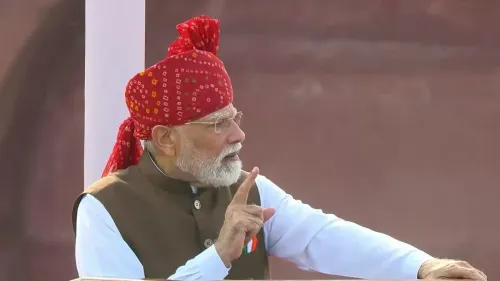
Where rifles once defined daily life, the national flag now flies in every hand. That is the image Union Parliamentary Affairs and Minority Affairs Minister Kiren Rijiju painted on Thursday, 20 August 2026, as he celebrated what he called a transformed Bastar — a region in southern Chhattisgarh that spent decades as the heartland of India's Naxalite insurgency and is now, he argues, writing a new story of development and trust.
From 'Red Terror' to tricolour: what Rijiju said
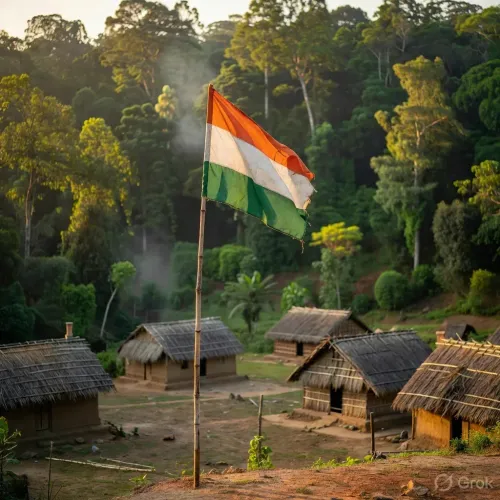
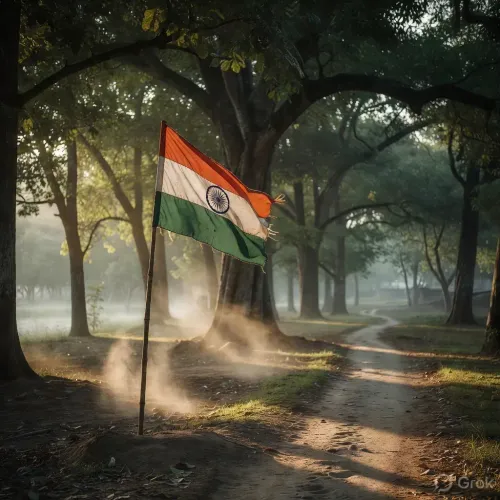
Posting in Hindi, Rijiju declared: 'जहाँ कभी हर हाथ में बंदूकें थीं, वहाँ आज हर हाथ में तिरंगा लहरा रहा है' — 'Where every hand once held a gun, today every hand waves the tricolour.' He framed Bastar's emergence from what he called 'the shadow of red terror and fear' as a pivot toward skill development, employment, farming, tourism, and cultural opportunity — anchoring the narrative in the BJP government's #ViksitBharat and #NaxalFreeIndia vision.
Bastar's long insurgency and the 'security plus development' push
Bastar — a vast, forested district in southern Chhattisgarh with a predominantly tribal population — became synonymous with Naxalite violence over several decades. Armed Maoist cadres operated across the so-called Red Corridor, challenging state authority, targeting security forces, and disrupting governance in remote villages. The human cost fell hardest on tribal communities caught between insurgents and the state.
Since 2014, successive central governments have pursued a twin-track approach in Left-Wing Extremism (LWE) districts: intensified security operations alongside targeted central assistance for roads, schools, and skill centres. Official data has pointed to a declining number of LWE-affected districts and reduced incident counts over the past decade, though ground conditions in the most remote pockets have remained contested.
Skill, tourism, and the Viksit Bharat frame
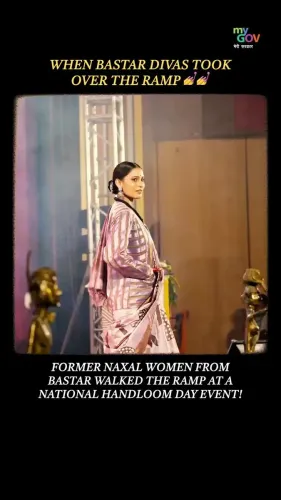
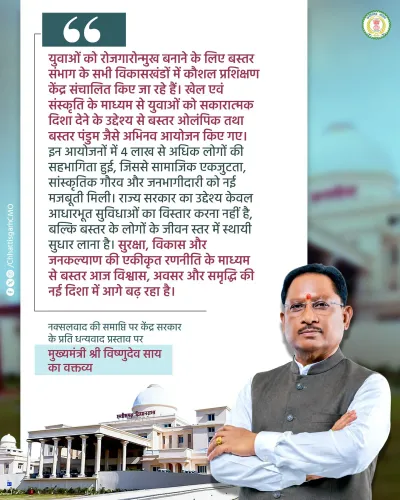
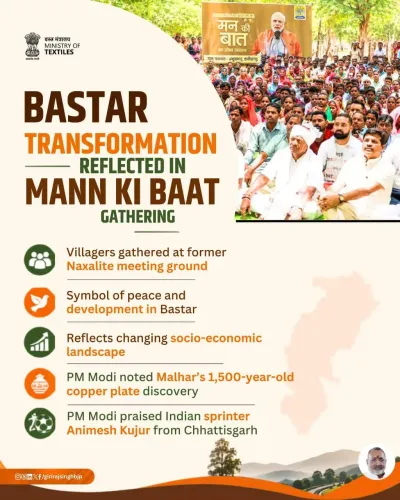
Rijiju's post is notable for the specific pillars he names — skill development, employment, agriculture, tourism, and culture — which map directly onto the central government's 'Viksit Bharat by 2047' agenda. Tourism and cultural promotion in Bastar, home to distinctive tribal art forms and dense biodiversity, have been cited by the Chhattisgarh government as emerging economic levers for communities long isolated by conflict. The framing signals that the political messaging around Bastar is shifting from a security story to a development dividend story — a transition the BJP has sought to make visible ahead of any parliamentary review of LWE district classifications.
Point of View
Not an ongoing conflict zone. The specific pillars he names (skill, tourism, culture) suggest a coordinated messaging push ahead of potential parliamentary reclassification of LWE-affected districts, which would itself be a political milestone. The tricolour-versus-gun imagery is potent but also measurable — it invites scrutiny of on-ground data on violence, displacement, and tribal welfare that official claims have not always survived. The broader arc is clear: the BJP is positioning 'Naxal-free India' as a governance achievement comparable to surgical strikes or Article 370, and Bastar is its most vivid exhibit.
NationPress
21 Aug 2026
Frequently Asked Questions
What did Kiren Rijiju say about Bastar?
Rijiju said that where every hand once held a gun, today every hand waves the tricolour, framing Bastar as a region that has emerged from Naxalite terror to embrace development through skill, employment, farming, tourism, and culture.
Is Bastar free from Naxalites now?
The central government has claimed a significant reduction in Naxalite violence and the number of LWE-affected districts over the past decade. However, the research available does not confirm complete elimination of insurgent activity in all parts of Bastar as of 2026.
What is the Viksit Bharat connection to Bastar?
Viksit Bharat is Prime Minister Modi's goal of making India a developed nation by 2047. The government has linked infrastructure, skill, and welfare schemes in former LWE strongholds like Bastar to this broader national development agenda.
What is the history of Naxalism in Bastar?
Bastar in southern Chhattisgarh was a core zone of India's Maoist insurgency for decades, with armed groups controlling forested areas, attacking security forces, and disrupting governance in tribal villages across the so-called Red Corridor.
What development schemes are running in Bastar?
Since 2014, central governments have provided special assistance for roads, schools, and skill centres in LWE districts including Bastar. Tourism promotion and cultural initiatives have also been cited as economic levers for tribal communities in the region.