Shivraj Singh Chouhan visits integrated farming model in Patna
Synopsis
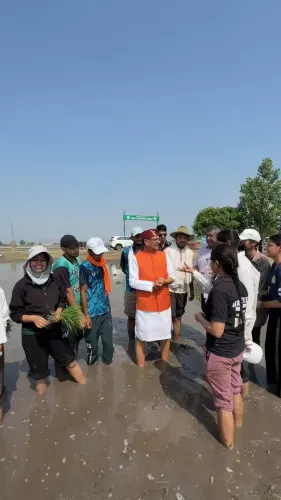
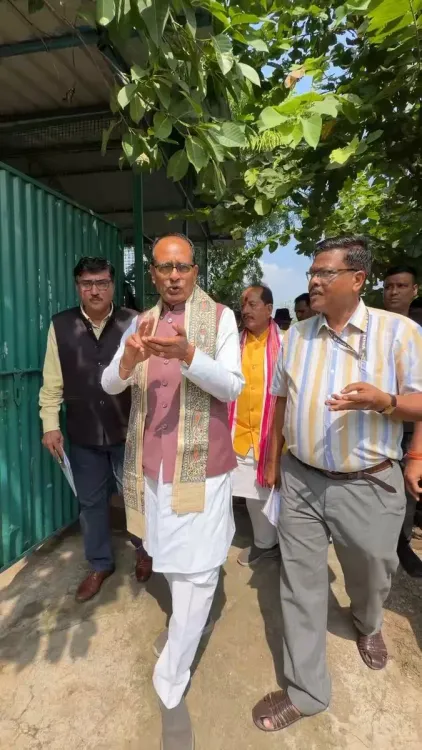
Union Agriculture Minister Shivraj Singh Chouhan visited an integrated farming demonstration in Patna on 20 August 2026, where a single field generates income from crops, fish, poultry, ducks, and vegetables. He urged farmers across India to study and adopt the model.
Key Takeaways
Union Agriculture Minister Shivraj Singh Chouhan visited an integrated farming demonstration in Patna, Bihar on 20 August 2026 .
The model generates income from five sources on a single plot: crops, fish, poultry, ducks, and vegetables.
ICAR has been developing Integrated Farming System models since the early 2010s to raise per-unit land productivity for small and marginal farmers.
Chouhan called on farmers to visit such models and adapt them to their own fields, framing it as a practical route to income diversification.
The approach reduces dependence on a single crop and spreads risk across multiple production cycles through the year.
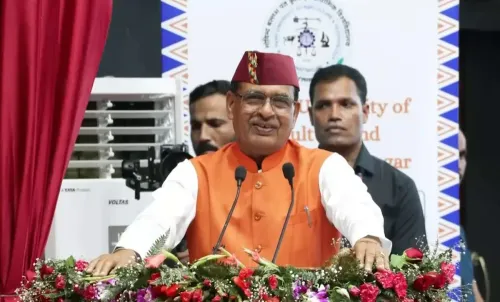
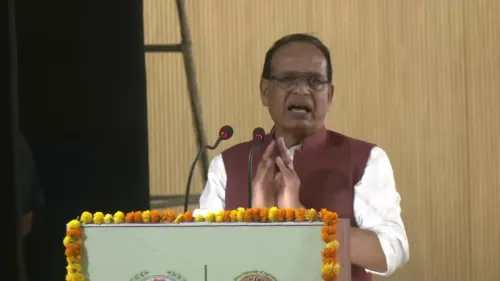
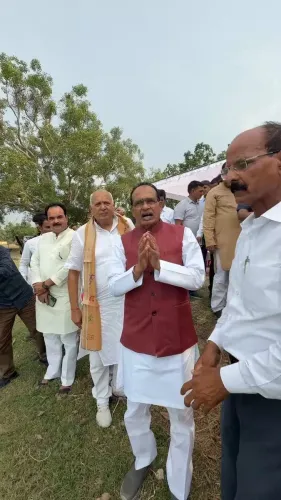
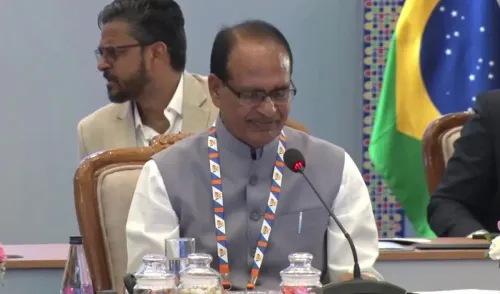
One field, four income streams — and a cabinet minister taking notes. Union Agriculture Minister Shivraj Singh Chouhan visited an integrated farming demonstration in Patna, Bihar on Thursday, 20 August 2026, where a single plot of land is simultaneously generating revenue from crops, fish, poultry, ducks, and vegetables.
Posting on X in Hindi, the minister described what he saw: 'एक ही खेत में खेती के साथ मछली, मुर्गी, बतख और सब्जियों से आमदनी के कई रास्ते बनाए गए हैं' — 'Multiple income avenues have been created from fish, poultry, ducks, and vegetables alongside farming on the very same field.' His message to farmers was direct: study this model, and adapt it to your own land.
Why one field doing five jobs changes the math for small farmers
The logic of integrated farming is brutally simple. A farmer dependent on a single crop is exposed to a single point of failure — a bad monsoon, a price crash, a pest outbreak. Stack fish ponds, a poultry shed, duck rearing, and a kitchen-garden plot onto that same land, and the household earns across multiple cycles through the year. Risk spreads. Income smooths. The Indian Council of Agricultural Research (ICAR) has been developing and validating Integrated Farming System models since the early 2010s, specifically targeting small and marginal cultivators who cannot afford to wait out a bad season. The approach combines crop residues as animal feed, animal waste as organic fertiliser, and water bodies for fish — each component subsidising the others.Chouhan's field visit and the call to Bihar's farming community
Chouhan, a four-term former Chief Minister of Madhya Pradesh who built his political identity around rural welfare, has consistently used field visits as a communication tool — seeing a practice, then amplifying it to a national audience. His Patna visit follows a pattern of successive agriculture ministers spotlighting resource-efficient models under existing central schemes rather than announcing fresh large-scale programmes. The minister's framing was notably practical, not bureaucratic: 'If farming is done a little differently, a big change can come.' The invitation — 'किसान भाई इसे जरूर देखें', 'Farmer brothers must see this' — was a peer-to-peer nudge, not a policy directive. The immediate question is whether Bihar's state agriculture department and ICAR's regional centres follow up with replicable demonstration plots and accessible extension support so the model moves beyond a single showcase field.Point of View
A state where smallholder agriculture dominates and farm incomes remain low, is politically legible ahead of the state's electoral cycle. More broadly, the spotlight on integrated farming signals that the Centre is betting on productivity-per-acre gains through diversification rather than new large-scale input subsidies. Whether this translates into operational funding windows or replicable demonstration infrastructure will determine if the message outlasts the visit.
NationPress
21 Aug 2026
Frequently Asked Questions
What is integrated farming and how does it work in India?
Integrated farming combines crops, livestock, fish, and horticulture on the same plot so that each component supports the others — animal waste fertilises crops, crop residue feeds animals, and water bodies host fish — raising total income per unit of land. ICAR has been promoting Integrated Farming System models in India since the early 2010s.
Why did Shivraj Singh Chouhan visit Patna in August 2026?
Chouhan visited Patna on 20 August 2026 to see an integrated farming demonstration where a single field generates income from crops, fish, poultry, ducks, and vegetables, and to encourage farmers to adopt similar models.
What income sources does the Patna integrated farming model include?
The model demonstrated in Patna generates income from five sources on one plot: traditional crop cultivation, fish rearing, poultry, duck farming, and vegetable production.
Which government body supports integrated farming in India?
The Indian Council of Agricultural Research (ICAR) has led research and extension support for Integrated Farming Systems in India, targeting small and marginal farmers to help them reduce risk and raise household income.
How does integrated farming help small farmers reduce risk?
By spreading production across crops, fish, poultry, and vegetables, a farmer is not dependent on a single harvest or price cycle. A failure in one stream is cushioned by earnings from the others, smoothing income across the year.