Shivraj Singh Chouhan Welcomes BRICS Agriculture Ministers
Synopsis
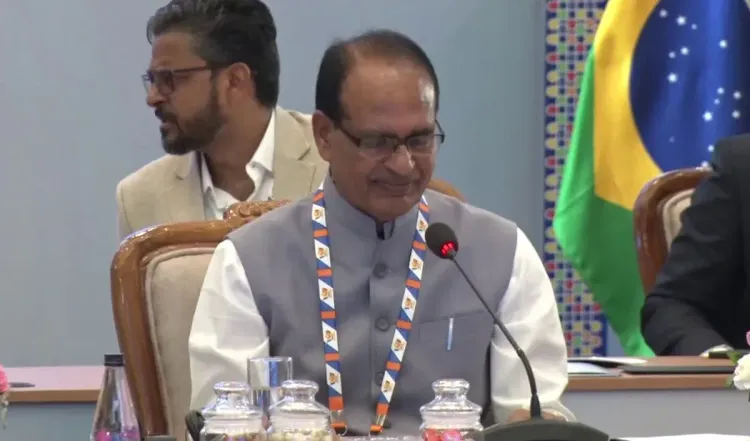
Union Agriculture Minister Shivraj Singh Chouhan welcomed delegates to the BRICS Agriculture Ministers' Meeting on June 13, 2026, framing India's participation in the ideals of universal welfare — 'Sarvajan Hitaya, Sarvajan Sukhaya' — and reaffirming India's commitment to shared global prosperity through multilateral agricultural cooperation.
Key Takeaways
Union Agriculture Minister Shivraj Singh Chouhan formally welcomed BRICS agriculture ministers on behalf of the Government of India on June 13, 2026 .
Chouhan invoked Sanskrit ideals — 'Sarvajan Hitaya, Sarvajan Sukhaya' and 'Sarve Bhavantu Sukhinah' — to frame India's multilateral philosophy.
India's participation in BRICS agricultural forums has historically focused on food security, digital agriculture and South-South cooperation .
A joint declaration or action plan is expected as a standard outcome of the ministers' meeting.
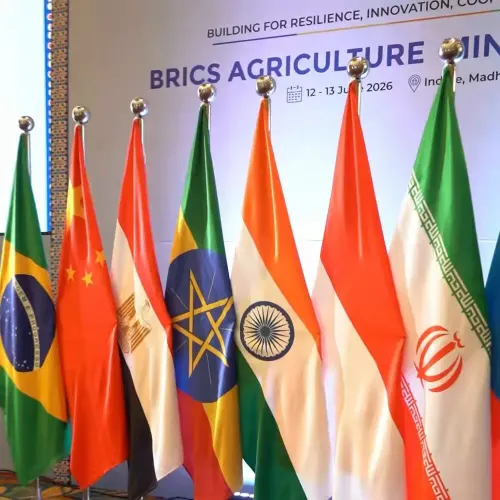
The BRICS agriculture track has expanded in scope following the grouping's recent membership enlargement .
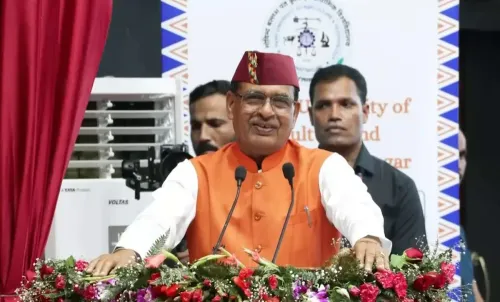
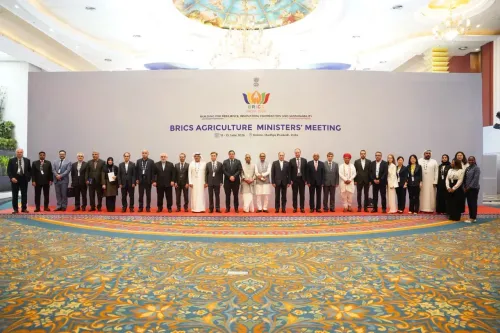
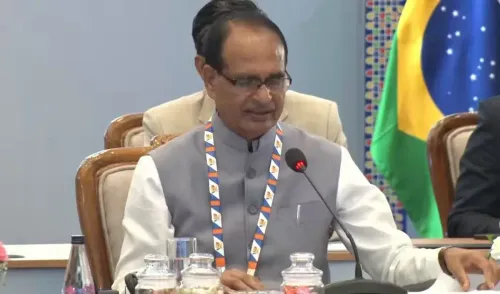
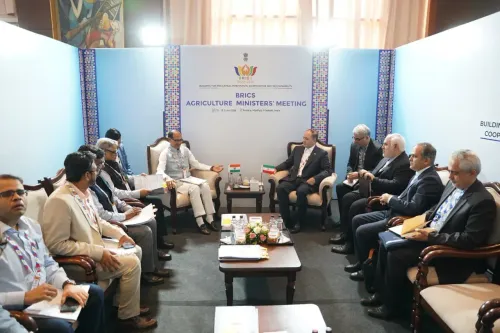
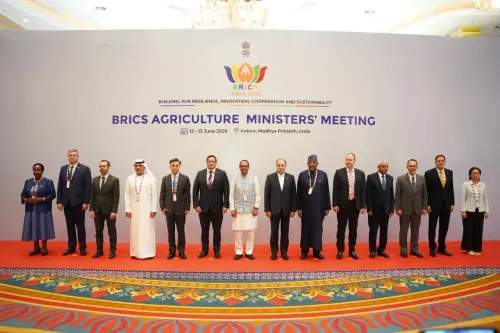
Union Agriculture Minister Shivraj Singh Chouhan on Saturday, June 13, 2026, extended a formal welcome to delegates attending the BRICS Agriculture Ministers' Meeting, invoking India's civilisational philosophy of universal welfare as the foundation of its multilateral engagement.
Posting on X in Hindi, Chouhan wrote on behalf of the Government of India and its citizens: 'सर्वजन हिताय, सर्वजन सुखाय' ['for the welfare of all, for the happiness of all'] and 'सर्वे भवन्तु सुखिनः, सर्वे सन्तु निरामयाः' ['may all be happy, may all be free from illness']. He stated that India moves forward not merely for its own prosperity but for the shared well-being of all nations.
Context
BRICS — the intergovernmental grouping of major emerging economies including Brazil, Russia, India, China and South Africa, along with more recent member states — holds regular ministerial-level meetings on agriculture as part of its sectoral cooperation track. These meetings run parallel to, and feed into, the annual BRICS Leaders' Summit. The agriculture ministers' track is a standing forum for coordinating positions on food security, rural development and agricultural technology among member nations.
Chouhan's welcome address signals India's active role as a participating voice in shaping the meeting's agenda. His message framed India's participation not as transactional but as rooted in a broader ethical commitment to human welfare — a framing consistent with how senior Indian officials have addressed multilateral platforms in recent years.
Policy Backdrop
India has consistently used BRICS agricultural forums to advocate South-South cooperation on themes such as food security, digital agriculture and climate-resilient farming. The integration of Sanskrit philosophical concepts into official multilateral messaging has become a recognisable feature of India's diplomatic communication under the current government.
As BRICS has expanded its membership in recent years, the agriculture ministers' track has grown in scope, encompassing a wider range of economies with diverse agricultural profiles. India, as one of the world's largest agricultural producers and home to a significant share of the global farming population, holds a structurally important position within this forum.
Stakeholders and Impact
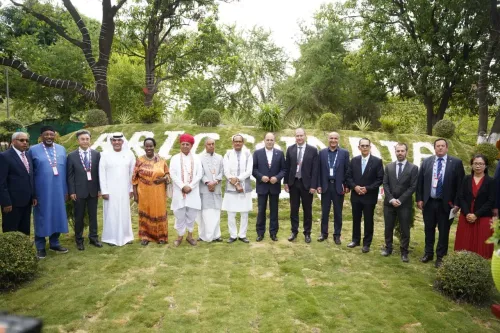
The meeting brings together agriculture ministries from across the BRICS grouping, with implications for farmers, agri-trade policy and food security frameworks across member nations. Outcomes from such ministerial meetings typically inform joint declarations that guide bilateral and multilateral agricultural cooperation in the months that follow.
For India's farming community, BRICS cooperation has historically opened channels for technology transfer, market access discussions and coordinated responses to global commodity price volatility. Chouhan, who oversees both agriculture and rural development portfolios, is positioned to advance India's interests on multiple fronts at the meeting.
What's Next
A joint declaration or action plan from the agriculture ministers is expected as a standard outcome of the meeting, which would then feed into the broader BRICS summit process. Observers will watch for specific commitments on food security cooperation, agricultural technology exchange and support mechanisms for smallholder farmers across member economies.
Chouhan's opening framing — anchoring India's participation in the universalist ideals of Vasudhaiva Kutumbakam and allied Sanskrit precepts — suggests India will continue positioning itself as a values-driven stakeholder in multilateral agricultural governance, even as the grouping navigates complex geopolitical currents among its expanding membership.
Point of View
Other-regarding power within a grouping that has grown more complex with expanded membership. The move fits a broader pattern of the current government weaving India's philosophical heritage into its official multilateral voice, distinguishing its posture from purely transactional engagement. For Chouhan personally, the platform is an opportunity to demonstrate diplomatic heft beyond domestic politics, reinforcing his stature as a senior Cabinet minister with a national and international brief. The real test will be whether the philosophical framing translates into substantive outcomes — technology transfer commitments, food security frameworks or market access agreements — in the meeting's final declaration.
NationPress
13 Sept 2026
Frequently Asked Questions
What is the BRICS Agriculture Ministers' Meeting?
The BRICS Agriculture Ministers' Meeting is a regular ministerial-level forum where agriculture ministers from BRICS member nations coordinate on food security, rural development and agricultural cooperation. It feeds into the broader annual BRICS summit process.
What did Shivraj Singh Chouhan say at the BRICS agriculture meeting?
Chouhan welcomed delegates on behalf of the Government of India and its citizens, invoking Sanskrit ideals of universal welfare — 'Sarvajan Hitaya, Sarvajan Sukhaya' and 'Sarve Bhavantu Sukhinah' — to frame India's commitment to shared global prosperity.
What is India's role in BRICS agricultural cooperation?
India is a key participant in the BRICS agriculture track, advocating South-South cooperation on food security, digital agriculture and climate-resilient farming. As one of the world's largest agricultural producers, India holds significant influence within the forum.
What outcomes are expected from the BRICS Agriculture Ministers' Meeting 2026?
A joint declaration or action plan is typically the standard outcome of such ministerial meetings, with commitments on food security cooperation, agricultural technology exchange and support for smallholder farmers across member nations.
Who is Shivraj Singh Chouhan?
Shivraj Singh Chouhan is India's Union Minister of Agriculture and Farmers Welfare and Rural Development. He is a senior BJP leader and former four-term Chief Minister of Madhya Pradesh, one of India's longest-serving state chief ministers.