Shivraj Singh Chouhan opens BRICS Agriculture Meet in Indore
Synopsis
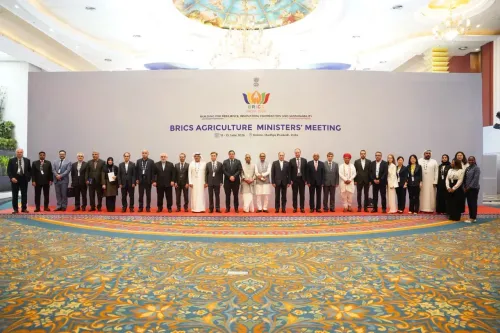
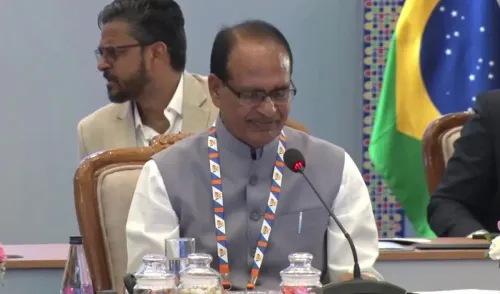
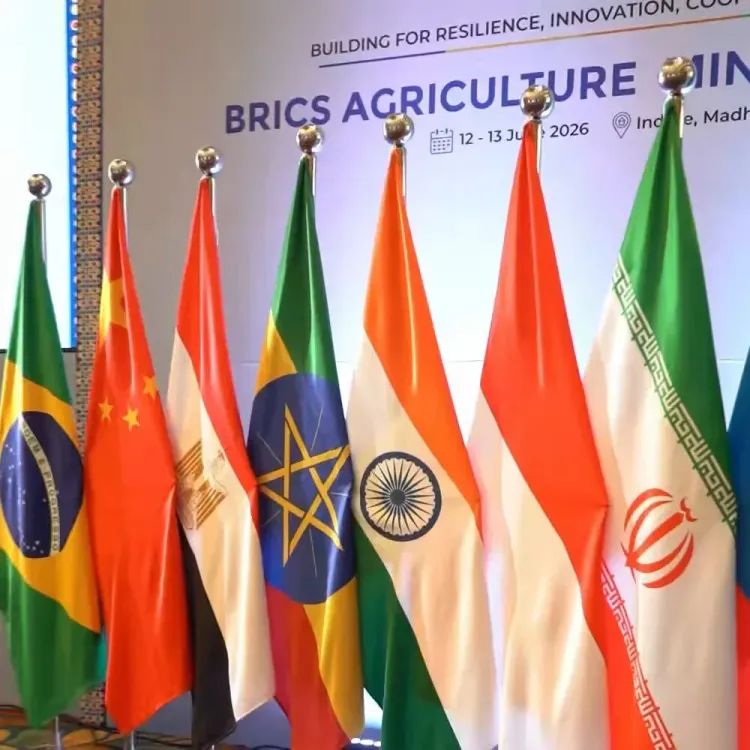
Union Agriculture Minister Shivraj Singh Chouhan inaugurated a two-day BRICS agriculture ministers' conference in Indore on 12 June 2026. Discussions centred on food security, natural farming, and empowering small farmers, with India invoking PM Modi's 'Vasudhaiva Kutumbakam' principle to frame its call for deeper global agricultural cooperation.
Key Takeaways
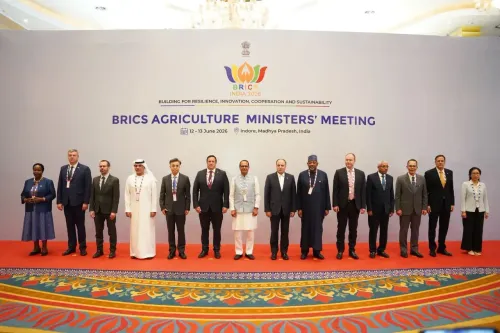
Union Agriculture Minister Shivraj Singh Chouhan inaugurated the two-day BRICS agriculture ministers' conference in Indore on 12 June 2026 .
Discussions covered food security , sustainable agricultural development , and shared challenges facing the farming sector across BRICS nations.
India presented its perspective on empowering small and marginal farmers and promoting natural farming as a cooperative priority.
PM Narendra Modi 's 'Vasudhaiva Kutumbakam' (the world is one family) principle was cited as the philosophical basis for India's push for global agricultural partnerships.
The meeting is expected to feed into broader #BRICS2026 summit outcomes, with potential joint declarations on food security cooperation.
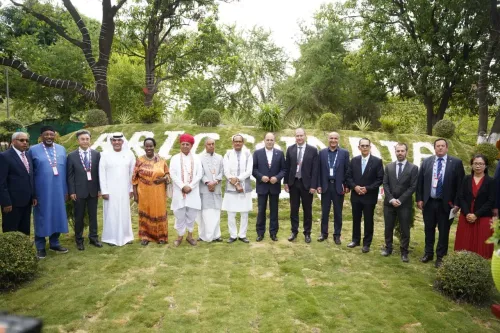
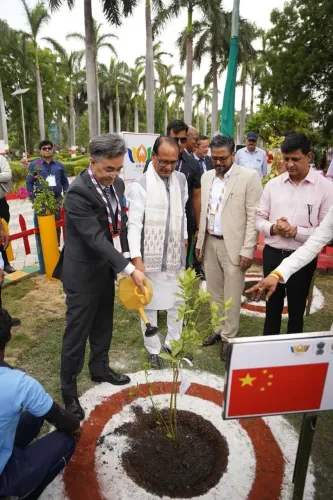
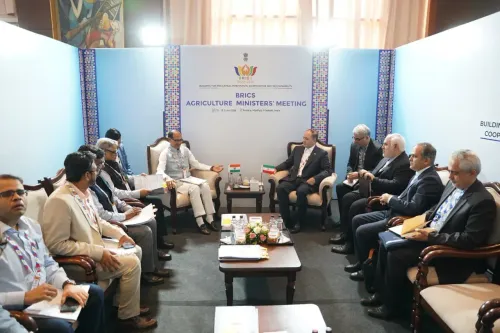
Union Agriculture Minister Shivraj Singh Chouhan on Friday, 12 June 2026 inaugurated a two-day conference of BRICS agriculture ministers in Indore, Madhya Pradesh, where delegates from member nations held substantive discussions on agriculture, food security, and sustainable farming cooperation. The meeting was held in the city historically revered as the sacred land of Mata Ahilyabai Holkar, a symbolic setting underscoring India's civilisational connect to the gathering.
Context
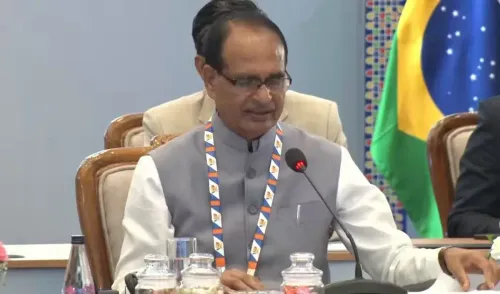
Chouhan shared India's perspective on empowering small and marginal farmers, promoting natural farming, and building coordinated responses to shared challenges in the agricultural sector. Posting on X, he wrote that 'meaningful discussions were held on shared global cooperation for agriculture, food security and sustainable agricultural development' at the inauguration of the two-day conference.
The minister invoked Prime Minister Narendra Modi's guiding foreign-policy principle of 'Vasudhaiva Kutumbakam' (the world is one family), stating that under Modi's leadership, the summit emphasised global partnerships rooted in that philosophy. India's articulation of this principle at a multilateral agricultural forum signals its intent to position itself as a voice for the Global South on food and farming issues.
Policy Backdrop
BRICS agriculture ministers have convened periodically since 2010 to coordinate on food security, sustainable farming, and rural development. The grouping has steadily institutionalised sector-specific ministerial meetings to address shared challenges including climate-resilient food systems and rural livelihoods. India has used these platforms consistently to advance priorities aligned with its domestic agricultural agenda.
Natural farming — a low-external-input approach that reduces dependence on chemical fertilisers and pesticides — has been a flagship domestic push under the current central government. Raising it at a BRICS ministerial forum reflects India's effort to internationalise the model and build peer interest among major emerging economies.
Stakeholders and Impact
The most direct beneficiaries of any outcomes from this conference would be small and marginal farmers across BRICS nations, who collectively represent a significant share of the world's agricultural workforce. Coordinated policy frameworks on natural farming, input costs, and market access could translate into tangible support mechanisms if formalised in a joint declaration.
Indore, as the host city, also gains visibility as a venue for high-level international diplomacy. The city, Madhya Pradesh's commercial capital, has in recent years hosted several national and international events, and the BRICS agriculture ministers' meet adds to that profile.
What's Next
Attention will now turn to the outcomes of the agriculture working-group sessions over the two days, and whether the conference produces a formal joint declaration or action framework. Any commitments on food security cooperation, natural farming exchanges, or technology sharing between BRICS member states would feed into the agenda of the broader BRICS Summit expected later in the year under the #BRICS2026 cycle.
If the ministerial discussions crystallise into binding cooperation frameworks, they could open new avenues for agricultural trade, research partnerships, and farmer-welfare initiatives across the bloc — outcomes Chouhan described as 'opening doors to new possibilities.'
Point of View
Chouhan is effectively internationalising the BJP government's domestic agricultural branding. The choice of Indore, a city with strong symbolic resonance in Madhya Pradesh and Chouhan's own political heartland, also carries a soft-power dimension. Whether the ministerial rhetoric translates into binding BRICS frameworks will be the real test of this diplomatic investment.
NationPress
13 Sept 2026
Frequently Asked Questions
Where was the BRICS agriculture ministers' conference held in 2026?
The two-day BRICS agriculture ministers' conference was held in Indore, Madhya Pradesh , inaugurated on 12 June 2026 by Union Agriculture Minister Shivraj Singh Chouhan .
What did India discuss at the BRICS agriculture meeting?
India shared its perspective on empowering small and marginal farmers , promoting natural farming , and building coordinated solutions to shared agricultural challenges, framed around PM Modi's 'Vasudhaiva Kutumbakam' principle.
What is 'Vasudhaiva Kutumbakam' and why was it invoked at the BRICS meeting?
'Vasudhaiva Kutumbakam' is a Sanskrit phrase meaning 'the world is one family.' PM Narendra Modi has used it as a guiding foreign-policy principle, and Agriculture Minister Chouhan invoked it to frame India's call for deeper global cooperation on food security and sustainable farming.
What is the significance of holding the BRICS agriculture meet in Indore?
Indore is described as the sacred land of Mata Ahilyabai Holkar , carrying strong cultural symbolism. It is also Madhya Pradesh 's commercial hub and has increasingly served as a venue for national and international conferences.
What outcomes are expected from the BRICS agriculture ministers' conference?
The conference may produce a joint declaration or action framework on food security, natural farming exchanges, and farmer-welfare cooperation, with outcomes expected to feed into the broader #BRICS2026 summit agenda.