BRICS agriculture meet: India pushes for small farmer empowerment, food security
Synopsis
At a BRICS agriculture ministers' conference in Indore, India's Agriculture Minister Shivraj Singh Chouhan made the case that empowering small and marginal farmers — who make up 87 per cent of India's farming community — is the cornerstone of global food security. With India's foodgrain output at 376 million tonnes and growing, New Delhi is positioning itself as the bloc's lead voice on sustainable agriculture.
Key Takeaways
Agriculture Minister Shivraj Singh Chouhan addressed the BRICS agriculture ministers' conference in Indore on 12 June 2025 .
India called for collective BRICS action to empower small farmers and strengthen global food security.
India's total foodgrain production stands at nearly 376 million tonnes , with wheat output close to 118 million tonnes .
Horticulture production has crossed 378 million tonnes ; fish production exceeds 19 million tonnes .
Nearly 87 per cent of India's farmers are small and marginal; agriculture employs about 43 per cent of the workforce.
India's agriculture sector has grown at an average of nearly 4.5 per cent annually over the last decade.
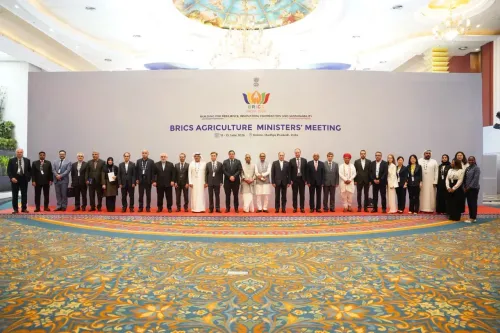
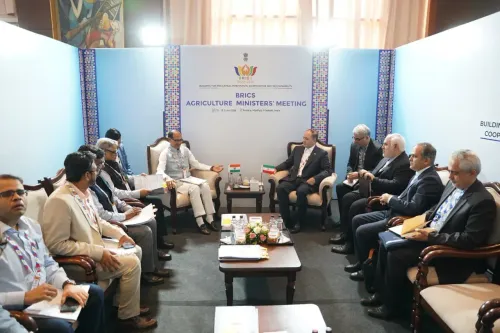
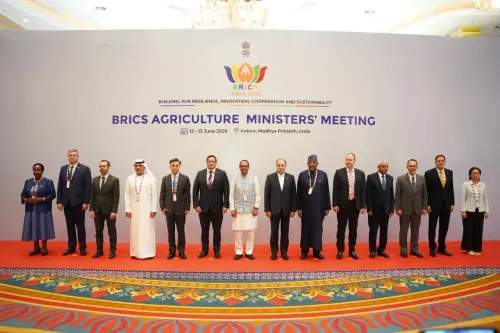
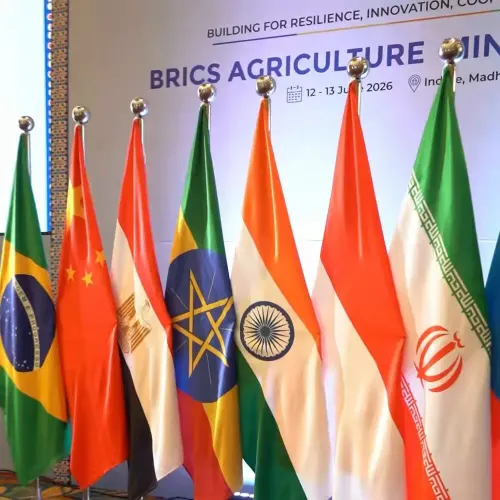
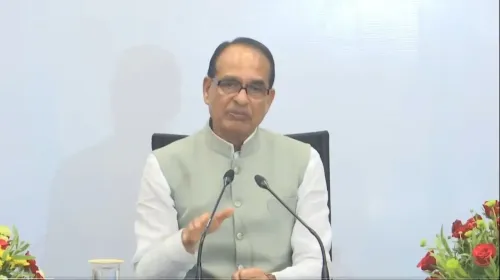
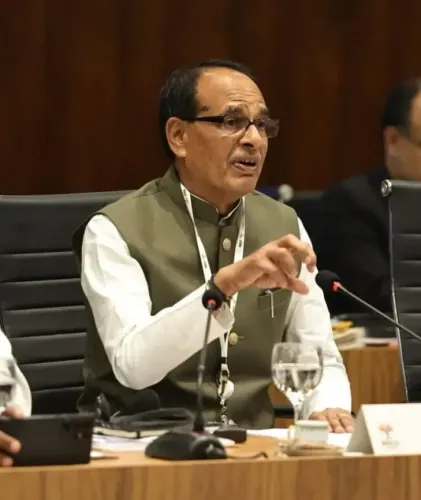
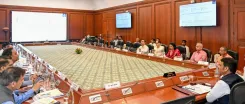
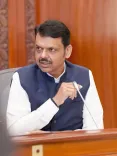
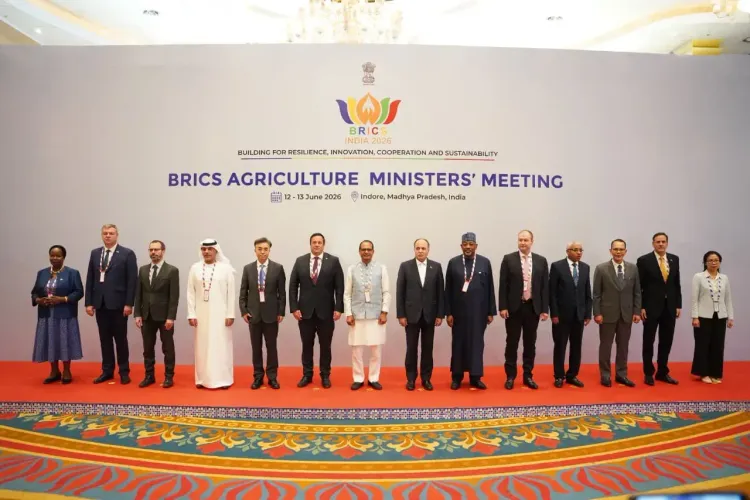
Agriculture Minister Shivraj Singh Chouhan on Friday, 12 June called on BRICS member nations to deepen collective action on empowering small and marginal farmers, ensuring global food security, and advancing sustainable agricultural development. Speaking at a two-day conference of BRICS agriculture ministers in Indore, Chouhan said coordinated efforts by the bloc could provide 'a new direction to global agriculture.'
Key Developments at the Indore Conference
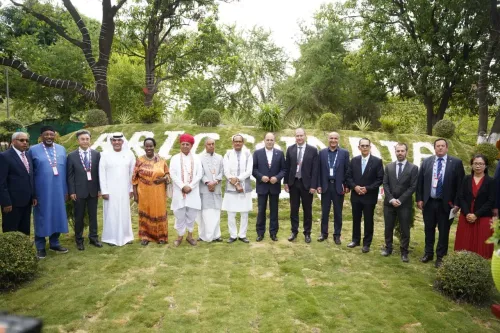
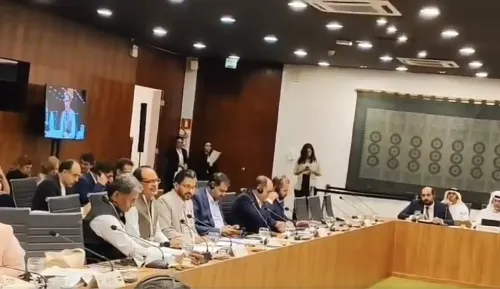
The ministerial conference, hosted in Indore, brought together agriculture ministers from BRICS countries to address shared challenges in the sector. Chouhan framed the gathering as a critical platform for collectively tackling pressures faced by small and marginal farmers — including climate change, strain on natural resources, rising input costs, and volatility in agricultural markets.
He invoked the principle of 'Vasudhaiva Kutumbakam' — the ancient Indian concept of the world as one family — to underscore India's commitment to global agricultural cooperation under Prime Minister Narendra Modi.
India's Agricultural Achievements
Chouhan presented a detailed account of India's agricultural progress to the assembled delegates. India's agriculture sector has recorded an average annual growth of nearly 4.5 per cent over the last decade, he said.
Total foodgrain production has reached approximately 376 million tonnes (MT), with wheat output alone touching close to 118 million tonnes. Horticulture production has crossed 378 million tonnes, while fish production has exceeded 19 million tonnes — reflecting broad-based growth across multiple allied sectors.
Chouhan also noted that India operates what he described as the world's largest food security programme, covering a very large section of the country's population.
The Small Farmer Question
A central theme of Chouhan's address was the structural importance of small and marginal farmers. Approximately 87 per cent of India's farming community falls into this category, he said, while around 43 per cent of India's total workforce is engaged in agriculture and allied sectors.
He argued that if small and marginal farmers become economically strong and technologically capable, the global food security architecture would itself become more resilient. Ensuring their welfare, he said, is not a domestic priority alone but a prerequisite for sustainable agricultural growth worldwide.
Why This Matters for BRICS
The call for BRICS agricultural solidarity comes at a time when global food systems face compounding stress — from erratic monsoons and extreme weather events to supply chain disruptions and inflationary pressure on farm inputs. Notably, BRICS nations collectively account for a significant share of the world's agricultural output and rural population, making coordinated policy a high-stakes endeavour.
This is the latest in a series of multilateral agricultural engagements India has led in recent years, reflecting a broader diplomatic push to position the country as a voice for the Global South on food and farming issues.
What Comes Next
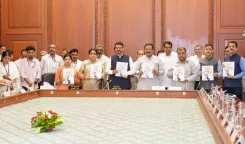
The two-day conference is expected to produce a joint communiqué outlining areas of cooperation among BRICS agriculture ministers. Implementation of any agreed framework will depend on follow-through by individual member states, a perennial challenge in multilateral agricultural diplomacy.
Point of View
New Delhi is signalling that it wants to lead the BRICS agricultural agenda — particularly as the bloc expands and the Global South's weight in multilateral forums grows. The harder question is whether BRICS ministerial declarations translate into binding cooperation frameworks, or remain aspirational communiqués. With 87 per cent of India's own farmers still in the small-and-marginal category, the domestic gap between ambition and delivery is wide enough to invite scrutiny alongside applause.
NationPress
26 Oct 2026
Frequently Asked Questions
What was the BRICS agriculture ministers' conference in Indore about?
The two-day conference brought together agriculture ministers from BRICS nations in Indore to discuss cooperation on food security, support for small farmers, and sustainable agricultural development. India used the platform to present its agricultural achievements and call for coordinated multilateral action.
What did Agriculture Minister Shivraj Singh Chouhan say at the conference?
Chouhan urged BRICS members to collectively empower small and marginal farmers, warning that climate change, rising input costs, and market volatility pose serious threats to global food security. He also highlighted India's foodgrain output of nearly 376 million tonnes and average agricultural growth of 4.5 per cent annually.
Why are small and marginal farmers central to India's BRICS pitch?
Nearly 87 per cent of India's farming community consists of small and marginal farmers, making their economic empowerment critical to the country's food security. Chouhan argued that strengthening this segment globally would make the world's food security architecture more resilient.
What are India's key agricultural statistics cited at the conference?
India's foodgrain production stands at approximately 376 million tonnes, wheat output is close to 118 million tonnes, horticulture production has crossed 378 million tonnes, and fish production exceeds 19 million tonnes. The agriculture sector has grown at nearly 4.5 per cent annually over the last decade.
What is expected to come out of the BRICS agriculture ministers' meeting?
The two-day conference is expected to produce a joint communiqué outlining areas of agricultural cooperation among BRICS nations. The actual impact will depend on whether member states follow through on any agreed framework.