CM Fadnavis Puts Maharashtra's Interests First on Tummidihetti Barrage
Synopsis
CM Devendra Fadnavis met Telangana CM Revanth Reddy in Mumbai over the proposed height increase of the Tummidihetti Barrage from 148m to 152m. Maharashtra will form a joint technical committee with Telangana to study submergence impacts before deciding, insisting its citizens' interests come first.
Key Takeaways
Telangana has formally requested Maharashtra's approval to raise the Tummidihetti Barrage height from 148 metres to 152 metres .
CM Devendra Fadnavis declined an immediate decision, citing past instances where actual submergence exceeded projected figures after an earlier approval.
A joint committee of chief secretaries and water resources secretaries of both states will conduct an independent technical study on submergence, sanctuary inclusion, and land requirements.
If Telangana disputes Maharashtra's findings, officials from both sides will meet; independent expert opinion may also be sought.
Water allocation and statutory approvals remain under the purview of the Central Water Commission ; Maharashtra will submit its position only after the Commission formally seeks it.
Maharashtra's stated principle: cooperation with neighbouring states is positive, provided Maharashtra's own citizens face no loss.
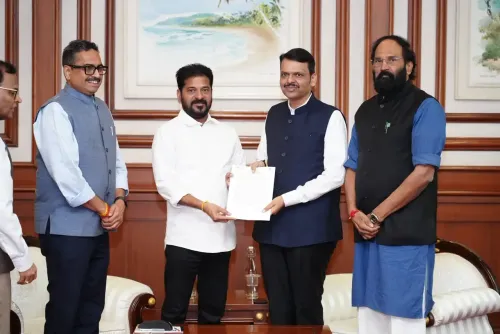
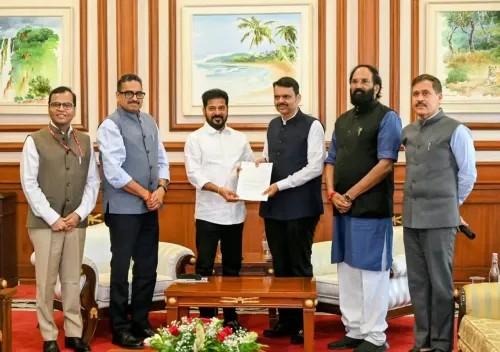
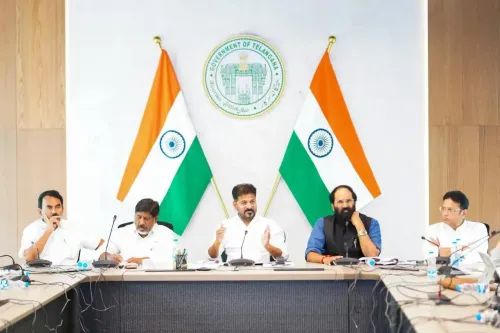
A high-stakes water diplomacy meeting unfolded at Sahyadri Guest House, Mumbai on Monday, October 26, 2026, as Chief Minister Devendra Fadnavis hosted a delegation from Telangana to deliberate on one of the Godavari basin's most consequential pending decisions — whether Maharashtra will approve raising the height of the Tummidihetti Barrage from 148 metres to 152 metres. The answer, for now, is a careful 'not yet.'
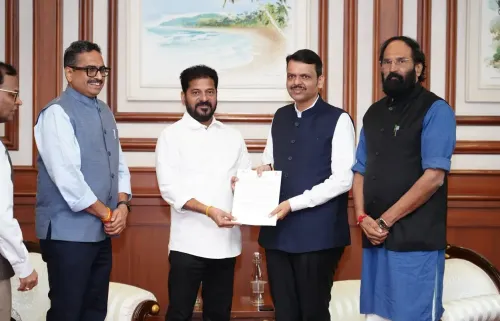
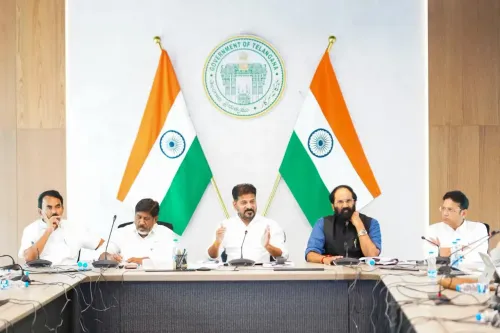
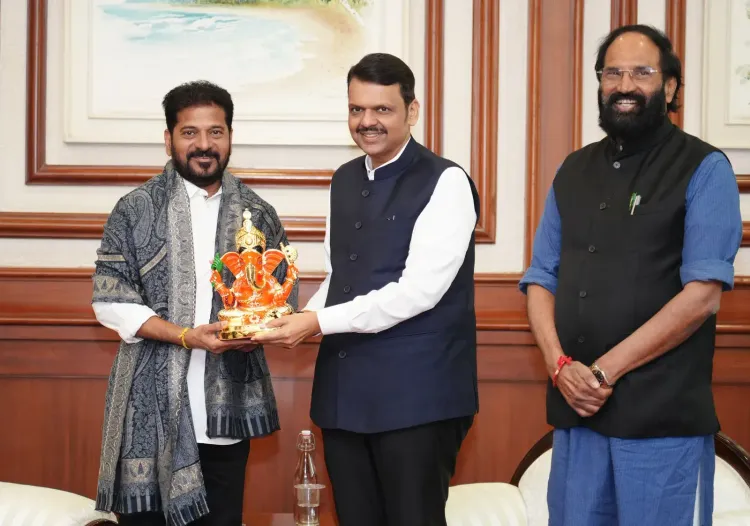
The Chief Minister's Office of Maharashtra confirmed that Telangana Chief Minister Revanth Reddy led the delegation, accompanied by Telangana Water Resources Minister Uttam Kumar Reddy, who laid out the technical case for the proposed height increase. CM Fadnavis and Maharashtra Minister Girish Mahajan represented the state's side at the table.
Why Tummidihetti's Four Extra Metres Matter
The Tummidihetti Barrage sits on the Godavari River, and even a modest height increase carries outsized downstream consequences. Raising the structure by 4 metres — from 148m to 152m — directly expands the submergence zone, potentially inundating land, wildlife sanctuaries, and settlements that extend into Maharashtra's territory. CM Fadnavis underlined that a previous Maharashtra approval for an earlier version of the project had already seen actual submergence exceed initial projections, making due diligence this time non-negotiable.
'The impact of the changed project site on submergence, the inclusion of the associated sanctuary, and the land required outside the riverbed will all be examined,' Fadnavis stated, signalling that environmental and land-acquisition dimensions are as central to the review as the hydraulics.
A Joint Committee to Scrutinise the Numbers
Rather than a flat refusal or an immediate green light, Maharashtra chose a structured path forward. A joint committee of chief secretaries and water resources department secretaries from both states will be constituted to conduct an independent technical study. The committee will assess submergence area, sanctuary boundaries, and land requirements before either government commits to a position.
Fadnavis was clear that Maharashtra's study remains its own — Telangana will receive the findings and, if it has objections or gaps to flag, officials from both sides will sit down to resolve them. Expert opinion may also be sought if technical disputes arise. Crucially, matters relating to water allocation and statutory approvals fall under the jurisdiction of the Central Water Commission; Maharashtra will submit its position to the Commission only after the independent study is complete and the Commission formally seeks the state's input.
Fadnavis Frames the Principle: Cooperative, Not Unconditional
CM Fadnavis articulated a governing principle that threads cooperation with conditionality: 'शेजारी राज्यांचे प्रश्न परस्पर सहकार्याने सोडविण्याची भूमिका महाराष्ट्राने नेहमीच घेतली आहे' — 'Maharashtra has always taken the position of resolving neighbouring states' issues through mutual cooperation.' But that cooperation, he made explicit, is contingent on Maharashtra's citizens not suffering loss. 'If there is no harm to the people of Maharashtra and another state stands to benefit, the state has no objection to taking a positive decision,' he said.
That framing is both an olive branch and a boundary marker — it keeps the door open for eventual approval while locking in Maharashtra's right to conduct its own independent analysis without being rushed.
What Godavari Basin States Are Watching
The Godavari is the largest river system in peninsular India and its basin states — Maharashtra, Telangana, Andhra Pradesh, and Chhattisgarh — have long negotiated competing claims through bilateral committees and central arbitration. This meeting is a textbook instance of that process: a downstream state requesting more storage capacity, an upstream state insisting on verified impact data before conceding. The joint-committee mechanism avoids both a political showdown and a premature technical sign-off.
With the joint committee yet to be formally notified and the Central Water Commission looming as the final statutory gatekeeper, the Tummidihetti decision remains a live issue — one that will test whether cooperative federalism on water can move at the speed that Telangana's irrigation ambitions demand.
Point of View
Decide later' stance on the Tummidihetti Barrage is a politically astute move that protects Maharashtra from accusations of blocking a neighbouring state's development while simultaneously creating institutional cover for an eventual refusal if the numbers don't hold up. The joint-committee mechanism also keeps the Central Water Commission at arm's length for now, buying time before a federally mediated showdown becomes necessary. For Telangana, already pressing ahead with Godavari basin infrastructure, the delay is a procedural inconvenience — but the cooperative framing makes it hard to frame as obstructionism. This meeting is a microcosm of how large federal water systems get negotiated in India: not through courts or crisis, but through layered committees designed to diffuse political heat while technical uncertainty gets resolved.
NationPress
26 Oct 2026
Frequently Asked Questions
What is the Tummidihetti Barrage and why is it controversial?
The Tummidihetti Barrage is a water resources project on the Godavari River in Telangana. It is controversial because Telangana's proposal to raise its height from 148m to 152m would expand the submergence zone, potentially flooding land and wildlife sanctuary areas in neighbouring Maharashtra.
Did Maharashtra approve the Tummidihetti Barrage height increase?
No. CM Devendra Fadnavis did not approve the increase at the October 26 meeting. Maharashtra will first conduct an independent technical study through a joint committee of both states' chief secretaries and water resources secretaries before making any decision.
What will the Maharashtra-Telangana joint committee examine?
The joint committee will study the impact of the changed project site on the submergence area, the inclusion of any wildlife sanctuary within the new submergence zone, and the extent of land required outside the riverbed as a result of the height increase.
What role does the Central Water Commission play in this project?
Water allocation and statutory approvals related to interstate river projects fall under the Central Water Commission's jurisdiction. Maharashtra has stated it will submit its position to the Commission only after completing its independent study and only when the Commission formally seeks the state's input.
Why did Maharashtra not give an immediate positive response to Telangana's request?
CM Fadnavis noted that after an earlier approval for a previous version of the project, actual submergence in Maharashtra exceeded projected figures. This precedent made a fresh, independent technical study necessary before any new approval could be considered.