Telangana CM Revanth Reddy writes to Fadnavis on Tummidihatti Barrage height
Synopsis
Telangana CM Revanth Reddy has formally written to Maharashtra CM Devendra Fadnavis seeking fresh inter-state talks on the Tummidihatti Barrage's height — arguing the agreed 148-metre FRL falls short of North Telangana's water needs. The move revives a decade-old dispute and could determine the fate of the long-stalled Pranahita–Chevella Project.
Key Takeaways
Revanth Reddy has written to Maharashtra CM Devendra Fadnavis seeking talks on the Tummidihatti Barrage height.
The barrage is part of the B.R.
Ambedkar Pranahita–Chevella Sujala Sravanthi Project on the Godavari River .
In 2016 , Maharashtra agreed to an FRL of 148 metres , down from the originally proposed 152 metres .
Telangana now argues 148 metres is insufficient for Adilabad, Nizamabad, Karimnagar, and Medak districts.
The Congress government revived the Pranahita–Chevella Project last year, calling its earlier merger into Kaleshwaram a 'historic mistake' by the BRS regime.
Irrigation Minister N.
Uttam Kumar Reddy confirmed on 29 April that project proposals are aligned with the party's election manifesto.
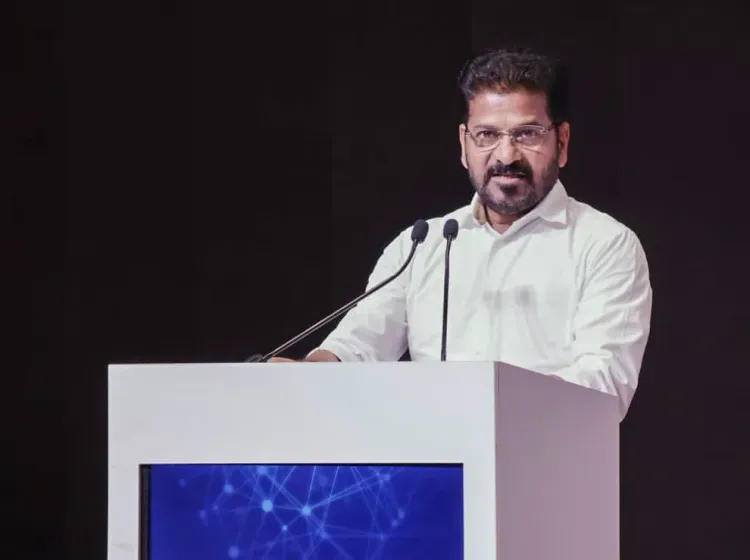
Telangana Chief Minister A. Revanth Reddy has written to Maharashtra Chief Minister Devendra Fadnavis, requesting fresh inter-state talks on the height and construction of the Tummidihatti Barrage across the Godavari River. The letter, sent from Hyderabad, seeks to finalise a schedule for a delegation-level meeting to resolve a long-pending dispute over the barrage's Full Reservoir Level (FRL).
Background: The Barrage Dispute
The Tummidihatti Barrage is a key component of the B.R. Ambedkar Pranahita–Chevella Sujala Sravanthi Project, a major irrigation initiative proposed by the Telangana government. The original plan envisaged constructing the barrage at a height of 152 metres. However, during an Inter-State Board meeting on 23 August 2016, the Maharashtra government agreed to a reduced height of 148 metres and assured cooperation in obtaining the necessary regulatory clearances.
That agreement has now come under scrutiny. Following a series of internal reviews involving top officials and irrigation experts, the current Telangana government has concluded that an FRL of 148 metres would be insufficient to meet the water requirements of North Telangana.
What Telangana Is Asking For
In his letter to Fadnavis, Chief Minister Revanth Reddy argued that a slightly higher FRL — beyond the agreed 148 metres — would not significantly increase the submergence impact on Maharashtra's territory. He further contended that a higher water level would allow water to flow into Telangana through gravity, reducing the need for costly lift irrigation infrastructure.
The CM specifically cited the irrigation and drinking water needs of Adilabad, Nizamabad, Karimnagar, and Medak districts as the primary justification for revisiting the barrage's design parameters.
Revival of the Pranahita–Chevella Project
The Congress government in Telangana last year decided to revive the Pranahita–Chevella Project, which had been merged into the Kaleshwaram Lift Irrigation Scheme by the previous Bharat Rashtra Samithi (BRS) administration. The current government has described that merger as a 'historic mistake' and committed to restoring the original project.
Irrigation Minister N. Uttam Kumar Reddy stated on 29 April that proposals have been prepared in line with the party's election manifesto commitments. The government is also examining alternative proposals to divert water from Tummidihatti to Yellampalli to irrigate lakhs of acres across the region.
What Happens Next
The ball is now in Maharashtra's court. A positive response from Fadnavis would pave the way for a formal delegation-level meeting, potentially unlocking progress on a project that has been stalled for years. Analysts note that inter-state water disputes on the Godavari have historically required sustained political engagement to resolve, and the outcome of this outreach will be closely watched by farming communities across North Telangana.
Point of View
The Telangana Congress government is setting up a narrative: if North Telangana's water woes persist, responsibility will be shared with a BJP-governed Maharashtra. The revival of the Pranahita–Chevella Project — undone by the previous BRS regime — is also a key Congress electoral promise, and progress here is essential to the government's credibility in Adilabad and Nizamabad. What the letter does not address is the timeline: inter-state water negotiations on the Godavari have dragged for decades, and a change in FRL requires fresh environmental and inter-state clearances that could take years. The urgency in Revanth Reddy's outreach may not be matched by the pace of the process.
NationPress
24 Sept 2026
Frequently Asked Questions
What is the Tummidihatti Barrage and why is it disputed?
The Tummidihatti Barrage is a proposed structure on the Godavari River, part of the B.R. Ambedkar Pranahita–Chevella Sujala Sravanthi Project in Telangana. The dispute centres on its Full Reservoir Level — Telangana wants a height above the 148 metres agreed upon with Maharashtra in 2016, arguing the lower level cannot meet North Telangana's irrigation and drinking water needs.
Why is Telangana seeking fresh talks with Maharashtra on the barrage?
Telangana's government, after reviewing the project with irrigation experts, concluded that an FRL of 148 metres is insufficient for districts like Adilabad, Nizamabad, Karimnagar, and Medak. CM Revanth Reddy has written to Maharashtra CM Devendra Fadnavis to negotiate a higher FRL, asserting that the additional submergence impact on Maharashtra would be minimal.
What is the Pranahita–Chevella Project?
The Pranahita–Chevella Project is a major irrigation initiative in Telangana aimed at diverting Godavari waters to North Telangana. The current Congress government revived it after the previous BRS administration merged it into the Kaleshwaram Lift Irrigation Scheme — a decision the Congress has called a 'historic mistake.'
Who is affected by the Tummidihatti Barrage project?
The primary beneficiaries are farming and rural communities across North Telangana, particularly in Adilabad, Nizamabad, Karimnagar, and Medak districts. The project aims to provide both irrigation water for lakhs of acres and drinking water to these regions.
What happens next in the Tummidihatti Barrage talks?
The next step depends on Maharashtra's response to CM Revanth Reddy's letter. If Fadnavis agrees, a formal delegation-level meeting will be scheduled. Any change in the barrage's FRL would require fresh inter-state approvals and environmental clearances, making the timeline uncertain.