CM Revanth Reddy meets Fadnavis over Tummidihatti Barrage height
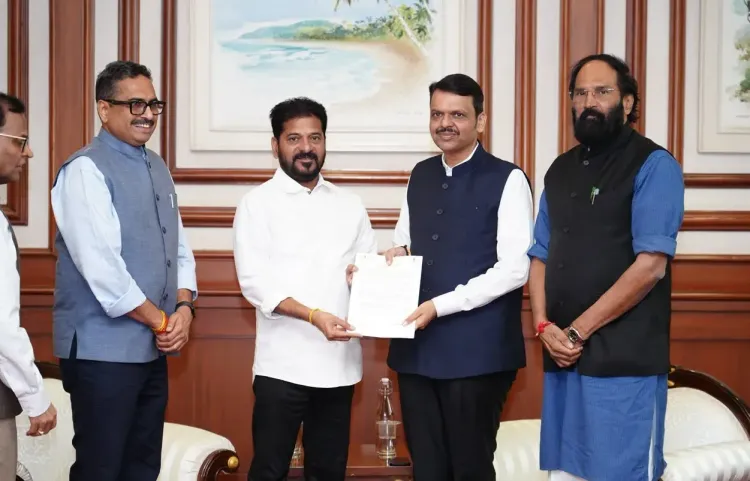
Synopsis
Telangana CM Revanth Reddy led a high-level delegation to Mumbai on October 26, meeting Maharashtra CM Devendra Fadnavis to seek an upward revision of the Tummidihatti Barrage height from 148 m to 152 m. Fadnavis responded positively and proposed a joint officials committee to study the proposal.
Key Takeaways
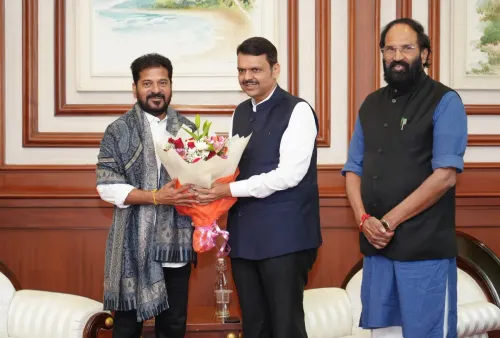
Telangana CM Revanth Reddy met Maharashtra CM Devendra Fadnavis at Sahyadri Guest House, Mumbai, on October 26, 2026 over the Tummidihatti Barrage.
Telangana is seeking to raise the barrage height from the 2016-agreed 148 metres to 152 metres to fully meet drinking and irrigation water needs in Adilabad.
Irrigation Minister Uttam Kumar Reddy presented the project's historical arc, tracing discussions back to the October 6, 1975 agreement between Jalagam Vengala Rao and S.
Telangana offered to compensate Maharashtra farmers for submerged agricultural land under Maharashtra's own land acquisition and compensation norms.
Fadnavis proposed a joint officials committee led by both states' irrigation secretaries, alongside continued Central Water Commission (CWC) technical studies.
Both CMs reaffirmed commitment to tribal and Adivasi welfare in undivided Adilabad, framing the barrage as a broader development catalyst for the backward border region.
Fifty years after the first agreement was signed on the banks of the Pranahita, Telangana Chief Minister Revanth Reddy walked into Sahyadri Guest House in Mumbai on Monday, October 26, 2026, with a single, overdue ask: raise the Tummidihatti Barrage height from 148 metres to 152 metres — and finally deliver water to one of India's most historically marginalised tribal belts.
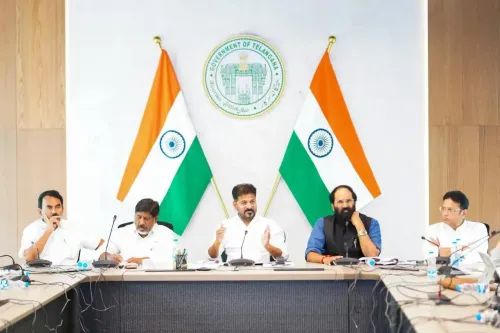
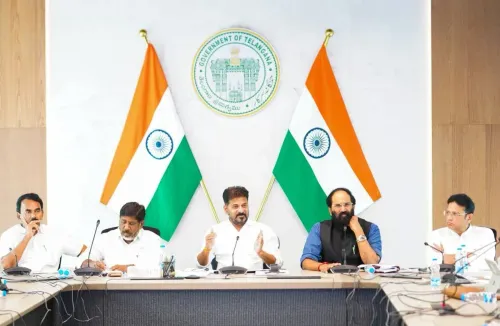
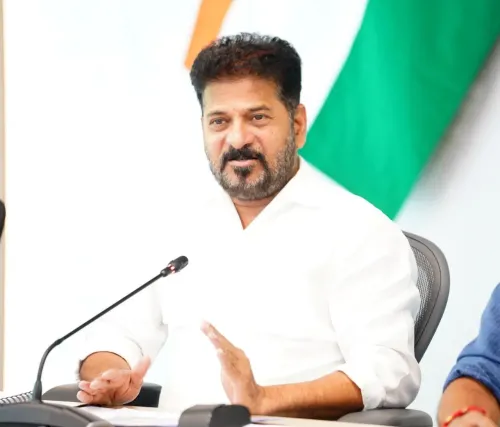
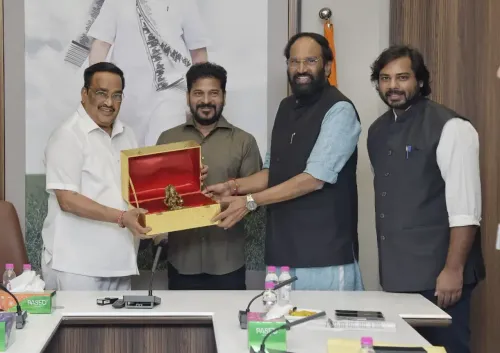
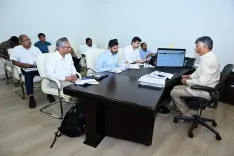
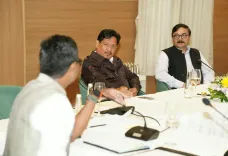
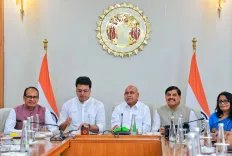
The Chief Minister's Office of Telangana confirmed that a high-level delegation led by CM Revanth Reddy met Maharashtra Chief Minister Devendra Fadnavis at the official guest house to advance discussions on the Tummidihatti Barrage on the Pranahita river, which forms the border between the two states. Irrigation Minister Uttam Kumar Reddy, the principal secretaries of both state governments, and senior irrigation officials from each side were present.
Five decades, one proposal — why 148 metres is not enough
Irrigation Minister Uttam Kumar Reddy opened the meeting with a structured presentation tracing the project's long, frustrating arc. The story begins on October 6, 1975, when then Andhra Pradesh Chief Minister Jalagam Vengala Rao and Maharashtra CM S. B. Chavan inked an agreement to bring Pranahita waters to the undivided Adilabad district. That pact was followed by five decades of proposals and discussions — and, in 2016, a fresh interstate agreement that fixed the barrage height at 148 metres.
The Telangana delegation's core argument: 148 metres is simply not high enough. At that elevation, the barrage cannot fully meet the region's drinking and irrigation water requirements. The state's case rests on gravity-flow economics — lifting water electrically adds enormous long-term operational costs. Raising the structure by just 4 metres, to 152 metres, unlocks gravity-based distribution, slashes energy expenditure, and accounts for climate variability in future water availability.
The minister also contextualised the human cost of delay. Undivided Adilabad, despite its rich cultural heritage, remains one of Telangana's most economically backward regions. Tribal and Adivasi communities have waited generations for basic irrigation and drinking water. The presentation drew a direct line between resource deprivation and the conditions that once gave rise to Naxalite activity in the region — echoing the 'jal, jungle, zameen' ('water, forest, land') movement championed by tribal icon Komaram Bheem.
Revanth Reddy's broader pitch: a barrage as a bridge
CM Revanth Reddy framed the barrage as far more than an irrigation structure. He invoked the shared history of the former Hyderabad State, reminding Fadnavis that Adilabad and Maharashtra's border districts share a centuries-old cultural bond. He called on both states to honour that bond through joint development of backward areas.
The CM also raised a strategic argument. A proposed defence and civil airport at Adilabad — if realised — would catalyse economic activity across the border districts of both states, improving transport connectivity and investment flows. The barrage, in this framing, is a development anchor for a region that national growth statistics have largely bypassed.
Telangana sweetened the proposal with a clear financial commitment: the state government is prepared to pay compensation, under Maharashtra's land acquisition rules and compensation norms, to all farmers whose agricultural land would be submerged on the Maharashtra side of the barrage.
Fadnavis responds — and proposes a joint officials committee
Maharashtra's CM responded warmly. Fadnavis acknowledged a personal connection to the border region — noting that his grandmother speaks Telugu — and said he had 'no objection' to revisiting the 148-metre agreement provided there was no adverse impact on Maharashtra and its people. He endorsed cooperation on Telangana's water needs and framed the engagement in terms of 'friendship and brotherhood between good neighbouring states.'
Critically, Fadnavis made a concrete institutional proposal: form a joint officials committee, led by the irrigation secretaries of both states, to comprehensively study the barrage height revision, water availability, submergence extent, compensation modalities, and all other technical parameters. He confirmed that the Central Water Commission (CWC) would continue its own independent technical and environmental studies on the project in parallel.
Both chief ministers agreed that the next steps include setting timelines for the committee's work, holding follow-up technical consultations, and preparing an actionable plan — with both reaffirming a joint commitment to the development of backward regions and tribal welfare.
What moves next on the Pranahita
The immediate deliverable from Mumbai is the constituted officials committee and its study mandate. The CWC's technical review runs alongside it. Any upward revision of the barrage height from 148 metres to 152 metres will require alignment between both state governments, central clearances, and resettlement planning for submerged Maharashtra villages — a process that, given the project's fifty-year history, will demand both political will and bureaucratic precision.
For Adilabad's tribal communities, the clock has been running since 1975. The question now is whether this meeting in Mumbai finally moves the needle — or joins the long list of discussions that promised water and delivered paperwork.
Point of View
Rather than a purely technical water dispute, reflects a deliberate broadening of the political argument to make rejection harder for Maharashtra. Fadnavis's warm response and proposal for a joint committee advances the process institutionally, but the committee mechanism has historically been where interstate water disputes slow down rather than resolve. The true test will be whether both states can agree on submergence estimates and compensation figures — the two variables that have derailed similar negotiations in the Godavari basin before.
NationPress
26 Oct 2026
Frequently Asked Questions
What is the Tummidihatti Barrage and why is it important for Telangana?
The Tummidihatti Barrage is a proposed structure on the Pranahita river at the Telangana-Maharashtra border, designed to provide irrigation and drinking water to the historically backward undivided Adilabad district and its tribal communities. Telangana considers it critical for the socio-economic development of one of its most marginalised regions.
Why does Telangana want to increase the barrage height from 148 m to 152 m?
Telangana argues that the 148-metre height agreed in 2016 cannot fully meet the region's drinking and irrigation water demands. Raising it to 152 metres enables gravity-based water distribution, reduces long-term energy costs, and accounts for future climate variability in water availability.
What was Maharashtra CM Fadnavis's response to Telangana's proposal?
Fadnavis responded positively, saying he had no objection to revisiting the 148-metre agreement provided there was no adverse impact on Maharashtra and its people. He proposed forming a joint officials committee led by both states' irrigation secretaries to study the height revision, submergence impact, and compensation issues.
What is the history of the Tummidihatti Barrage agreement between the two states?
The first agreement on harnessing Pranahita waters for the Adilabad region dates to October 6, 1975, between then Andhra Pradesh CM Jalagam Vengala Rao and Maharashtra CM S. B. Chavan. A subsequent interstate agreement in 2016 fixed the barrage height at 148 metres. Discussions have continued for five decades without full resolution.
What role will the Central Water Commission play in the Tummidihatti Barrage project?
The Central Water Commission (CWC) will conduct independent technical and environmental studies on the Tummidihatti project in parallel with the proposed joint officials committee of the two states. Its findings will be a key input before any final decision on revising the barrage height.