CM Chandrababu Reviews Cyclone Arnab Preparedness in AP

Synopsis
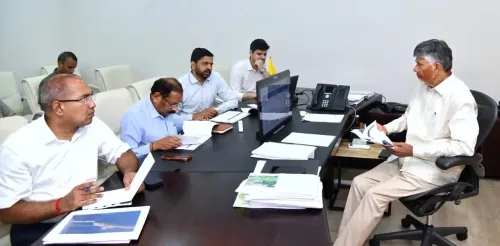
Chief Minister Chandrababu Naidu chaired an emergency review on Cyclone Arnab on 26 October 2026, ordering real-time storm tracking, public alerts, and flood-preparedness measures, with district collectors and police officials joining virtually.
Key Takeaways
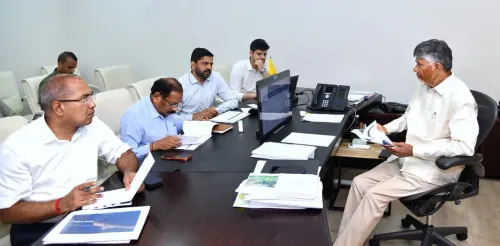
CM Nara Chandrababu Naidu chaired a high-level cyclone preparedness review on 26 October 2026 ahead of Cyclone Arnab .
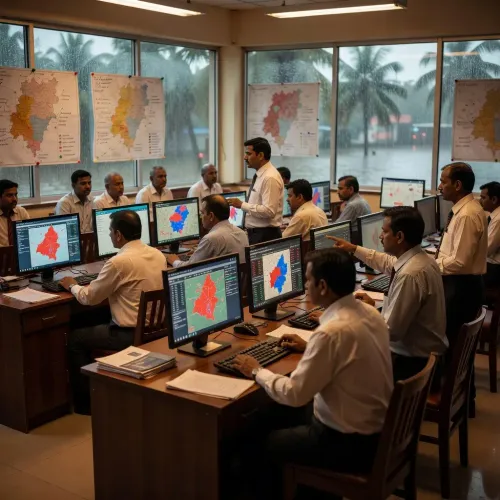
He directed officials to continuously monitor the cyclone's track, alert the public, and assess rain, wind, and flood threats proactively.
Principal Secretary Sai Prasad and RTGS and disaster management officials attended in person; district collectors and police joined virtually.
Andhra Pradesh's 974-km Bay of Bengal coastline makes it one of India's most cyclone-exposed states.
The review format mirrors the centralised inter-departmental model adopted during the 2014 Hudhud cyclone response.
Further action depends on evolving IMD track projections , with evacuation orders and shelter activation as possible next steps.
With Cyclone Arnab bearing down on the coast, Chief Minister Nara Chandrababu Naidu chaired an emergency preparedness review with senior officials on Monday, 26 October 2026, directing every arm of the state machinery to stay one step ahead of the storm.
What the CM ordered — and who was in the room
The Chief Minister's instructions were unambiguous: track the cyclone's movement in real time, keep citizens continuously alerted in proportion to the storm's intensity, and pre-emptively assess the combined threat of heavy rainfall, high winds, and flash flooding. The message was less a briefing and more a mobilisation order.
Principal Secretary to the Government of Andhra Pradesh, Sai Prasad, attended in person alongside officials from the Revenue and Disaster Management (RTGS) department. Senior officers from multiple departments, district collectors across the state, and police officials joined the session virtually — a format that ensured the chain of command stretched from the secretariat to the last coastal district in a single meeting.
Andhra Pradesh's long coastal exposure
Andhra Pradesh carries one of India's longest Bay of Bengal coastlines — roughly 974 kilometres — placing it squarely on the cyclone highway that activates, with brutal regularity, during the northeast monsoon season between October and December. The state has institutionalised exactly this kind of centralised, pre-landfall review after learning hard lessons from past storms.
Chandrababu Naidu oversaw the state's response to Cyclone Hudhud in October 2014, a Category-4 equivalent storm that devastated Visakhapatnam and tested every tier of disaster management. That experience forged the template still visible today: inter-departmental video conferences, district-level collector accountability, and police integration from the first alert. The 26 October review mirrors that architecture precisely.
The watch period ahead
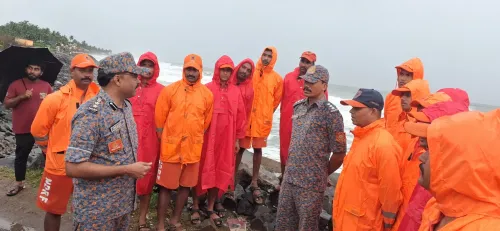
The India Meteorological Department's evolving track projections for Arnab will now govern the pace of ground-level action — whether that means pre-emptive evacuations of coastal villages, opening cyclone shelters, or mobilising the National Disaster Response Force. District collectors, already looped in, are the fulcrum: they translate the CM's directives into on-ground movement of people and resources within hours.
Andhra Pradesh's coastal communities have lived through enough cyclones to know that the window between a warning and landfall is everything. The state administration has signalled, clearly, that it does not intend to waste a minute of it.
Point of View
Not a monitoring exercise. The virtual inclusion of district collectors signals that accountability has been pushed all the way to the district level before the storm has even made landfall. For a state that experienced the catastrophic Hudhud cyclone under the same CM, this early activation is less optics and more institutional muscle memory. The real test, as always, will be the speed of last-mile communication to coastal fishing and farming communities in the hours that follow.
NationPress
26 Oct 2026
Frequently Asked Questions
What is Cyclone Arnab and where is it headed?
Cyclone Arnab is a weather system being tracked in the Bay of Bengal that has prompted alerts for Andhra Pradesh . Precise track projections are being updated in real time by the India Meteorological Department.
What did CM Chandrababu Naidu instruct during the cyclone review?
CM Naidu directed officials to continuously monitor the cyclone's movement, issue timely public alerts, and assess the potential severity of associated rainfall, winds, and flooding so that appropriate precautionary measures can be taken.
Who attended the cyclone preparedness meeting on 26 October 2026?
Principal Secretary Sai Prasad , RTGS and disaster management officials attended in person; senior departmental officers, district collectors, and police officials across Andhra Pradesh joined virtually.
Why is Andhra Pradesh particularly vulnerable to cyclones?
Andhra Pradesh has a coastline of roughly 974 kilometres along the Bay of Bengal, placing it directly on one of the most active cyclone tracks in the world, especially during the October–December northeast monsoon season.
What is the next step after this review?
Ground-level actions such as pre-emptive evacuations, opening of cyclone shelters, and NDRF deployment will be guided by updated IMD track forecasts , with district collectors responsible for implementing orders at the local level.