CM Revanth writes to Fadnavis on Tummidihetty Barrage height
Synopsis
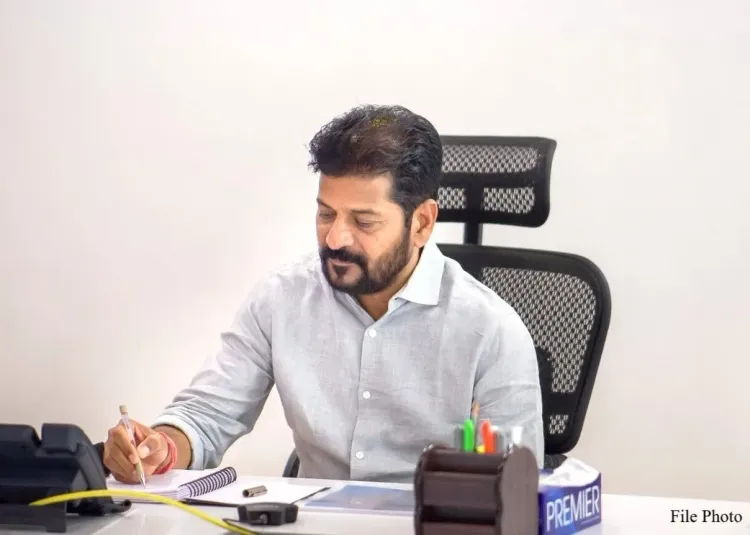
Telangana CM Revanth Reddy has written to Maharashtra CM Devendra Fadnavis requesting an inter-state meeting to revisit the Full Reservoir Level of the Tummidihetty Barrage, arguing that the 2016-agreed 148-metre height is insufficient for northern Telangana's irrigation and drinking-water needs.
Key Takeaways
CM Revanth Reddy has formally written to Maharashtra CM Devendra Fadnavis seeking a bilateral meeting on Tummidihetty Barrage height.
The barrage is part of the Dr B.R.
Ambedkar Pranahita–Chevella Sujala Sravanthi project, originally proposed at 152 metres and revised to 148 metres FRL in 2016 .
Maharashtra had agreed to the 148-metre FRL at the Inter-State Board meeting on 23 August 2016 .
Telangana experts now say 148 metres is inadequate for the irrigation and drinking-water needs of Adilabad, Nizamabad, Karimnagar , and Medak districts.
Telangana argues that a higher FRL would enable gravity-fed water supply and cause only minimal additional submergence in Maharashtra.
The next step is Maharashtra confirming a date for a technical delegation meeting.
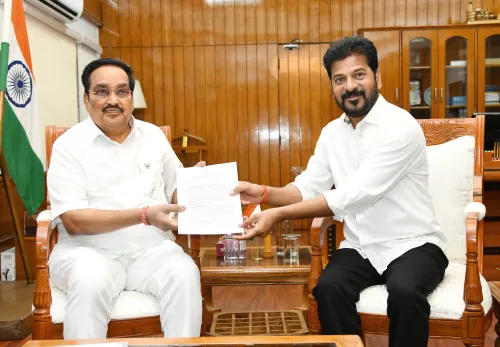
Hyderabad, 27 May 2026 — The Chief Minister's Office of Telangana announced on Wednesday that Chief Minister Revanth Reddy has written to Maharashtra Chief Minister Devendra Fadnavis seeking a bilateral meeting to renegotiate the height of the proposed Tummidihetty Barrage, a critical component of the Dr B.R. Ambedkar Pranahita–Chevella Sujala Sravanthi irrigation project. The letter requests that Maharashtra fix a convenient date at the earliest for a meeting with a Telangana government delegation.
Context
The Tummidihetty Barrage is the linchpin of the Pranahita–Chevella Sujala Sravanthi project, designed to lift water from the Pranahita river to meet irrigation and drinking-water needs across northern Telangana. The original proposal envisaged building the barrage at a height of 152 metres. At an Inter-State Board meeting on 23 August 2016, Maharashtra gave its consent for a revised Full Reservoir Level (FRL) of 148 metres and pledged to cooperate on necessary clearances.
The Telangana government has now decided to push for completion of the long-stalled project and has re-examined whether the 148-metre FRL is adequate for the state's water requirements.
Policy Backdrop
Expert assessments cited in CM Revanth Reddy's letter conclude that a 148-metre FRL is insufficient to meet north Telangana's irrigation and drinking-water demands. The letter argues that even a modest increase beyond 148 metres would have minimal submergence impact on Maharashtra's territory, while enabling Telangana to draw water through gravity flow — significantly reducing pumping costs and operational complexity.
Since Telangana's formation in 2014, water-sharing negotiations with Maharashtra over Godavari tributaries have remained a persistent challenge. Optimising reservoir levels for gravity supply while managing upstream submergence concerns has been a recurring tension in inter-state water diplomacy in the Godavari basin.
Stakeholders and Impact
The districts of Adilabad, Nizamabad, Karimnagar, and Medak stand to benefit most directly from a higher FRL, with improved access to both irrigation water for farmers and drinking water for communities. Northern Telangana has historically faced acute water scarcity, and the Pranahita–Chevella project was conceived specifically to address this deficit.
For Maharashtra, any upward revision in the FRL raises questions about submergence of upstream land. The Telangana government's position, as stated in the letter, is that the additional submergence would be limited and manageable — a technical claim that bilateral talks are expected to examine.
What's Next
The immediate focus is on Maharashtra CM Devendra Fadnavis confirming a date for the inter-state delegation meeting. Once a date is fixed, technical teams from both states are expected to review FRL options and their respective submergence and water-supply implications. A positive response from Maharashtra would mark a significant step toward reviving a project that has remained incomplete for years, with the outcome likely to shape irrigation planning across northern Telangana for decades.
Point of View
Revanth Reddy is converting a long-dormant technical dispute into an active inter-state diplomatic agenda — a signal that the Congress government in Telangana is serious about completing legacy irrigation projects before the next election cycle. The gravity-flow argument is strategically significant: if accepted, it would reduce the project's operating costs substantially and make it more fiscally defensible. Maharashtra's response will be closely watched, as agreeing to even a marginal FRL increase sets a precedent in Godavari-basin water politics. The move also allows Revanth Reddy to demonstrate proactive governance on an issue that directly affects farmer communities in politically sensitive northern Telangana districts.
NationPress
10 Oct 2026
Frequently Asked Questions
What is the Tummidihetty Barrage and why is it important?
The Tummidihetty Barrage is a proposed dam on the Pranahita river that forms the foundation of the Dr B.R. Ambedkar Pranahita–Chevella Sujala Sravanthi project, designed to supply irrigation and drinking water to northern Telangana districts including Adilabad, Nizamabad, Karimnagar, and Medak.
Why does Telangana want to change the barrage height agreed in 2016?
Telangana's expert assessments now indicate that the 148-metre Full Reservoir Level agreed at the 2016 Inter-State Board meeting is insufficient to meet north Telangana's water needs. A higher FRL would also allow gravity-fed water supply, reducing pumping costs.
What did Maharashtra agree to in 2016 regarding Tummidihetty Barrage?
At the Inter-State Board meeting on 23 August 2016, Maharashtra agreed to a 148-metre FRL for the Tummidihetty Barrage and committed to cooperating on necessary clearances for the project.
What is Telangana asking Maharashtra for now?
Telangana CM Revanth Reddy has written to Maharashtra CM Devendra Fadnavis requesting a meeting with a Telangana government delegation to discuss revising the barrage height above 148 metres, and has asked Maharashtra to confirm a convenient date at the earliest.
Which districts in Telangana will benefit from a higher Tummidihetty Barrage FRL?
The districts of Adilabad, Nizamabad, Karimnagar, and Medak are specifically cited in CM Revanth Reddy's letter as the primary beneficiaries, with both irrigation and drinking-water supply needs driving the push for a higher FRL.