Revanth Reddy, Naidu, Shivakumar Pledge Water Harmony at Tungabhadra
Synopsis
In a rare cross-party show of unity, Telangana CM Revanth Reddy, AP CM Chandrababu Naidu, and Karnataka Deputy CM D. K. Shivakumar met at the Tungabhadra Reservoir on 25 June 2026 to jointly commit to resolving inter-state water disputes through dialogue, with Union Minister C. R. Patil present.
Key Takeaways
Revanth Reddy , AP CM N.
Chandrababu Naidu , and Karnataka Deputy CM D.
Shivakumar met at the Tungabhadra Reservoir on 25 June 2026 .
Union Minister of Jal Shakti C.
Patil was present, giving the meeting central government backing.
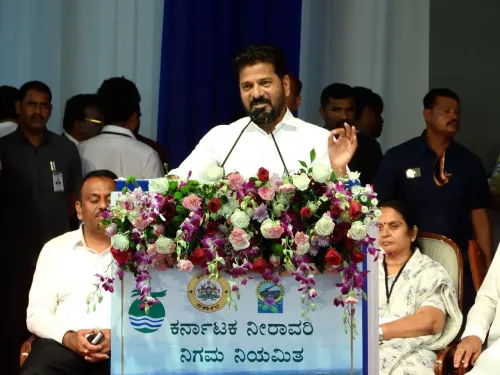
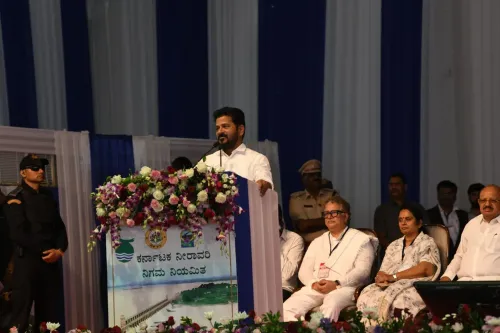
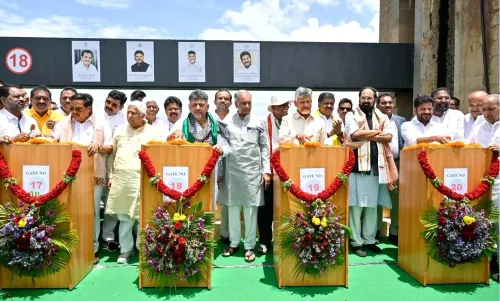
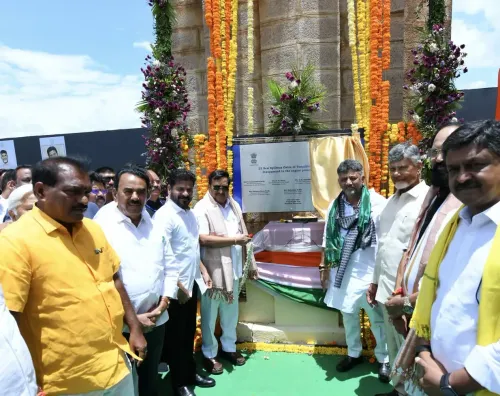
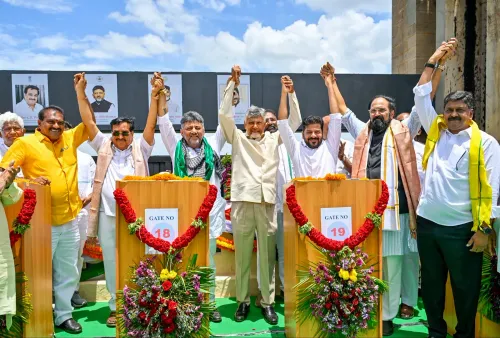
The occasion was the inauguration of 33 newly installed spillway gates at the Tungabhadra Reservoir.
All three leaders committed to resolving inter-state water concerns through 'mutual, amicable' discussions rather than litigation.
The meeting is significant because the three leaders represent different political parties — Congress (Telangana and Karnataka) and TDP (Andhra Pradesh) — bridging partisan divides on a historically contentious issue.
The Krishna basin water-sharing framework has been disputed since the 2014 bifurcation of Andhra Pradesh, making this cooperative signal a potentially important policy shift.
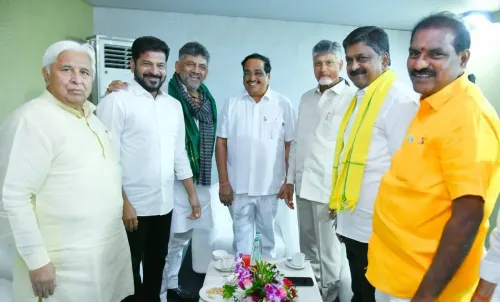
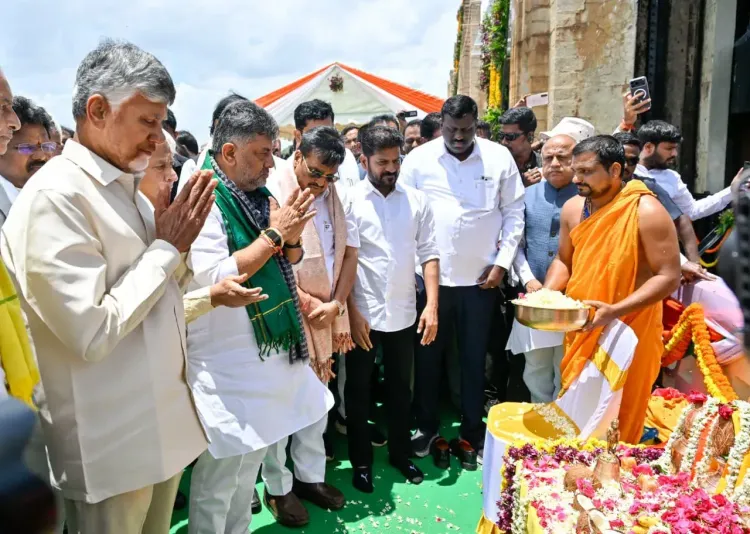
Telangana Chief Minister A. Revanth Reddy on Thursday, 25 June 2026, joined his counterparts from Karnataka and Andhra Pradesh at the Tungabhadra Reservoir to announce a landmark commitment to resolve inter-state water disputes through dialogue, marking a rare show of cross-party unity on one of southern India's most contentious governance challenges.
Context
The meeting brought together three chief ministers of sharply different political affiliations: D. K. Shivakumar, Karnataka's Deputy Chief Minister and senior Congress leader; N. Chandrababu Naidu, Chief Minister of Andhra Pradesh and Telugu Desam Party chief; and Revanth Reddy, representing Congress-governed Telangana. Union Minister of Jal Shakti C. R. Patil presided over the gathering as the central government's representative. The occasion was the inauguration of 33 newly installed spillway gates at the Tungabhadra Reservoir.
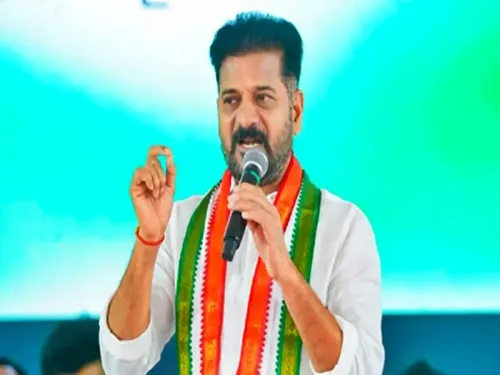
Revanth Reddy described the moment as a historic departure from entrenched patterns of litigation and rivalry. 'Water justice can be ensured with resolutions through discussions and talks. Together, we will ensure water and harmony can flow freely,' he wrote, summarising the joint resolve of all three leaders.
Policy Backdrop
The Tungabhadra Reservoir, built on the Tungabhadra river in Karnataka, is a critical node in the Krishna river basin, supplying irrigation water to large agricultural tracts in both Telangana and Andhra Pradesh. Water-sharing arrangements in this basin date to the Bachawat Tribunal award of 1976, which allocated shares among Maharashtra, Karnataka, and then-undivided Andhra Pradesh.
The bifurcation of Andhra Pradesh under the Andhra Pradesh Reorganisation Act, 2014 opened fresh disputes between the two successor states — Telangana and Andhra Pradesh — over their respective entitlements from the Krishna and Godavari systems. The Krishna River Management Board has since been the principal federal mechanism for coordinating releases, but inter-state tensions have persisted. The Jal Shakti Ministry and the Central Water Commission have periodically convened technical meetings on Tungabhadra operations, reflecting the reservoir's centrality to the dispute.
Stakeholders and Impact
The primary beneficiaries of any durable agreement are the farming communities across the Krishna basin — millions of cultivators in Rayalaseema and coastal Andhra Pradesh, the Kalyana Karnataka districts, and Telangana's irrigation-dependent districts who depend on timely and adequate water releases for kharif and rabi crops. Irrigation departments of all three states have long flagged the operational unpredictability caused by unresolved upstream-downstream disagreements.
The political optics are equally significant. The image of a Congress chief minister from Telangana, a Congress deputy chief minister from Karnataka, and a TDP chief minister from Andhra Pradesh standing together signals that water security may be emerging as an issue capable of transcending partisan competition. The presence of a central minister from the ruling BJP-led NDA government adds a further layer of federal consensus to the occasion.
What's Next
All three leaders resolved to 'move forward with a spirit of cooperation and ensure water justice for all farmers and people,' according to Revanth Reddy's post. Technical follow-up meetings on Tungabhadra water releases and reservoir management protocols are expected to be the immediate next step. Observers will watch for a formal memorandum or joint communiqué formalising the commitments made at the meeting, as well as any reference to the new understanding in the proceedings of the Krishna River Management Board. If the cooperative spirit holds, it could reduce the frequency of litigation-driven disputes that have historically stalled water-sharing implementation across southern India.
Point of View
And none can afford to be seen as the spoiler of a visible federal peace effort. By hosting the gathering under the Jal Shakti Ministry's umbrella, the central government has also positioned itself as a facilitator rather than an arbitrator, subtly shifting the dispute-resolution model from tribunal-driven litigation to executive negotiation. For Revanth Reddy specifically, the optics of standing alongside a rival-party chief minister underscores a pragmatic, governance-first posture that could pay dividends with the farming constituencies of Telangana. Whether this goodwill translates into enforceable water-sharing protocols will be the true test of the day's declarations.
NationPress
24 Sept 2026
Frequently Asked Questions
What was decided at the Tungabhadra Reservoir meeting on 25 June 2026?
The chief ministers of Telangana, Andhra Pradesh, and Karnataka — along with Union Minister of Jal Shakti C. R. Patil — resolved to settle inter-state water disputes through mutual dialogue and cooperation rather than litigation, pledging water justice for farmers across all three states.
Why is the Tungabhadra Reservoir important for Telangana and Andhra Pradesh?
The Tungabhadra Reservoir, located in Karnataka on the Krishna river tributary, supplies irrigation water to large farming areas in both Telangana and Andhra Pradesh. Disputes over its water releases have been a long-running source of tension since the bifurcation of Andhra Pradesh in 2014.
Who attended the Tungabhadra inter-state water meeting?
Telangana CM A. Revanth Reddy, Andhra Pradesh CM N. Chandrababu Naidu, Karnataka Deputy CM D. K. Shivakumar, and Union Minister of Jal Shakti C. R. Patil attended the meeting, which was held on the occasion of the inauguration of 33 new spillway gates at the reservoir.
What is the history of Krishna river water disputes between southern states?
Water-sharing in the Krishna basin was first adjudicated by the Bachawat Tribunal, which delivered its award in 1976. The 2014 bifurcation of Andhra Pradesh into Telangana and residual Andhra Pradesh created fresh disputes over Krishna and Godavari water entitlements, which the Krishna River Management Board has since tried to manage.
What will happen next after the Tungabhadra water agreement?
Technical follow-up meetings on water releases and reservoir management are expected. Observers are watching for a formal memorandum or joint communiqué, as well as any reflection of the new cooperative understanding in the proceedings of the Krishna River Management Board.