Tungabhadra water dispute: Telangana CM Revanth Reddy urges Centre for permanent fix
Synopsis
The Chief Ministers of Telangana, Andhra Pradesh, and Karnataka met at Hosapete in what Revanth Reddy called a 'Red Letter day' — but the numbers tell a harder story: Telangana is using barely a third of its 17.9 TMC Tungabhadra allocation, with 10 TMC stranded by unresolved disputes and silt. The inauguration of 33 new dam gates is a start, but a permanent fix remains elusive.
Key Takeaways
Revanth Reddy appealed to Union Jal Shakti Minister C.R.
Paatil on 25 June for a permanent resolution to the Tungabhadra river water sharing dispute.
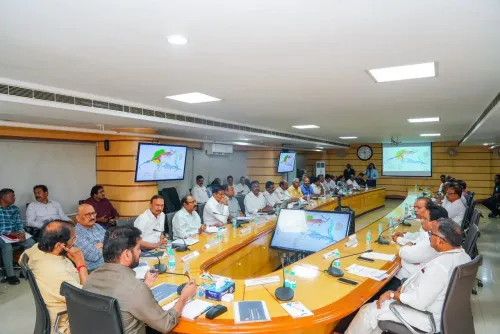
Chief Ministers of Telangana, Andhra Pradesh, and Karnataka met at Hosapete, Karnataka in a joint session chaired by the Union Minister.
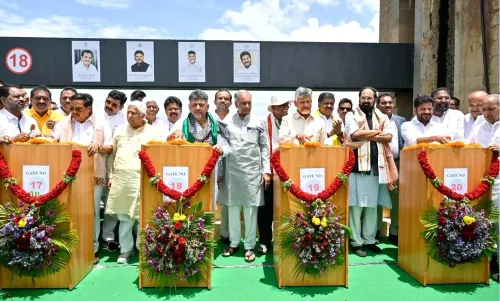
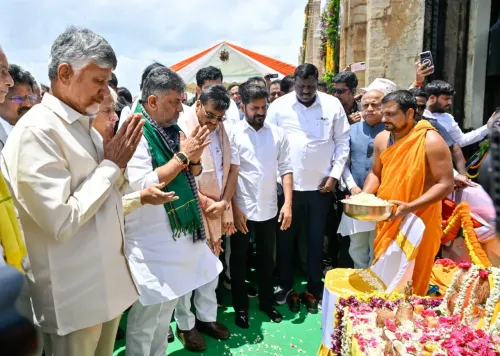
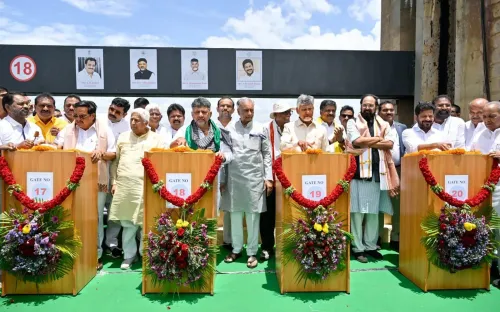
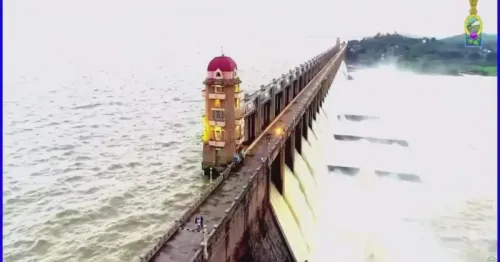
33 new gates were inaugurated at the Tungabhadra dam, described as a key step toward easing the water crisis for lakhs of farmers .
Telangana is using only 5-6 TMC of its allocated 17.9 TMC under the Rajolibanda Diversion Scheme ; another 10 TMC remains unused.
Silt accumulation and unresolved allocation disputes were flagged as key bottlenecks by the Telangana government.
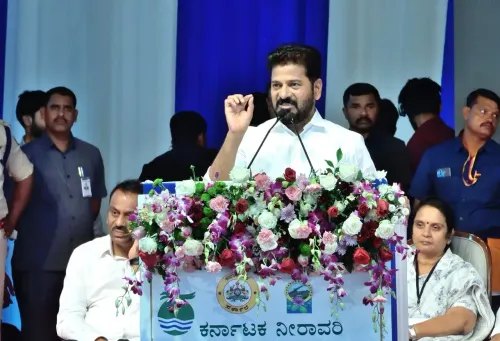
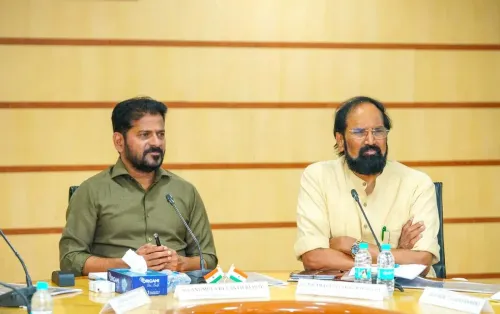
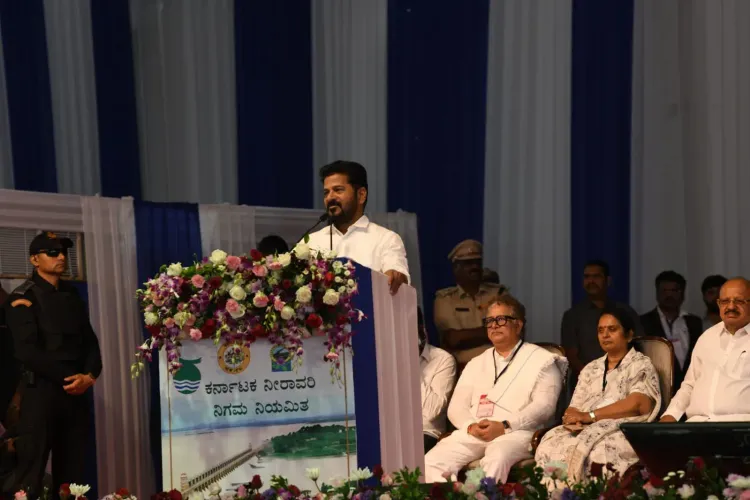
Telangana Chief Minister A. Revanth Reddy on Thursday, 25 June appealed to Union Jal Shakti Minister C.R. Paatil to expeditiously find a permanent resolution to the long-standing inter-state water sharing dispute over the Tungabhadra river. Revanth Reddy made the appeal at a public meeting in Hosapete, Karnataka, held on the occasion of the inauguration of newly-installed gates at the Tungabhadra dam.
A Historic Gathering on the Banks of the Tungabhadra
Chief Minister Revanth Reddy described the occasion as a 'Red Letter day', noting that the Chief Ministers of three states — Telangana, Andhra Pradesh, and Karnataka — attended a meeting chaired by Union Minister Paatil to discuss the Tungabhadra water sharing issue. He called it the first step toward an amicable resolution of a dispute that has long affected farmers across the three states.
Speaking at the event, Revanth Reddy stressed that all political forces must rise above partisan considerations in the interest of farmers. 'It was a momentous occasion that the discussions on water sharing issue were held on the banks of the Tungabhadra river,' he said, expressing hope that the meeting would pave the way for a lasting settlement.
New Gates at Tungabhadra Dam: A Practical Step Forward
The inauguration of 33 new gates at the Tungabhadra dam was cited by Revanth Reddy as a significant initiative to address the water sharing dispute at a practical level. He argued the new infrastructure would directly alleviate the hardship of lakhs of farmers dependent on the river's waters.
Drawing a historical parallel, the Chief Minister noted that even the Mysore Kings had set aside their disputes to find solutions for farmers — a reference intended to underscore the need for similar statesmanship today.
Telangana's Allocation Gap: Only 5-6 TMC of 17.9 TMC Used
Revanth Reddy highlighted a critical gap in water utilisation, stating that Telangana farmers have been able to use only 5 to 6 TMC of the 17.9 TMC allocated to the state under the Rajolibanda Diversion Scheme (RDS), which serves the Gadwal, Alampur, and Palamuru regions. He noted that another 10 TMC of the state's allocation remains unused due to various unresolved issues.
According to the Chief Minister's Office (CMO), Revanth Reddy had already brought the problems of silt accumulation in the Tungabhadra river and water allocation disputes to the Union Minister's attention ahead of the meeting.
Call for Consensus Over Conflict
Revanth Reddy urged all stakeholders to prioritise finding solutions over perpetuating disputes. 'We resolved to find a permanent solution to the water crisis in the meeting,' he said. The Chief Minister emphasised that the welfare of farmers across Telangana, Andhra Pradesh, and Karnataka must take precedence over political rivalries.
With the three-state meeting now concluded and new dam infrastructure in place, attention turns to whether the Centre will formalise a mechanism to resolve the allocation shortfall and silt-related bottlenecks that have left a significant portion of Telangana's water entitlement unused.
Point of View
But symbolism has rarely moved water policy in India. The more telling detail is that Telangana is accessing barely a third of its own Tungabhadra allocation — a failure of infrastructure and inter-state coordination, not just political will. Until the silt problem is addressed with a binding timeline and the RDS shortfall is formally remedied, the 33 new gates risk being a photo-op rather than a turning point. The Centre's next move — whether it convenes a formal tribunal review or lets this lapse into another round of state-level grievances — will determine whether this 'Red Letter day' becomes a footnote or a genuine inflection.
NationPress
24 Sept 2026
Frequently Asked Questions
What is the Tungabhadra inter-state water dispute about?
The Tungabhadra river water dispute involves the allocation and utilisation of river water among Telangana, Andhra Pradesh, and Karnataka. Key issues include silt accumulation in the river, underutilisation of allocated water, and disagreements over sharing arrangements under schemes such as the Rajolibanda Diversion Scheme.
Why did Telangana CM Revanth Reddy visit Hosapete?
Revanth Reddy attended the inauguration of 33 newly-installed gates at the Tungabhadra dam in Hosapete, Karnataka, on 25 June. The event also served as the venue for a three-state meeting chaired by Union Jal Shakti Minister C.R. Paatil on the water sharing dispute.
How much Tungabhadra water is Telangana currently using?
According to Revanth Reddy, Telangana farmers are using only 5 to 6 TMC of the state's allocated 17.9 TMC under the Rajolibanda Diversion Scheme. Another 10 TMC of the allocation remains unused due to unresolved disputes and infrastructure issues.
What is the Rajolibanda Diversion Scheme?
The Rajolibanda Diversion Scheme (RDS) is a water diversion project that provides Tungabhadra river water to the Gadwal, Alampur, and Palamuru regions of Telangana. Telangana has an allocation of 17.9 TMC under this scheme, but structural and inter-state issues have severely limited actual utilisation.
What is the significance of the 33 new gates at Tungabhadra dam?
The inauguration of 33 new gates at the Tungabhadra dam is seen as a practical infrastructure step to improve water management and distribution from the dam. Chief Minister Revanth Reddy said the new gates would help address the hardship of lakhs of farmers dependent on the river across the three states.