CM Revanth Seeks Centre's Help on Tungabhadra Water Share
Synopsis
Chief Minister Revanth Reddy has called on the Centre to intervene on Telangana's 15.9 TMC Tungabhadra entitlement, flagging a shortfall to five-six TMC, structural risks at the RDS anicut, and unimplemented 2004 desilting recommendations, ahead of a tripartite Jal Shakti meeting.
Key Takeaways
Telangana is entitled to 15.9 TMC from the Tungabhadra Dam and river but is reportedly receiving only five to six TMC .
The shortfall threatens irrigation of 83,987 acres across 75 villages in Jogulamba Gadwal district under the Rajolibanda Diversion Scheme.
Telangana has already deposited Rs.
59 crore for RDS canal modernisation, but Packages 1 and 2 remain unstarted.
A 2004 expert committee recommendation on desilting has not been implemented; siltation on the Telangana side is blocking water diversion.
CM Revanth Reddy will raise all pending issues at a tripartite meeting chaired by the Union Jal Shakti Minister with the CMs of Telangana, Andhra Pradesh, and Karnataka.
The Tungabhadra Board is to be strengthened under Central Water Commission leadership for better interstate water management.
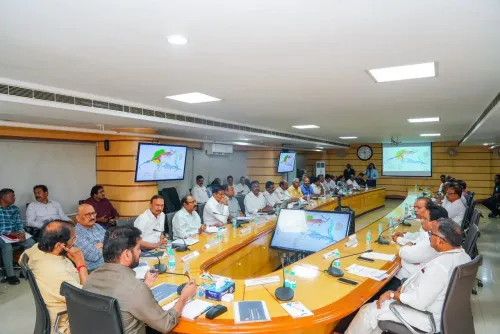
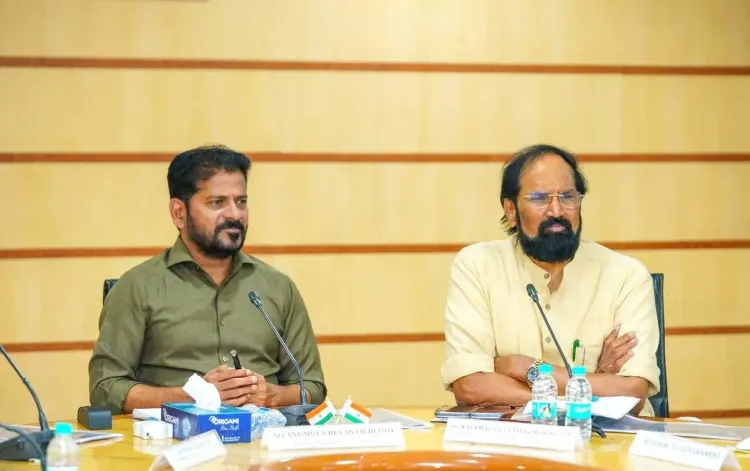
Hyderabad, June 24: The Chief Minister's Office of Telangana announced on Wednesday that Chief Minister Revanth Reddy has formally urged the Central Government to intervene in securing Telangana's rightful share of Tungabhadra waters and to coordinate with partner states for their effective utilisation. The announcement followed a high-level review chaired by CM Revanth Reddy at Jalasoudha, the state's irrigation headquarters in Hyderabad.
Context
The Chief Minister's Office stated that Telangana is entitled to 15.9 TMC (thousand million cubic feet) of water from the Tungabhadra Dam and river flows as a matter of right, but actual receipts have reportedly fallen to five to six TMC — a shortfall that CM Revanth Reddy described as a serious concern. The deficit directly affects the Rajolibanda Diversion Scheme (RDS), which is meant to irrigate 83,987 acres of ayacut across approximately 75 villages in Jogulamba Gadwal district.
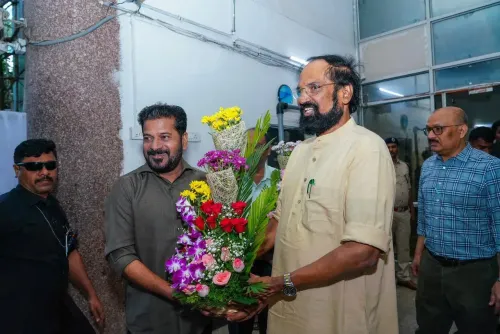
The review meeting at Jalasoudha was attended by Ministers Uttam Kumar Reddy and Jupally Krishna Rao, MP Dr. Mallu Ravi, Government Advisors AP Jithender and Aditya Nath Das, along with senior officials of the Irrigation Department.
Policy Backdrop
The Tungabhadra Board, a statutory body under the Central Water Commission (CWC), oversees the operation and maintenance of the shared Tungabhadra project among Telangana, Andhra Pradesh, and Karnataka. CM Revanth Reddy urged that the Tungabhadra Board be strengthened under CWC leadership to ensure efficient utilisation of water shares by all three states. The original allocation framework traces back to the Krishna Water Disputes Tribunal award of 1976, and Telangana has been pressing for its due share since the 2014 bifurcation of Andhra Pradesh.
Officials also flagged that the RDS anicut has become structurally unsafe, and CM Revanth Reddy directed that safety-related works be identified and treated as urgent priority. The Telangana government has already deposited Rs. 59 crore for modernisation of the Rajolibanda Diversion Canal, but works remain incomplete. Officials informed the Chief Minister that Packages 1 and 2 of the modernisation works are yet to begin, while Packages 3 and 4 have been completed.
A 2004 expert committee had recommended desilting of the Tungabhadra reservoir on the Telangana side. Those recommendations remain unimplemented to date. Engineers at the review noted that heavy siltation on the Telangana-facing side of the RDS has severely restricted water diversion. Since the silt-affected land lies in Karnataka, the Chief Minister decided to seek that state's cooperation for desilting operations.
Stakeholders and Impact
The most immediate impact is felt by farmers across 75 villages in Jogulamba Gadwal district whose 83,987 acres of irrigated land depend on RDS flows. Reduced Tungabhadra diversions have left these farmers with inadequate water for their crops, threatening livelihoods in one of Telangana's agriculturally significant districts.
CM Revanth Reddy also directed officials to explore alternatives to maximise water use through the Tungabhadra Lift Irrigation Scheme and instructed that the capacity of the Mallammakunta Balancing Reservoir — critical for utilising flows from Tummilla — be enhanced at the earliest.
What's Next
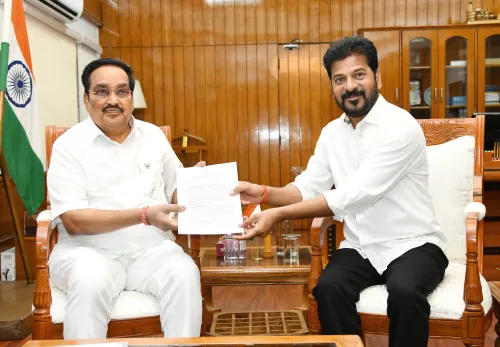
The Chief Minister decided that the stalled Packages 1 and 2 works, the desilting issue, and the implementation of the 2004 expert committee recommendations will be raised prominently at a tripartite meeting scheduled for the following day under the chairmanship of the Union Jal Shakti Minister, involving the Chief Ministers of Telangana, Andhra Pradesh, and Karnataka. The Irrigation Department has been instructed to prepare a comprehensive report analysing the ground situation against the 2004 committee's findings. A formal representation will also be submitted to the Central Government seeking immediate desilting action and implementation of pending technical recommendations.
Point of View
Where institutional frameworks have struggled to keep pace with the realities of a divided Andhra Pradesh. By foregrounding both the structural decay of the RDS anicut and the two-decade lag in implementing expert recommendations, CM Revanth Reddy is building a multi-pronged case — technical, administrative, and political — ahead of the tripartite meeting. The Rs. 59 crore already deposited by Telangana for canal modernisation strengthens the state's moral claim that it has fulfilled its obligations while central and interstate coordination has lagged. The outcome of the Jal Shakti Minister-chaired meeting will be a key test of whether the Centre is prepared to exercise its mediating authority in one of South India's most contested river-sharing arrangements.
NationPress
23 Sept 2026
Frequently Asked Questions
What is Telangana's share of Tungabhadra water?
Telangana is entitled to 15.9 TMC of water from the Tungabhadra Dam and river flows as a matter of right, but the state has reportedly been receiving only around five to six TMC in recent times.
What is the Rajolibanda Diversion Scheme (RDS)?
The Rajolibanda Diversion Scheme (RDS) is an interstate irrigation project that diverts Tungabhadra waters to serve approximately 83,987 acres of ayacut across 75 villages in Telangana's Jogulamba Gadwal district , as well as parts of Andhra Pradesh's Kurnool district.
Why is the Tungabhadra Board meeting being called?
A tripartite meeting chaired by the Union Jal Shakti Minister involving the Chief Ministers of Telangana, Andhra Pradesh, and Karnataka has been scheduled to address pending RDS modernisation work packages, desilting of the Tungabhadra reservoir, and Telangana's water share shortfall.
What is the status of RDS canal modernisation works?
Telangana has deposited Rs. 59 crore for modernisation of the Rajolibanda Diversion Canal, but Packages 1 and 2 are yet to begin, while Packages 3 and 4 have been completed.
What did the 2004 expert committee recommend for Tungabhadra?
A 2004 expert committee recommended removal of silt that has accumulated on the Telangana-facing side of the Tungabhadra reservoir near the RDS, but those recommendations have not been implemented as of the June 2026 review meeting.