Gadkari salutes Quit India Movement on August Kranti Diwas
Synopsis
On August Kranti Diwas, Union Minister Nitin Gadkari saluted the martyrs of the 1942 Quit India Movement, recalling Mahatma Gandhi's historic call for British withdrawal and honouring those who sacrificed everything for India's independence.
Key Takeaways
Union Minister Nitin Gadkari posted a tribute on August Kranti Diwas , observed on 9 August each year.
The Quit India Movement was launched on 8 August 1942 under Mahatma Gandhi's leadership, demanding immediate British withdrawal from India.
The movement, also called the August Revolution , was the most sweeping mass uprising of India's independence struggle.
Gadkari's tribute bows to the 'immortal martyrs' who sacrificed everything for the country's freedom.
Senior Indian political figures across party lines routinely mark August Kranti Diwas with public tributes to the freedom struggle.
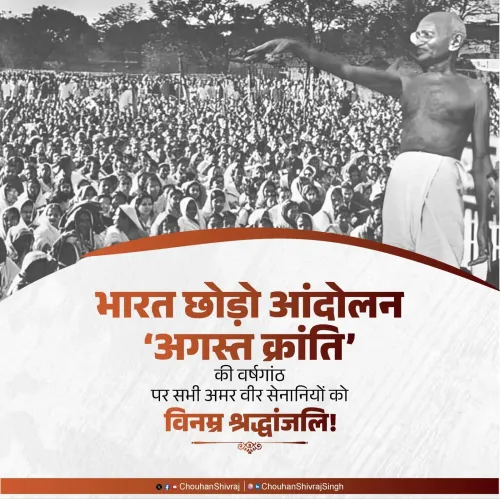
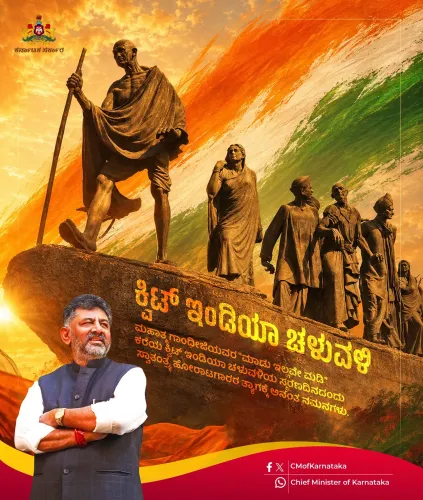
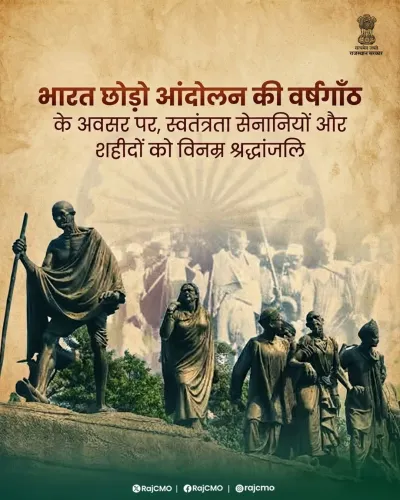
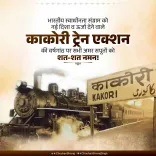
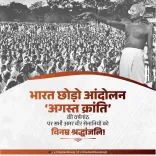
Eighty-four years ago on this date, a single call — 'Karo ya Maro' (Do or Die) — shook the foundations of British rule and set a billion futures in motion. On August Kranti Diwas, Union Road Transport and Highways Minister Nitin Gadkari paid tribute to the martyrs of the Quit India Movement, honouring those who gave everything for India's freedom.
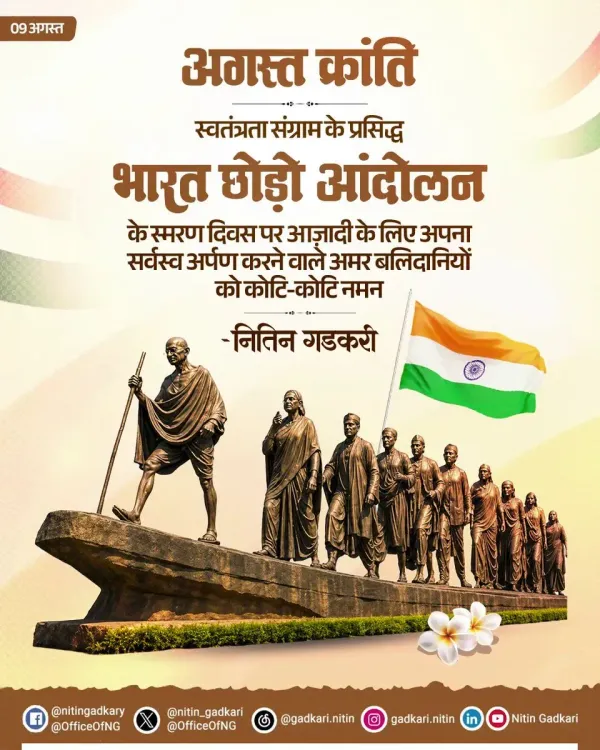
In his post, Gadkari wrote: 'On this very day in 1942, under the leadership of Mahatma Gandhi, the people of India launched the Quit India Movement against the British. On the occasion of this famous August Kranti Diwas of the freedom struggle, I bow a hundred times to the immortal martyrs who sacrificed everything for independence.'
The movement that changed everything
The Quit India Movement — launched on 8 August 1942 at the Bombay session of the All India Congress Committee — was unlike anything that had come before it. Gandhi's demand was blunt and total: immediate British withdrawal from India. The British responded with mass arrests within hours, detaining Gandhi and virtually the entire Congress leadership. What followed was a spontaneous, leaderless uprising across the country — students, farmers, and workers taking to the streets, cutting telegraph wires, and disrupting colonial infrastructure. It was the most decisive mass rebellion of the independence era.August Kranti Diwas and the politics of remembrance
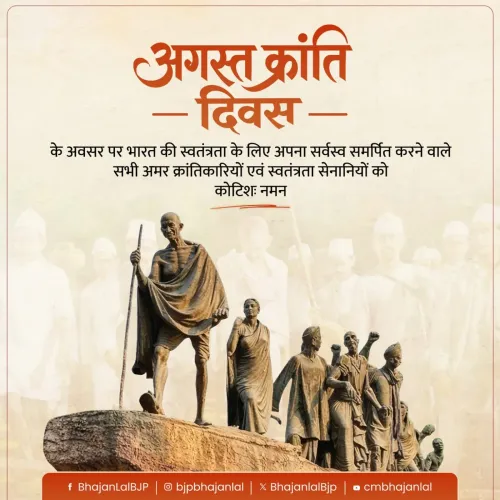
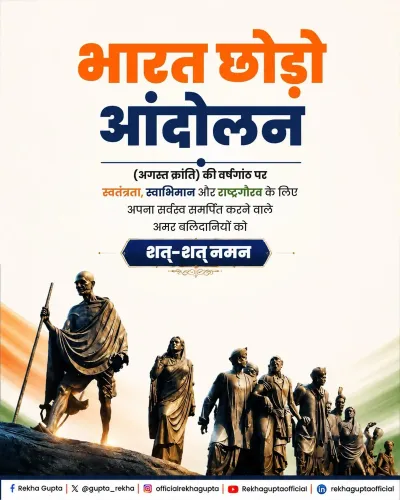
The 9th of August is observed annually as August Kranti Diwas — August Revolution Day — a moment when India's political class, across party lines, pauses to acknowledge the debt owed to those who never saw the freedom they fought for. Gadkari's tribute fits a consistent pattern of senior government figures using the occasion to reinforce the national memory of the independence struggle and the values it carried. For a generation that inherited a free India, the Quit India Movement is more than a history chapter — it is a reminder that the country's sovereignty was purchased at an enormous human cost, by ordinary people who made extraordinary choices. The immortal martyrs of 1942 asked for nothing but a free India. The least the free India can do is remember their names.Frequently Asked Questions
What is August Kranti Diwas?
August Kranti Diwas, or August Revolution Day, is observed on 9 August every year to commemorate the launch of the Quit India Movement in 1942 , when Mahatma Gandhi called for immediate British withdrawal from India.
When was the Quit India Movement launched?
The Quit India Movement was officially launched on 8 August 1942 at the All India Congress Committee session in Bombay, with Gandhi issuing his famous 'Do or Die' call.
What did Nitin Gadkari say on August Kranti Diwas?
Union Minister Nitin Gadkari posted a tribute recalling that on this day in 1942 , Indians under Mahatma Gandhi's leadership began the Quit India Movement, and offered his respects to the immortal martyrs who sacrificed everything for independence.
Why is the Quit India Movement historically significant?
The Quit India Movement was the most decisive mass uprising against British colonial rule, triggering a spontaneous nationwide rebellion even after the British arrested Gandhi and the entire Congress leadership within hours of the call.
Who led the Quit India Movement?
Mahatma Gandhi led the Quit India Movement, issuing the call at the 1942 Bombay session of the All India Congress Committee, though the uprising continued in a leaderless, decentralised form after his arrest.