Amit Shah Marks Quit India Day, Invokes 'Do or Die' for Viksit Bharat
Synopsis
Union Home Minister Amit Shah marked the 84th anniversary of the Quit India Movement on 9 August 2026, saluting freedom fighters who answered Gandhi's 'Do or Die' call and urging citizens to channel that resolve into building an Atmanirbhar and Viksit Bharat.
Key Takeaways
The Quit India Movement was launched on 9 August 1942 after Mahatma Gandhi's 'Do or Die' call on 8 August 1942.
Union Home Minister Amit Shah paid tribute to all freedom fighters who sacrificed everything in the independence struggle.
Shah explicitly linked the 1942 spirit of swadeshi to the Atmanirbhar Bharat Abhiyan , announced in May 2020 .
The Viksit Bharat vision targets a fully developed Indian economy by 2047 , the centenary of independence.
The tribute carries no new policy announcement but reinforces the BJP's consistent framing of current self-reliance goals as heirs to the freedom struggle.
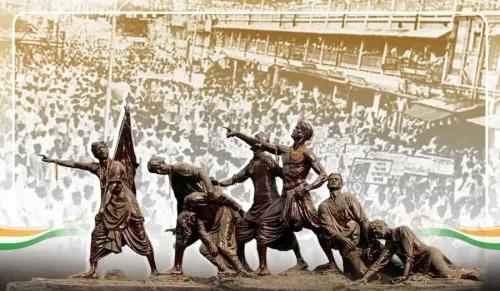
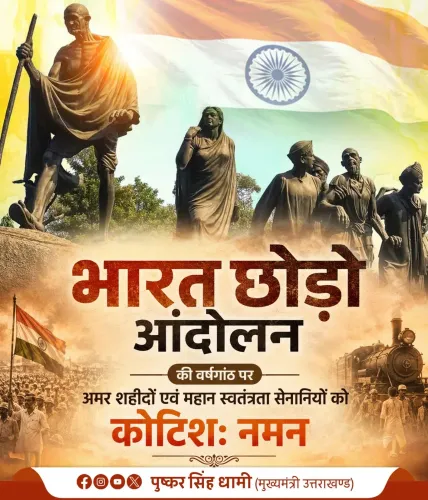
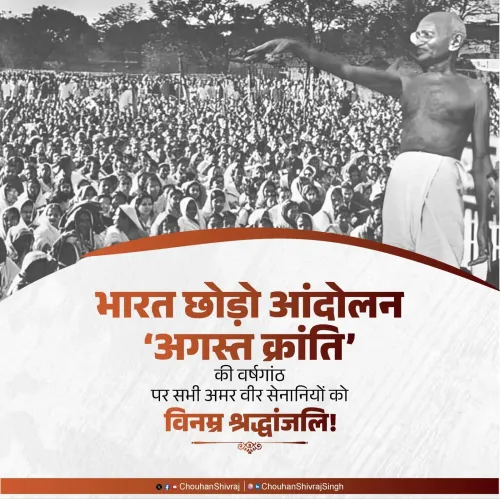
Eighty-four years after Mahatma Gandhi electrified a nation with the words 'Karo ya Maro' — Do or Die — Union Home Minister Amit Shah on Sunday, 9 August 2026 paid tribute to the freedom fighters of the Quit India Movement, drawing a direct line from that 1942 resolve to India's present-day ambitions of self-reliance and developed-nation status.
In his post, Shah saluted all freedom fighters who gave everything in the struggle for independence, calling the Quit India Movement the historic chapter that united the country and gave it the courage to demand liberation from British rule. 'This day of August Kranti,' he wrote, 'inspires us to place national interest above all, embrace swadeshi, build an Atmanirbhar Bharat, and realise the vision of Viksit Bharat.'
The 1942 Uprising That Changed the Equation
The Quit India Movement was formally launched on 9 August 1942 by the Indian National Congress under Mahatma Gandhi, a day after Gandhi issued his thunderous call to action on 8 August 1942. The movement triggered mass arrests, widespread civil disobedience, and a wave of defiance that significantly intensified pressure on the British administration. It remains one of the most consequential mass mobilisations in Indian history — a moment when ordinary citizens, not just political leaders, became the engine of change.
From 'Do or Die' to Atmanirbhar Bharat
Atmanirbhar Bharat Abhiyan, announced by Prime Minister Narendra Modi in May 2020, is the government's flagship self-reliance campaign aimed at boosting domestic manufacturing and reducing India's dependence on imports. Shah's post explicitly connects the spirit of 1942 — rejecting foreign economic and political dominance — to this contemporary programme, framing swadeshi not as nostalgia but as live national policy.
The companion vision of Viksit Bharat — a developed India by 2047, the centenary of independence — has become a recurring anchor in official messaging. Invoking both on August Kranti Diwas is a deliberate rhetorical move: it positions present economic goals as the fulfilment of a promise made on the streets of 1942.
A BJP Pattern on Independence Anniversaries
Ruling party leaders routinely mark independence-movement anniversaries by threading historical anti-colonial resolve into current policy priorities. The framing is consistent: the sacrifice of 1942 obligates the present generation to build, manufacture, and compete — not merely to remember. Shah's tribute fits squarely in that tradition, adding no new policy announcement but reinforcing the ideological continuity the party seeks to project between the freedom struggle and its governance agenda.
As Independence Day on 15 August approaches, expect this narrative — self-reliance as the true heir of 1942 — to grow louder from official platforms. The question the anniversary always poses is the same one Gandhi posed: what, exactly, are you willing to sacrifice for the nation you say you love?
Point of View
The party frames economic nationalism not as policy choice but as patriotic obligation. The move is rhetorically effective precisely because it is historically grounded: the Quit India Movement genuinely did demand rejection of foreign goods and self-sufficiency. What it elides is that Gandhi's swadeshi was a tool of political resistance, while the current programme operates in a globalised trade environment — a distinction the anniversary's emotional weight tends to obscure.
NationPress
9 Aug 2026
Frequently Asked Questions
What is the Quit India Movement and why is 9 August significant?
The Quit India Movement was a mass anti-colonial uprising launched on 9 August 1942 by the Indian National Congress under Mahatma Gandhi, a day after Gandhi issued his historic 'Do or Die' call. It is commemorated annually as August Kranti Diwas (August Revolution Day).
What did Amit Shah say on Quit India Movement Day 2026?
Amit Shah saluted all freedom fighters who gave everything in the independence struggle and said the day inspires Indians to embrace swadeshi , build an Atmanirbhar Bharat, and realise the Viksit Bharat vision.
What is Atmanirbhar Bharat and when was it launched?
Atmanirbhar Bharat Abhiyan is a self-reliance campaign announced by Prime Minister Narendra Modi in May 2020 , aimed at boosting domestic manufacturing and reducing dependence on imports.
What is the Viksit Bharat vision?
Viksit Bharat is the government's goal to make India a fully developed economy by 2047 , coinciding with the centenary of Indian independence, and is a central theme in official policy messaging.
Why do BJP leaders invoke the Quit India Movement?
Ruling BJP leaders routinely mark independence-movement anniversaries to connect the historical anti-colonial resolve of 1942 with present-day priorities of economic self-reliance and indigenous production, framing current policy goals as the fulfilment of the freedom fighters' sacrifice.