Quit India Movement 1942: Modi, Shah, Yogi pay tribute on August Revolution Day
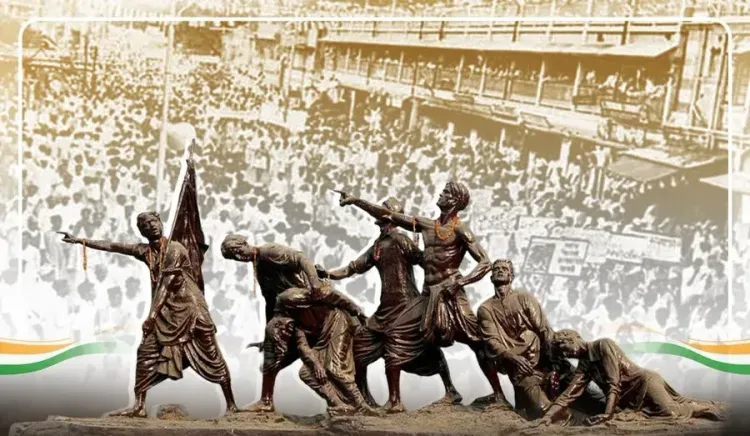
Synopsis
On the 83rd anniversary of the Quit India Movement, India's top political leadership — PM Modi, Home Minister Shah, and UP CM Yogi — invoked Gandhi's 'Do or Die' call, connecting the 1942 mass uprising to the present government's Atmanirbhar Bharat and Viksit Bharat vision. The tributes signal how deeply the August Revolution remains woven into India's national political identity.
Key Takeaways
PM Narendra Modi paid tribute to Quit India Movement participants on 9 August 2025 , calling their courage a lasting inspiration for Indians.
Home Minister Amit Shah linked the movement's 'Do or Die' spirit to the goals of Atmanirbhar Bharat and Viksit Bharat .
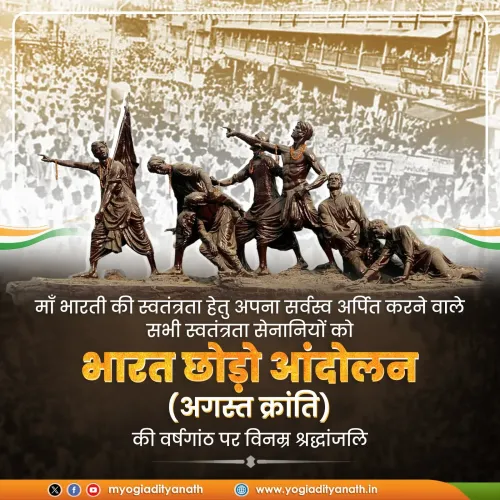
UP CM Yogi Adityanath honoured freedom fighters who 'dedicated their all' to ending colonial rule.
The Quit India Movement was launched on 8 August 1942 in Bombay after the All India Congress Committee adopted the resolution at Mahatma Gandhi's call.
Gandhi's historic 'Do or Die' call triggered nationwide protests, strikes, and civil resistance, drawing participation across class and regional lines.
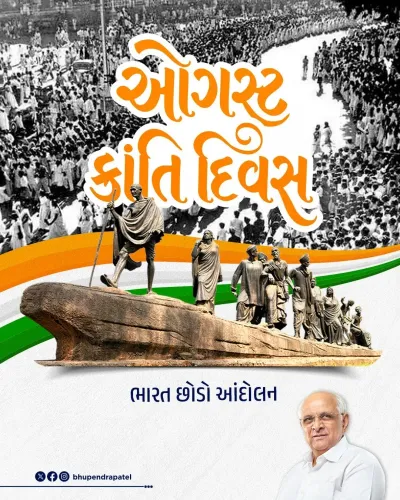
9 August is observed annually as August Kranti Diwas across India.
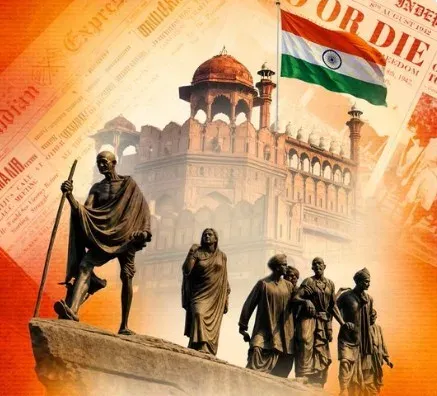
Prime Minister Narendra Modi on Sunday, 9 August 2025, paid solemn tribute to the freedom fighters who participated in the historic Quit India Movement, saying their courage and sacrifice will continue to inspire generations of Indians. The occasion marks the August Revolution Day, commemorating the launch of the movement on 8 August 1942, when Mahatma Gandhi issued his legendary 'Do or Die' call from Bombay.
PM Modi's Tribute on X
In a post on social media platform X, Prime Minister Modi recalled the movement's transformative role in India's independence struggle. 'Remembering all those who participated in the historic Quit India Movement. Their courage will always remain an inspiration for every Indian. Inspired by the leadership of Mahatma Gandhi Ji, the clarion call of Quit India infused new energy into our freedom struggle and reflected the unwavering determination of our people to break free from colonial rule,' Modi wrote.
The Prime Minister's tribute underscores the enduring political and cultural resonance of the movement, which remains one of the most significant mass uprisings in the final phase of British colonial rule in India.
Home Minister Shah's Message
Union Home Minister Amit Shah also paid homage to the freedom fighters, highlighting the movement's role in uniting Indians under a single, resolute spirit. In his post on X, Shah described the Quit India Movement as 'that historic chapter of our freedom struggle which united the countrymen and instilled in them the resolve of 'Do or Die' and indomitable courage to break free from British rule.'
Shah further said the anniversary of the August Revolution should inspire citizens to prioritise national interests — by promoting indigenous practices, building an Atmanirbhar Bharat, and working toward the vision of a Viksit Bharat. The framing connects a historical milestone to the current government's policy agenda.
UP CM Yogi Adityanath Remembers the Martyrs
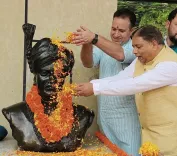
Uttar Pradesh Chief Minister Yogi Adityanath also marked the occasion with a tribute on X, honouring those who 'dedicated their all to freeing Mother India from the shackles of slavery.' He noted that the heroes of the freedom struggle had awakened national consciousness through the 'Do or Die' call, giving the independence movement a decisive direction. Their dedication and message of self-respect, he said, would remain a lasting source of inspiration for every Indian.
The Historical Significance of the Quit India Movement
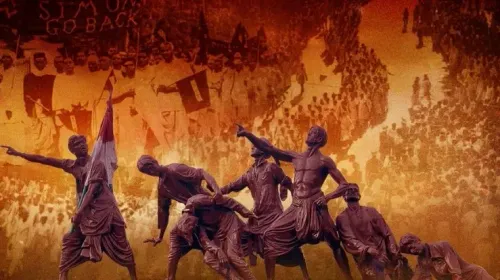
The Quit India Movement was formally launched on 8 August 1942, after the All India Congress Committee adopted the Quit India resolution in Bombay. Gandhi's 'Do or Die' call galvanised millions across the country, triggering widespread protests, strikes, and acts of civil resistance. British authorities responded with a sweeping crackdown, arresting thousands of leaders and activists.
Notably, the movement is widely regarded by historians as the most forceful mass mobilisation of the independence era, accelerating the political timeline toward eventual independence in 1947. It drew participation from students, farmers, industrial workers, and ordinary citizens — cutting across class and regional lines in a way few prior movements had achieved.
What the Day Means Today
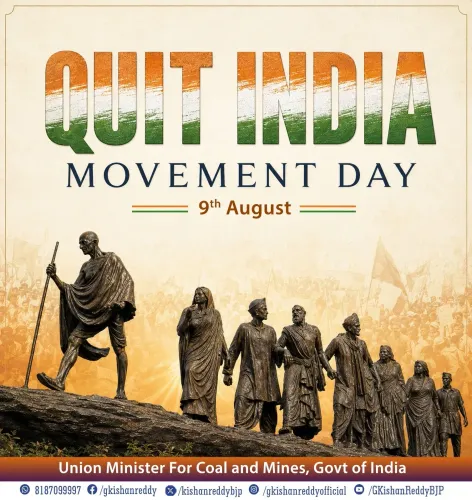
Each year, 9 August is observed as Quit India Movement Day or August Kranti Diwas across India. Senior political figures across the spectrum use the occasion to invoke the legacy of the freedom struggle, often connecting it to contemporary national goals. This year, the tributes from the Prime Minister, Home Minister, and a prominent Chief Minister reflect the continued centrality of the independence narrative in Indian public life.
As India moves toward its centenary of independence in 2047 — a milestone the current government has branded 'Viksit Bharat @2047' — the invocation of the Quit India Movement carries both historical weight and present-day political significance.
Point of View
Explicitly tethering the 1942 movement to the ruling dispensation's economic agenda of Atmanirbhar Bharat and Viksit Bharat. That linkage is worth scrutinising: the Quit India Movement was a mass civil disobedience campaign that also challenged the political establishment of its day. Using it as a frame for state-directed economic nationalism is a selective reading of history. The more substantive question — whether India's institutions today embody the democratic accountability those freedom fighters demanded — rarely surfaces in these commemorations.
NationPress
23 Sept 2026
Frequently Asked Questions
What is the Quit India Movement and why is it commemorated on 9 August?
The Quit India Movement was a mass civil disobedience campaign launched on 8 August 1942 by Mahatma Gandhi and the Indian National Congress, demanding an immediate end to British colonial rule. The following day, 9 August, is observed as August Kranti Diwas to honour the freedom fighters who participated in the uprising.
What did PM Modi say about the Quit India Movement?
PM Modi posted on X that the Quit India Movement, inspired by Mahatma Gandhi's leadership, 'infused new energy' into India's freedom struggle and reflected the 'unwavering determination' of the people to break free from colonial rule. He said the courage of the participants would remain an inspiration for every Indian.
What was Mahatma Gandhi's 'Do or Die' call?
Gandhi's 'Do or Die' call was issued on 8 August 1942 at the All India Congress Committee session in Bombay, urging Indians to either win freedom or die in the attempt. It galvanised millions into action and triggered one of the largest mass mobilisations of the independence era.
How did Home Minister Amit Shah connect the Quit India Movement to current national goals?
Amit Shah said the anniversary of the August Revolution should inspire citizens to promote indigenous practices, build an Atmanirbhar Bharat, and work toward Viksit Bharat. He described the movement as the chapter that united Indians and gave them the resolve to break free from British rule.
What was the significance of the Quit India Movement in India's independence struggle?
The Quit India Movement is widely regarded as the most forceful mass mobilisation of the independence era, drawing participation from students, farmers, workers, and ordinary citizens across class and regional lines. Historians credit it with accelerating the political timeline toward India's independence in 1947.