Jal Shakti Minister Paatil Defends Modi's 'Unblemished' Record
Synopsis
Union Jal Shakti Minister C. R. Paatil posted on 9 August 2026 defending PM Modi, arguing that bearing political attacks silently across a 23-year, stain-free public career — including 10 years as PM and 13-14 years as Gujarat CM — is itself the strongest proof of democratic strength.
Key Takeaways
Paatil , Union Jal Shakti Minister and senior BJP leader, posted on 9 August 2026 defending PM Modi against political attacks.
Paatil cited 10 years of full-majority national governance and 13–14 years as Gujarat Chief Minister as evidence of an unblemished public record.
The post frames Modi's political silence under sustained criticism as a democratic virtue, not weakness.
The argument follows an established BJP communications pattern: electoral mandate plus clean record as rebuttal to opposition attacks.
No specific triggering event is identified in the post; it appears to respond to an ongoing criticism cycle.
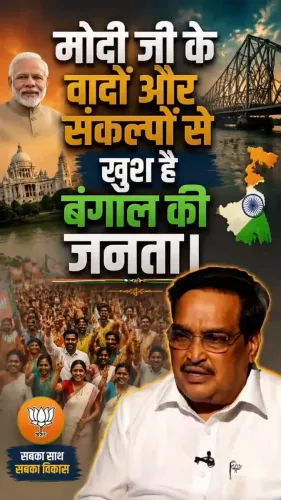
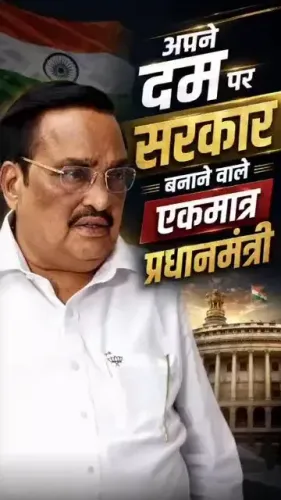
The abuses keep coming, the attacks keep mounting — and yet, says Union Jal Shakti Minister C. R. Paatil, the silence held is not weakness. In a pointed post on Sunday, 9 August 2026, Paatil invoked Prime Minister Narendra Modi's decades-long public record to argue that absorbing political hostility without retaliation is itself the highest proof of democratic character.
Posting in Hindi, Paatil wrote: 'जो गालियां पड़ रही हैं, जिस प्रकार का ज़ुल्म हम पर हो रहा है, चुपचाप सहते जाना... मजबूरी नहीं है जी!' — 'The abuses being hurled, the kind of oppression being inflicted on us, bearing it silently... it is not helplessness!' He then listed what he framed as Modi's clean slate: 10 years at the helm of the world's largest democracy with a full majority, 13–14 years as Gujarat's Chief Minister, and a 23-year public life — 'not a single stain.' The rhetorical close was sharp: 'What greater proof of democracy can there be than one man absorbing this much abuse without uttering a single word?'
Two Decades, One Argument
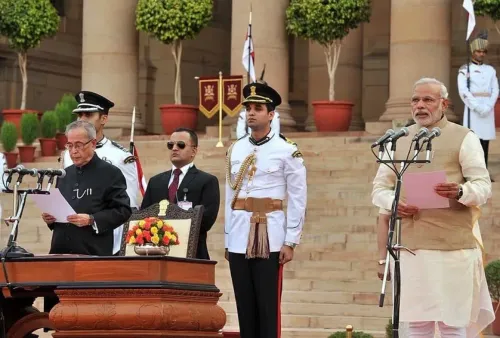
Modi has governed at the national level since May 2014, when the Bharatiya Janata Party won its first outright majority in three decades. His Gujarat tenure, which ran from 2001 to 2014, was consistently presented by the party as a development-first administration free of personal corruption charges. Paatil's post threads both chapters together into a single biographical argument: longevity plus a clean record equals democratic legitimacy.Paatil's Role in the BJP's Messaging Machine
C. R. Paatil — a former Gujarat BJP state president and now Union Minister for Jal Shakti — is among the party's most reliable amplifiers on questions of the Prime Minister's personal integrity. His framing here follows an established BJP communications pattern: when political attacks intensify, senior figures respond not by engaging the specific charge but by pointing to the electoral mandate and the absence of corruption convictions as self-evident rebuttals. The argument is less a counter-argument than a credential display. The post carries no reference to a specific triggering event, but its combative opening — 'it is not helplessness' — signals that it is a response to a sustained criticism cycle rather than an isolated moment. Opposition voices have long challenged the BJP's clean-governance claim, particularly on questions of institutional autonomy and press freedom; Paatil's post does not engage those critiques directly. A senior minister publicly framing the Prime Minister's political restraint as a democratic virtue is a reminder that in India's high-decibel political arena, silence itself can be weaponised as a message. Whether the opposition reads that silence the same way is another matter entirely.Point of View
Full majority, 10 years' — and personal longevity without corruption convictions, the party sidesteps the content of any individual charge. It is a durable strategy because it shifts the burden of proof onto the accuser. The broader arc here is the BJP's ongoing effort to consolidate the narrative that political longevity and clean personal conduct are synonymous with democratic health — a framing the opposition contests on institutional-autonomy grounds. Watch whether this post draws a formal opposition response that engages the specific '23-year clean record' claim, which would escalate the exchange into a verifiable factual debate.
NationPress
9 Aug 2026
Frequently Asked Questions
What did C. R. Paatil say about PM Modi on 9 August 2026?
Paatil posted in Hindi arguing that PM Modi bearing sustained political attacks silently — across a 23-year public life, 10 years as PM, and 13-14 years as Gujarat CM — without a single corruption stain is the greatest proof of democracy.
What is C. R. Paatil's current position?
C. R. Paatil is the Union Minister of Jal Shakti and a senior BJP leader who previously served as Gujarat BJP state president.
How long has Narendra Modi served as Prime Minister?
Narendra Modi has served as Prime Minister since May 2014, completing over 10 years in office with full parliamentary majorities.
How long was Narendra Modi the Chief Minister of Gujarat?
Modi served as Gujarat Chief Minister from 2001 to 2014, a tenure of approximately 13 years.
Why did Paatil say bearing abuse silently is not weakness?
Paatil argued that a leader with an unblemished 23-year record who absorbs political attacks without retaliating demonstrates democratic strength, not compulsion — framing restraint as a virtue rather than an inability to respond.