Jal Shakti Minister Paatil hails PM Modi's leadership, welfare record
Synopsis
Union Jal Shakti Minister C. R. Paatil on 8 June 2026 credited PM Modi's leadership with repeatedly earning public trust, saying the government's commitment to service, good governance, and welfare of the poor has strengthened India's democracy.
Key Takeaways
Paatil , Union Minister of Jal Shakti and senior BJP leader, posted on X on 8 June 2026 praising PM Narendra Modi 's leadership.
Paatil said the Indian public has 'time and again expressed trust' in Modi's leadership.
He cited service, good governance, and welfare of the poor as pillars that have strengthened India's democratic power.
The Jal Shakti Ministry , formed in 2019 , oversees the Jal Jeevan Mission , which aims to provide tap water to every rural household in India.
Such messaging by senior BJP ministers is part of a broader pattern of framing electoral mandates as validation of the Modi government's welfare delivery model.
Key policy milestones to watch include Jal Jeevan Mission coverage updates and welfare announcements in Parliament's monsoon session.
Union Jal Shakti Minister C. R. Paatil on Monday, 8 June 2026 praised Prime Minister Narendra Modi's leadership, saying the people of India have repeatedly reposed faith in him and that a commitment to service, good governance, and welfare of the poor has strengthened the country's democratic fabric.
Context
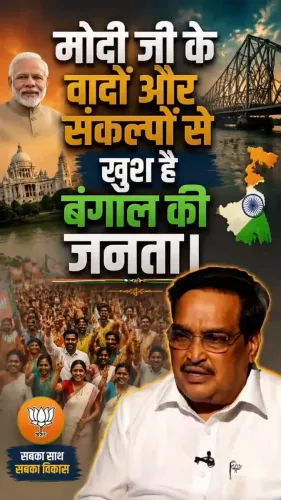
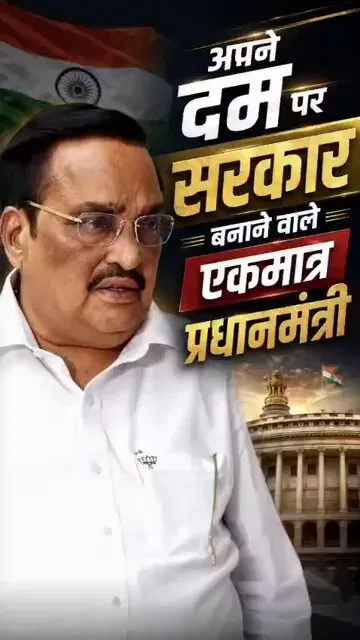
Paatil posted in Hindi on X, writing: 'देश की जनता ने आदरणीय प्रधानमंत्री श्री @narendramodi सर के नेतृत्व पर बार-बार विश्वास जताया है' — 'The people of the country have time and again expressed trust in the leadership of respected Prime Minister Shri Narendra Modi.' He added that the resolve of service, good governance, and welfare of the poor has further strengthened India's democratic power.
The post is accompanied by a video. Senior BJP ministers routinely use social media to reinforce the party's narrative linking repeated electoral mandates to the credibility of Modi's governance model.
Policy Backdrop
Narendra Modi first became Prime Minister in 2014, winning re-election in 2019 with an expanded majority. His governments have centred welfare delivery — through direct-benefit transfers, housing, cooking-gas connections, and rural electrification — as the primary metric of governance performance.
The Jal Shakti Ministry, formed in 2019, brought together water resources and drinking-water functions under one roof. Its flagship Jal Jeevan Mission targets tap-water connections to every rural household in India, and has been cited by the BJP as a concrete example of 'poor welfare' in action. C. R. Paatil, a former Gujarat BJP state president, has been at the helm of the ministry and has consistently framed its targets as an expression of the Prime Minister's commitment to the rural poor.
Stakeholders and Impact
The messaging is directed at a broad constituency: ordinary voters, rural households dependent on welfare schemes, and party workers who amplify such statements ahead of electoral cycles. Posts of this nature also serve an internal party function, signalling alignment among senior leaders around the Prime Minister's political brand.
For the millions of households covered — or still awaiting coverage — under schemes such as Jal Jeevan Mission, the political narrative intersects with a tangible policy reality: access to clean tap water, a basic amenity that successive governments struggled to universalise before the mission's launch.
What's Next
Attention will now turn to progress updates on Jal Jeevan Mission coverage targets and any fresh welfare announcements expected in the upcoming monsoon session of Parliament or the next Union Budget. Whether the political messaging translates into accelerated scheme delivery on the ground will be closely watched by both beneficiaries and opposition parties.
Point of View
Not ideology, as the source of political mandate. Coming from the head of the Jal Shakti Ministry, the statement implicitly links the Jal Jeevan Mission's reach to that mandate, making any shortfall in coverage a potential political liability. The broader pattern suggests the party is actively building a welfare-as-legitimacy narrative ahead of future electoral contests.
NationPress
23 Oct 2026
Frequently Asked Questions
What did C. R. Paatil say about PM Modi on 8 June 2026?
Paatil said the people of India have repeatedly expressed trust in PM Modi's leadership, and that the government's commitment to service, good governance, and welfare of the poor has strengthened India's democracy.
Who is C. R. Paatil?
C. R. Paatil is the Union Minister of Jal Shakti, a senior BJP leader, and former president of the BJP's Gujarat state unit.
What is the Jal Jeevan Mission?
The Jal Jeevan Mission is a flagship scheme launched in 2019 under the Jal Shakti Ministry that aims to provide functional tap-water connections to every rural household in India.
Why do BJP ministers frequently praise PM Modi's governance record?
Senior BJP ministers regularly post such messages to reinforce the party's narrative that repeated electoral mandates validate Modi's model of welfare delivery and administrative efficiency, particularly around elections and national milestones.
What welfare schemes is the Modi government known for?
The Modi government is associated with several welfare schemes including the Jal Jeevan Mission for rural water supply, direct-benefit transfers, housing programmes, and cooking-gas connections for low-income households.