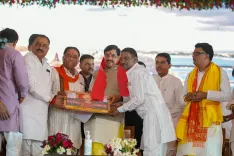
Jal Shakti Minister Paatil highlights Modi's welfare-first approach
Synopsis
Union Jal Shakti Minister C. R. Paatil on 10 June 2026 praised PM Modi's governance model on X, describing targeted help for every person in need as the government's defining working style — a message consistent with the BJP's welfare-delivery narrative built around flagship schemes such as the Jal Jeevan Mission.
Key Takeaways
Paatil , Union Jal Shakti Minister and senior BJP leader, posted on 10 June 2026 praising PM Modi 's welfare-first governance approach.
The post, in Hindi, translates as: 'Helping every person in need: this is the real way Modi ji works!' The Ministry of Jal Shakti was formed in May 2019 by merging two ministries focused on water resources and drinking water and sanitation.
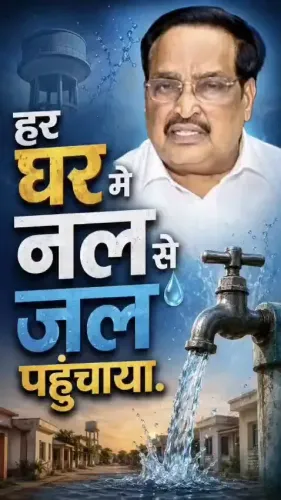
The Jal Jeevan Mission , launched on 15 August 2019 , aims to provide functional household tap connections to all rural households in India.
The government tracks scheme delivery through quarterly dashboards; the next Union Budget allocation for drinking water infrastructure is a key marker to watch.
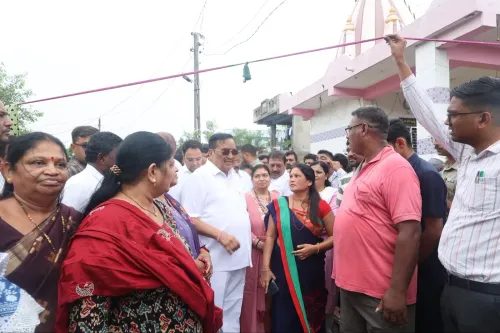
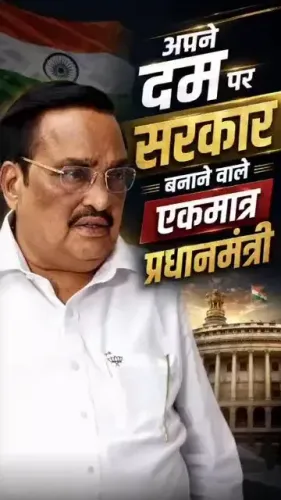
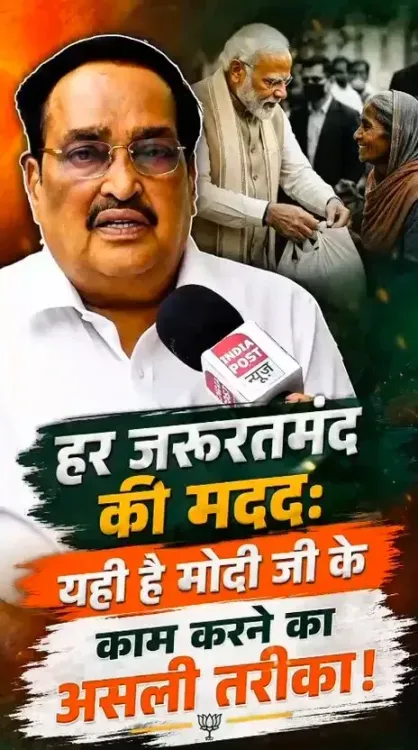
Union Jal Shakti Minister C. R. Paatil on Wednesday, 10 June 2026 took to X to underscore Prime Minister Narendra Modi's governance philosophy, framing it as one centred on reaching every person in need. The post, shared in Hindi, carried an attached video and offered a brief but pointed characterisation of the ruling dispensation's welfare priorities.
Context
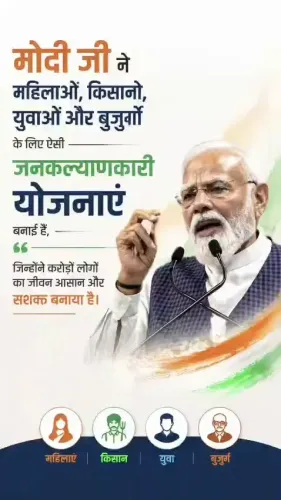
Paatil's post reads: 'Har zaruratmand ki madad: yahi hai Modi ji ke kaam karne ka asli tarika!' — translated as 'Helping every person in need: this is the real way Modi ji works!' The remark is a direct endorsement of the Prime Minister's governance model, positioning welfare delivery as the defining characteristic of the current government's approach.
The post comes from one of the ruling party's most prominent organisational figures. Paatil is a senior BJP leader, a former BJP Gujarat state president, and currently heads the Ministry of Jal Shakti, the Union ministry formed in May 2019 by merging the erstwhile Ministries of Water Resources and Drinking Water and Sanitation.
Policy Backdrop
The sentiment expressed by Paatil maps closely onto the Modi government's flagship welfare architecture, which spans drinking water, housing, health insurance, and direct cash transfers. In the water sector, the centrepiece has been the Jal Jeevan Mission, launched on 15 August 2019, with the stated goal of providing functional household tap connections to every rural household across India.
The mission was announced in the 2019-20 Union Budget and has since been tracked through quarterly progress dashboards maintained by the Ministry of Jal Shakti. Complementary programmes such as the Atal Bhujal Yojana address groundwater management, while the Swachh Bharat Mission (Gramin), scaled up from 2014 onward, brought rural sanitation into the same policy framework before its integration into the Jal Shakti umbrella.
Successive Union Budgets and NITI Aayog assessments have highlighted saturation coverage of the poorest districts as a core governance metric, lending institutional weight to the 'last-mile delivery' narrative that Paatil's post invokes.
Stakeholders and Impact
The primary beneficiaries of the policy ecosystem Paatil references are rural households and communities in water-stressed villages — populations that historically lacked reliable access to piped drinking water. The Jal Jeevan Mission's coverage data, published on the ministry's public dashboard, has been cited by the government as evidence that targeted welfare delivery can achieve scale.
For the BJP as a political organisation, messaging around welfare saturation serves a dual purpose: it reinforces the party's claim to a development-oriented identity ahead of electoral cycles, and it positions the Prime Minister as personally accountable for last-mile outcomes. Paatil, as both a cabinet minister and a seasoned party organiser from Gujarat, is well-placed to carry that message to a national audience.
What's Next
Observers will watch the next quarterly Jal Jeevan Mission progress report and the forthcoming Union Budget for signals on whether allocations for drinking water infrastructure will be expanded. Parliamentary committee reviews of scheme implementation are also expected to offer a more granular picture of on-ground delivery against the government's stated targets.
The broader question is whether the welfare-first framing articulated by ministers such as Paatil will translate into fresh policy announcements or whether it serves primarily as a consolidation of existing programmatic gains ahead of the political calendar.
Point of View
A strategy that has been a consistent feature of the party's communication since 2014. Coming from the head of the Jal Shakti Ministry, the message carries an implicit claim that flagship water-sector programmes are delivering on their last-mile promise. The timing, mid-cycle between elections, suggests the party is in consolidation mode, banking welfare-delivery credentials for future political use.
NationPress
26 Oct 2026
Frequently Asked Questions
What did C. R. Paatil post on X on 10 June 2026?
Paatil posted a Hindi message praising PM Modi's governance style, saying 'Helping every person in need: this is the real way Modi ji works,' accompanied by a video.
Who is C. R. Paatil?
C. R. Paatil is the Union Minister of Jal Shakti, a senior BJP leader, and a former BJP Gujarat state president.
What is the Jal Jeevan Mission?
The Jal Jeevan Mission is a central government scheme launched on 15 August 2019 to provide functional household tap connections to every rural household in India.
What does the Ministry of Jal Shakti do?
The Ministry of Jal Shakti, formed in May 2019, oversees water resources, drinking water supply, and sanitation policy across India, including the Jal Jeevan Mission.
How does the government track Jal Jeevan Mission progress?
The Ministry of Jal Shakti publishes quarterly progress dashboards showing coverage data on rural tap connections, which are also reviewed by parliamentary committees.