Jal Shakti Minister Paatil hails Jal Jeevan Mission's rural impact
Synopsis
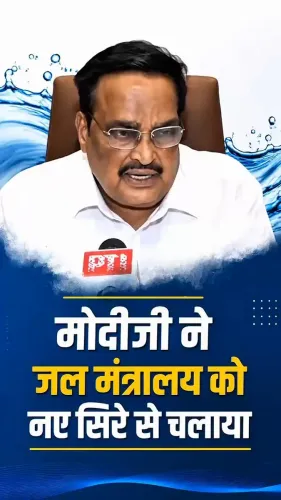
Union Jal Shakti Minister C. R. Paatil on 13 June 2026 hailed the Jal Jeevan Mission as a historic initiative delivering clean tap water to crores of rural homes, linking it to public health, women's empowerment and good governance under PM Modi's leadership.
Key Takeaways
Paatil , Union Minister of Jal Shakti, publicly praised the Jal Jeevan Mission on 13 June 2026 via a post on X.
The Jal Jeevan Mission was launched on 15 August 2019 with the goal of providing functional household tap connections to all rural households in India.
The mission subsumed the earlier National Rural Drinking Water Programme (NRDWP) and is administered by the Ministry of Jal Shakti , formed in 2019.
Minister Paatil described the scheme as a 'historic initiative' linking water access to public health , women's empowerment , and rural development .
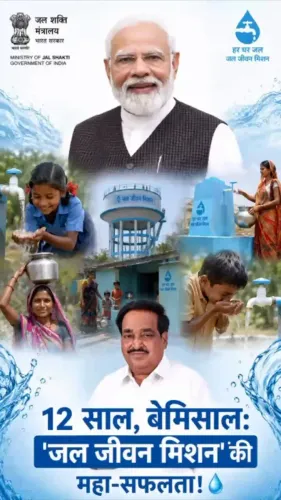
The post was made under the hashtag #12YearsOfSeva , placing the mission within a broader government governance milestone narrative.
Updated mission coverage data is anticipated in the Economic Survey and the Union Budget 2026-27 cycle.
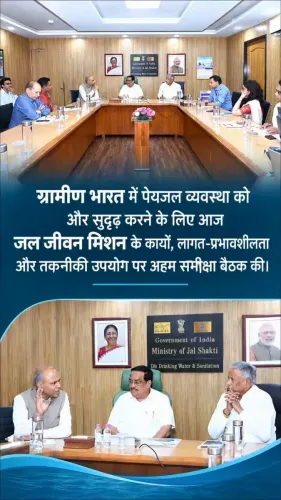
Union Jal Shakti Minister C. R. Paatil on Saturday, 13 June 2026 lauded the Jal Jeevan Mission, describing it as a transformative initiative that has brought positive change to crores of rural families across India under the leadership of Prime Minister Narendra Modi.
Posting on X under the hashtag #12YearsOfSeva, Minister Paatil wrote in Hindi: 'Jal Jeevan Mission ne desh ke croro gramin parivaron ke jeevan mein sakaratmak parivartan laane ka kary kiya hai' — broadly, 'The Jal Jeevan Mission has worked to bring positive change to the lives of crores of rural families in the country.' He further described the campaign to deliver clean drinking water to every home not merely as a scheme, but as a 'historic initiative' toward public health, women's empowerment, and rural development.
Context
The Jal Jeevan Mission was announced by Prime Minister Modi on 15 August 2019 from the ramparts of the Red Fort, with the stated objective of providing a functional household tap connection for drinking water to every rural home in India — encapsulated in the slogan 'Har Ghar Jal' (water to every home). The mission subsumed the earlier National Rural Drinking Water Programme (NRDWP), restructuring it with enhanced funding and community-ownership principles.
Minister Paatil's post arrives under the #12YearsOfSeva hashtag, situating the mission within a broader celebration of governance milestones by the ruling dispensation. The Ministry of Jal Shakti, formed in 2019 by merging the water resources and drinking water and sanitation departments, is the nodal ministry for the scheme.
Policy Backdrop
The Jal Jeevan Mission is part of a cluster of large-scale rural infrastructure programmes that the central government has pursued since 2014. Complementary schemes such as the Swachh Bharat Mission and the Atal Bhujal Yojana have similarly combined physical infrastructure creation with community participation and governance reforms — a model the government has consistently presented as integral to rural development.
Minister Paatil, who also serves as a senior BJP leader and former BJP Gujarat state president, underscored this convergence in his post, noting that the 'Har Ghar Jal' resolve is 'providing new momentum to the development journey of new India through public participation and good governance.' The framing links water access explicitly to women's empowerment — a recurring policy argument that reducing the burden of fetching water falls disproportionately on rural women.
Stakeholders and Impact
The primary beneficiaries of the Jal Jeevan Mission are rural households in states that have historically had low tap-water coverage, with rural women identified as a key group whose daily burden is reduced when piped water reaches the home. Village-level water and sanitation committees have been designated as the grassroots governance mechanism for the scheme, embodying the community-participation model Paatil referenced.
Public health advocates have long linked safe drinking water access to reductions in waterborne diseases, particularly among children, reinforcing the minister's characterisation of the mission as a public health initiative rather than purely an infrastructure project.
What's Next
Updated coverage data for the Jal Jeevan Mission is expected to feature in the forthcoming Economic Survey and the Union Budget 2026-27 cycle, which may also carry announcements on a potential phase-II or an urban extension of the scheme. Minister Paatil's high-profile endorsement of the mission's achievements signals that water infrastructure is likely to remain a centrepiece of the government's rural development communication ahead of those announcements.
Point of View
Timed under the #12YearsOfSeva hashtag to consolidate the BJP's rural development narrative ahead of the budget cycle. By framing the Jal Jeevan Mission as simultaneously a public health, gender, and infrastructure achievement, the government is broadening the political appeal of a scheme that could face scrutiny over last-mile delivery gaps. The explicit invocation of 'public participation and good governance' also signals a pre-emptive defence against criticism that large central schemes bypass local institutions. Taken together, the statement positions water access as a flagship legacy claim, much as the Swachh Bharat Mission was used in earlier electoral cycles.
NationPress
27 Oct 2026
Frequently Asked Questions
What is the Jal Jeevan Mission?
The Jal Jeevan Mission is a central government scheme launched on 15 August 2019 to provide a functional household tap connection for safe drinking water to every rural household in India under the 'Har Ghar Jal' objective.
Who is C. R. Paatil?
C. R. Paatil is India's Union Minister of Jal Shakti, a senior BJP leader, and former BJP Gujarat state president. His ministry is the nodal body for the Jal Jeevan Mission and river conservation programmes.
What did C. R. Paatil say about the Jal Jeevan Mission?
On 13 June 2026, Minister Paatil said the Jal Jeevan Mission has brought positive change to crores of rural families and called it a historic initiative for public health, women's empowerment, and rural development under PM Modi's leadership.
What is the 'Har Ghar Jal' scheme?
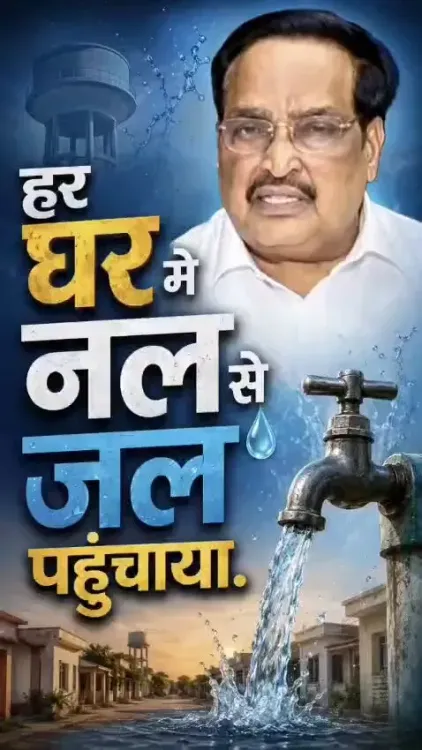
'Har Ghar Jal' — meaning 'water to every home' — is the core objective of the Jal Jeevan Mission, aiming to deliver piped drinking water to all rural homes in India through household tap connections.
How does the Jal Jeevan Mission help women?
The mission is designed to reduce the burden on rural women who traditionally travel long distances to fetch water. Piped tap connections at home free up time and improve safety, which the government frames as a women's empowerment outcome.