Jal Shakti Minister Paatil Highlights JJM's Milestone Progress
Synopsis
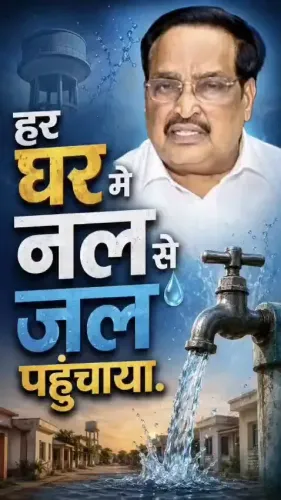
Union Jal Shakti Minister C. R. Paatil on 29 May 2026 shared a video on X hailing the Jal Jeevan Mission's achievements in extending tap water access to rural India, calling it '12 years, unmatched' under the government's flagship rural water infrastructure drive.
Key Takeaways
Union Jal Shakti Minister C.
Paatil posted on X on 29 May 2026 celebrating the Jal Jeevan Mission .
The Minister described the mission as '12 years, unmatched' ( 12 saal, bemisaal ) and shared a video highlighting its achievements.
The Jal Jeevan Mission was launched by Prime Minister Narendra Modi in August 2019 to provide functional tap connections to all rural households.
The mission is administered by the Ministry of Jal Shakti , which was created in 2019 by merging two water-related ministries.
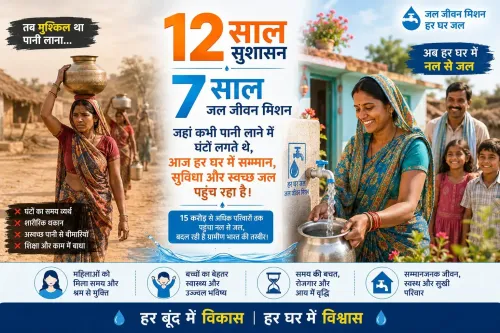
Rural women and girls are among the primary beneficiaries, with piped water access reducing drudgery and improving health outcomes.
Next quarterly progress reports and parliamentary reviews of state-level implementation are the key milestones to watch.
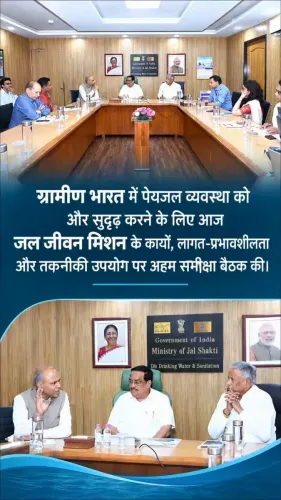
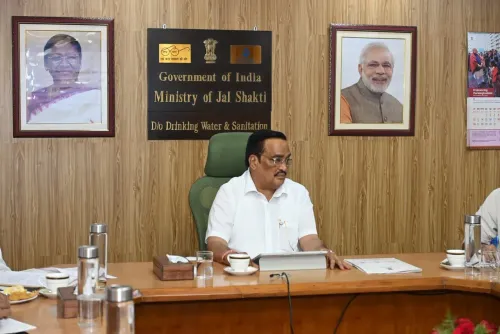
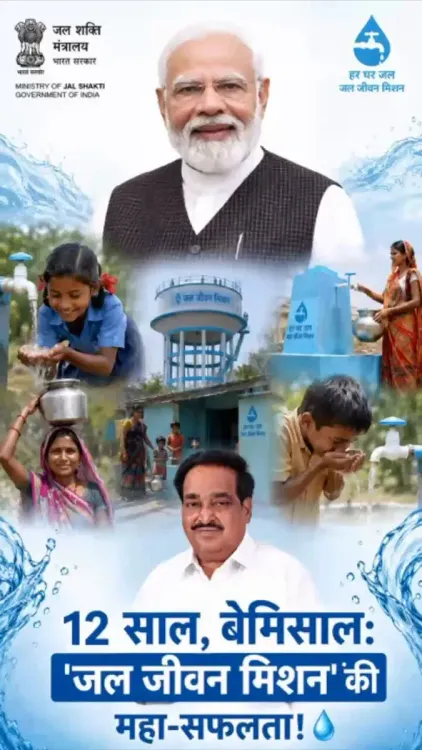
Union Jal Shakti Minister C. R. Paatil on Friday, 29 May 2026, shared a video on X celebrating what he described as the 'mega-success' of the Jal Jeevan Mission, calling it a landmark achievement in India's rural water infrastructure drive.
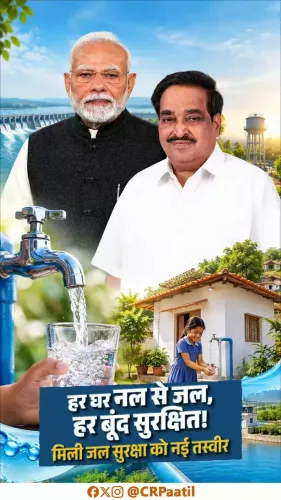
In his post, the Minister wrote: 'हर घर जल, जल जीवन मिशन — 12 साल, बेमिसाल' ('Har Ghar Jal, Jal Jeevan Mission — 12 years, unmatched'), presenting what he called a 'glimpse of the mission's mega-success.' The accompanying video underscores the government's position that the scheme has delivered transformative results for rural India.
Context
The Jal Jeevan Mission (JJM) was launched by Prime Minister Narendra Modi in August 2019 with the stated goal of providing a functional household tap connection to every rural home in India. The mission, operating under the Ministry of Jal Shakti, became one of the largest drinking-water programmes in the world by coverage ambition. Minister Paatil's post arrives as the government marks continued progress under the scheme, framing it as a symbol of sustained rural development.
Policy Backdrop
The Jal Jeevan Mission sits at the centre of the government's broader rural infrastructure agenda, which also includes the Jal Shakti Abhiyan — a campaign focused on water conservation, groundwater recharge, and watershed management. Together, these initiatives reflect a policy arc that has prioritised water security as a foundational element of rural welfare since 2014. The Ministry of Jal Shakti, created in 2019 by merging the ministries of Water Resources and Drinking Water and Sanitation, serves as the nodal body coordinating both supply-side and demand-side water interventions.
The mission's original deadline for achieving universal rural tap connectivity was 2024, and subsequent government communications have continued to highlight coverage milestones across states. Progress has varied significantly by state, with some achieving near-saturation coverage while others have faced implementation challenges tied to geography, groundwater availability, and last-mile infrastructure gaps.
Stakeholders and Impact
Rural households — particularly women and girls who historically bore the burden of fetching water — are the primary beneficiaries of the mission. Access to piped tap water at home is linked to documented improvements in health outcomes, reduced drudgery, and increased time available for education and livelihood activities. State governments, gram panchayats, and village water and sanitation committees are the key implementation partners at the ground level.
The scheme also has significant fiscal implications, with funds flowing from the Union government to states under a cost-sharing arrangement. Infrastructure contractors, pipe manufacturers, and local engineering agencies form a large secondary stakeholder ecosystem around the mission's capital expenditure.
What's Next
Attention will now turn to the next set of quarterly progress reports on household tap connections, as well as any state-level implementation reviews that may come before Parliament. The government is expected to continue amplifying JJM's achievements as a flagship welfare deliverable. Independent assessments of water quality, functional connection sustainability, and equitable distribution across marginalised communities will remain key benchmarks for evaluating the mission's long-term success.
Point of View
Timed to reinforce the BJP's narrative of rural welfare delivery ahead of ongoing political cycles. By framing the mission as '12 years, unmatched,' the post subtly extends credit to the broader Modi-era governance record rather than limiting it to JJM's 2019 launch date. The video format signals an intent to reach vernacular and semi-urban audiences on social media, where scheme-outcome content has proven effective for the ruling party. Analysts will note that the government's ability to sustain this messaging depends increasingly on independent verification of functional — not merely installed — connections.
NationPress
12 Oct 2026
Frequently Asked Questions
What is the Jal Jeevan Mission?
The Jal Jeevan Mission is a flagship central government scheme launched in August 2019 by Prime Minister Narendra Modi to provide a functional household tap connection to every rural home in India. It is administered by the Ministry of Jal Shakti.
What did C. R. Paatil post about Jal Jeevan Mission?
On 29 May 2026, Union Jal Shakti Minister C. R. Paatil shared a video on X calling the Jal Jeevan Mission '12 years, unmatched' and presenting what he described as a glimpse of the mission's mega-success in providing tap water to rural households.
Who is C. R. Paatil?
C. R. Paatil is the Union Minister of Jal Shakti, a senior BJP leader, and a former president of the BJP's Gujarat state unit.
What is the target of Jal Jeevan Mission?
The Jal Jeevan Mission was originally set a target of providing functional tap water connections to all rural households in India by 2024. Progress has varied by state, and the government continues to report coverage milestones.
What is Har Ghar Jal?
'Har Ghar Jal' — meaning 'water to every home' — is the tagline and sub-brand of the Jal Jeevan Mission, representing the government's goal of universal piped drinking-water access for rural India.