Jal Shakti Minister Paatil Marks 7 Years of Jal Jeevan Mission
Synopsis
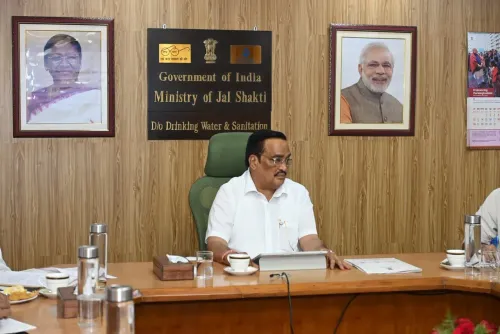
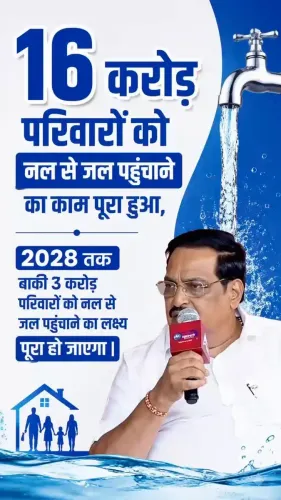
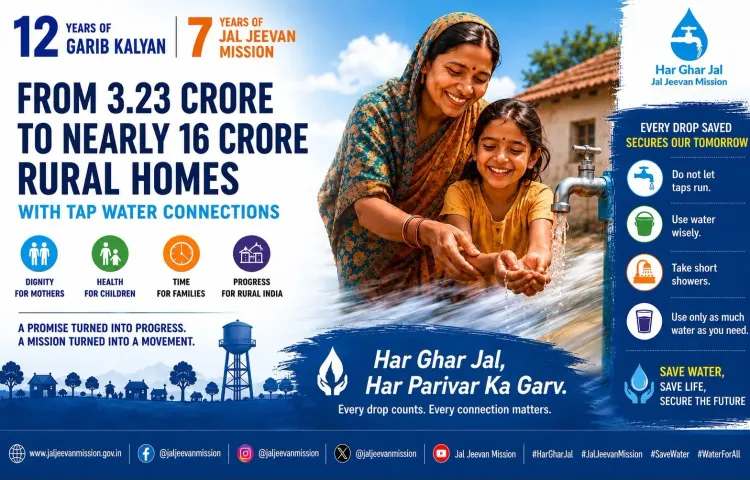
Union Jal Shakti Minister C. R. Paatil marked seven years of the Jal Jeevan Mission on 11 June 2026, highlighting that rural tap-water coverage has grown from 3.23 crore to nearly 16 crore households under PM Modi's flagship scheme.
Key Takeaways
Union Jal Shakti Minister C.
Paatil posted on 11 June 2026 to mark seven years of the Jal Jeevan Mission.
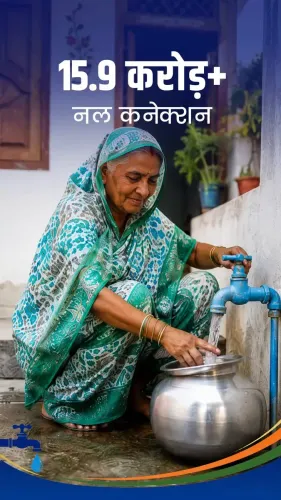
Rural household tap-water coverage has grown from 3.23 crore to approximately 16 crore homes , according to the minister.
The Jal Jeevan Mission was launched by PM Narendra Modi on 15 August 2019 with a target to cover all rural households.
The scheme replaced the earlier National Rural Drinking Water Programme (NRDWP) , which had operated since 2009 .
JJM is framed as a pillar of the Viksit Bharat agenda, alongside Swachh Bharat Mission and PM Awas Yojana.
Focus is now on quality assurance, remaining uncovered habitations, and Gram Panchayat -level operation and maintenance.
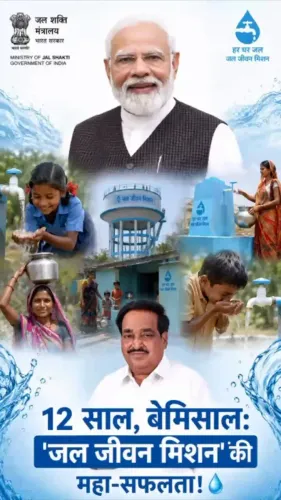
Union Jal Shakti Minister C. R. Paatil on Thursday, 11 June 2026 hailed the Jal Jeevan Mission (JJM) as a historic transformation in rural India, citing a near-fivefold expansion in household tap-water coverage since the scheme's launch under Prime Minister Narendra Modi in 2019.
Context
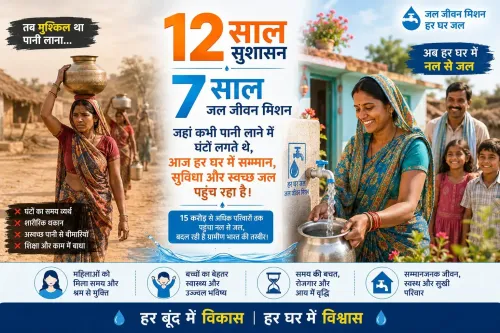
Posting on the occasion of #7YearsOfJalJeevanMission, Minister Paatil stated that tap-water access, once limited to 3.23 crore rural households, has now reached 'lagbhag 16 crore ghar' (approximately 16 crore homes). He described the milestone as 'a story of dignity for mothers, better health for children, time saved for families, and an empowered future for rural India.'
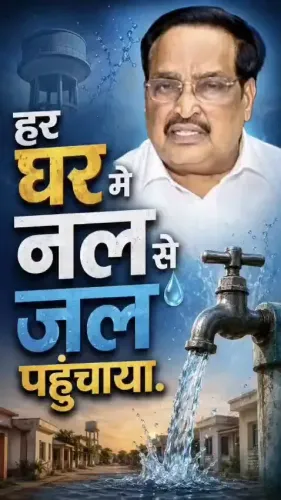
The post also invoked the parallel hashtag #12YearsOfGaribKalyan, situating JJM within the broader welfare arc that the ruling dispensation traces to its first full year in office in 2014. The minister concluded with the mission's tagline: 'Har Ghar Jal: Viksit Bharat ki mazboot neev' — 'Tap water for every home: the strong foundation of a developed India.'
Policy Backdrop
The Jal Jeevan Mission was announced by PM Modi from the ramparts of the Red Fort on 15 August 2019, with a mandate to provide functional household tap connections (FHTCs) to every rural household. It subsumed the earlier National Rural Drinking Water Programme (NRDWP), which had operated since 2009 with more modest coverage targets and decentralised implementation.
JJM is administered by the Ministry of Jal Shakti and operates on a centre-state cost-sharing model. The scheme set an original completion target of 2024, and subsequent government communications have emphasised last-mile delivery to remote and tribal habitations. The mission is also branded under the Har Ghar Jal programme, which certifies villages where every household has a tap connection.
The scheme sits alongside Swachh Bharat Mission and PM Awas Yojana as a pillar of the central government's rural infrastructure push, all framed under the Viksit Bharat (Developed India) vision for 2047.
Stakeholders and Impact
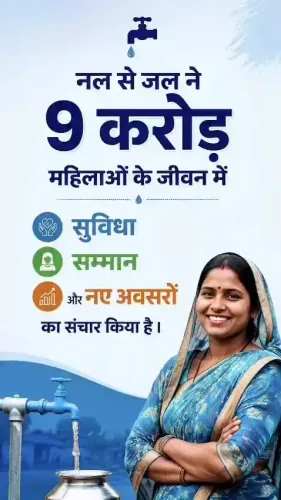
The primary beneficiaries of JJM are rural women, who have historically borne the burden of fetching water over long distances — a task that consumed hours each day and constrained access to education and economic activity. Independent assessments have linked household tap connections to reductions in waterborne diseases and improvements in school attendance among girls.
Children's health outcomes, particularly the reduction of diarrhoeal illness linked to contaminated surface-water sources, are a frequently cited metric in government progress reports on the scheme. Gram Panchayats are designated as the implementing units responsible for operation and maintenance once connections are commissioned.
What's Next
With the seventh anniversary marking a moment of stock-taking, attention will turn to the scheme's next phase: ensuring the quality and continuity of water supply in villages already declared covered, addressing remaining uncovered habitations — particularly in Uttar Pradesh, Bihar, Rajasthan, and tribal belts — and resolving pending parliamentary questions on scheme extension timelines. The government's own JJM dashboard, updated in near real-time, is the reference point for tracking district- and state-level progress. Minister Paatil's post signals that the political messaging around JJM will remain central to the BJP's rural outreach as the Viksit Bharat campaign intensifies.
Point of View
Anchoring the BJP's rural welfare narrative to a verifiable infrastructure milestone on the seventh anniversary of JJM. By invoking both '#12YearsOfGaribKalyan' and '#ViksitBharat' in the same post, the messaging bridges the party's 2014 origin story with its 2047 aspirational arc — a framing that has become standard template for flagship scheme anniversaries. The near-fivefold coverage figure, if borne out by independent audits, would represent one of the largest last-mile utility expansions in India's post-Independence history. The real political test, however, lies not in connection numbers but in whether water actually flows reliably — an operational question that opposition parties and civil society groups have increasingly raised in parliamentary proceedings.
NationPress
23 Sept 2026
Frequently Asked Questions
What is the Jal Jeevan Mission and when was it launched?
The Jal Jeevan Mission is a central government scheme launched by PM Narendra Modi on 15 August 2019 to provide functional household tap connections to every rural household in India. It is administered by the Ministry of Jal Shakti and is also known as Har Ghar Jal.
How many households have been covered under Jal Jeevan Mission?
According to Union Jal Shakti Minister C. R. Paatil's post on 11 June 2026, the scheme has expanded coverage from 3.23 crore rural households to approximately 16 crore households since its launch in 2019.
What was the scheme before Jal Jeevan Mission?
Before JJM, rural drinking water was covered under the National Rural Drinking Water Programme (NRDWP), which operated from 2009. The NRDWP had lower coverage targets and was subsumed into JJM when the new mission was launched in 2019.
Who is C. R. Paatil and what ministry does he head?
C. R. Paatil is the Union Minister of Jal Shakti and a senior BJP leader who previously served as BJP Gujarat state president. His ministry oversees the implementation of the Jal Jeevan Mission and other national water schemes.
What does Har Ghar Jal mean and how does it relate to JJM?
'Har Ghar Jal' translates to 'tap water for every home' and is the branding under which villages are certified once every household has a functional tap connection. It is the consumer-facing label for the Jal Jeevan Mission's delivery goal.