Paatil: 16 Crore Rural Homes Now Have Tap Water; 3 Crore Left by 2028
Synopsis
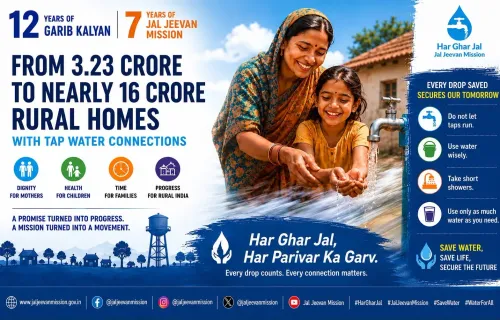
Union Jal Shakti Minister C. R. Paatil announced that 16 crore rural households have received tap water connections under the Jal Jeevan Mission, and said the remaining 3 crore families will be covered by 2028. The update, posted on X, sets a fresh public timeline for one of the Modi government's flagship rural infrastructure programmes.
Key Takeaways
Union Jal Shakti Minister C.
Paatil announced completion of tap-water connections for 16 crore rural households .
He set a 2028 deadline to cover the remaining 3 crore families under the Jal Jeevan Mission.
The Jal Jeevan Mission was launched on 15 August 2019 by PM Narendra Modi with an original 2024 target.
The scheme subsumed the earlier National Rural Drinking Water Programme.
Implementation is jointly executed by the Centre and state public health engineering departments.
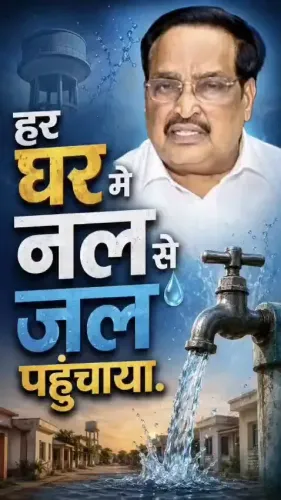
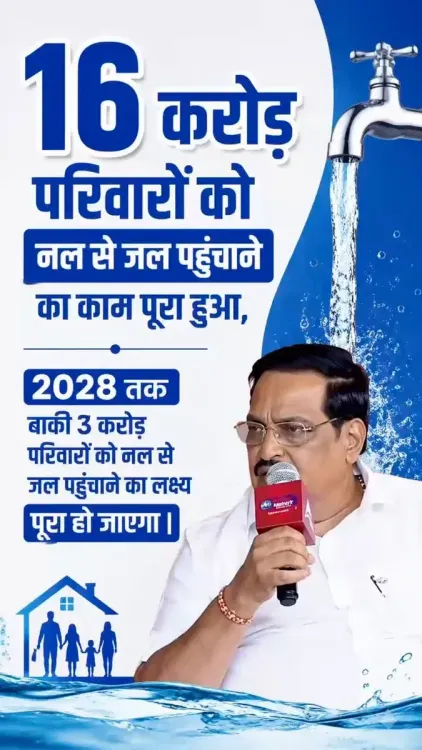
Union Jal Shakti Minister C. R. Paatil on Thursday, 4 June 2026, said the central government has completed piped drinking water connections for 16 crore rural households under the Jal Jeevan Mission, and committed to covering the remaining 3 crore families by 2028. The update, posted on X with a short video, frames the scheme's next milestone for the latter half of the decade.
In the post, written in Hindi, the minister stated: 'The work of providing tap water to 16 crore families has been completed, and by 2028 the target of delivering tap water to the remaining 3 crore families will be achieved.' (16 करोड़ परिवारों को नल से जल पहुंचाने का काम पूरा हुआ.)
Context
The Jal Jeevan Mission (JJM) was launched by Prime Minister Narendra Modi on 15 August 2019 from the Red Fort, with the aim of providing every rural household a Functional Household Tap Connection (FHTC). At launch, only a small fraction of India's roughly 19 crore rural households had piped water access, making it one of the largest drinking-water infrastructure pushes attempted anywhere.
The scheme subsumed the earlier National Rural Drinking Water Programme and is implemented jointly by the Centre and the states, with funding shared in differing ratios for general-category states, north-eastern and Himalayan states, and Union Territories.
Policy backdrop
The original deadline announced in 2019 was to achieve universal rural tap-water coverage by 2024. Official communications have since acknowledged that the timeline would need extension, citing geographical complexity, source sustainability issues, and varying state-level execution capacity. The 2028 horizon flagged in Paatil's post formalises that extended runway in public messaging.
The Ministry of Jal Shakti, which Paatil heads, is also responsible for source-strengthening initiatives, greywater management, and water-quality testing infrastructure that run alongside the headline tap-connection target.
Stakeholders and impact
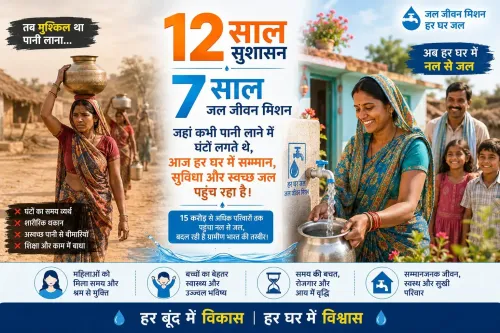
The principal beneficiaries are rural households, particularly women and girls who have historically borne the burden of fetching water over long distances. Tap-water coverage is also tied to public-health outcomes, with reduced incidence of waterborne disease cited as a co-benefit in successive government reviews.
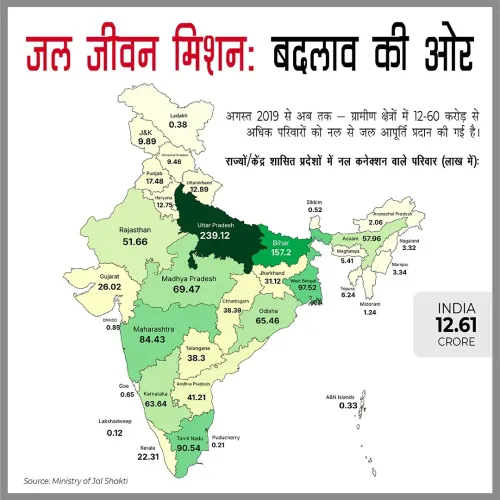
State governments remain the operational executors: connections are physically laid by state public health engineering departments or rural water supply agencies, while the Centre provides matched funding and monitoring through a national dashboard. Progress varies sharply across states, with some hill and tribal districts still lagging the national average.
What's next
With the remaining 3 crore connections concentrated in harder-to-reach geographies, including parts of the north-east, hilly terrain and water-stressed regions, attention will turn to source augmentation and last-mile delivery. Fund utilisation reports, parliamentary committee reviews and state-level implementation audits are likely to shape the path to the 2028 target.
For the Bharatiya Janata Party-led central government, sustaining the pace and visibility of the Jal Jeevan Mission also feeds into its broader narrative on basic-infrastructure delivery, alongside housing, electrification and cooking-gas connections. The next set of state-wise progress disclosures will indicate whether the new deadline is on track.
Point of View
Replacing the original 2024 deadline with a 2028 horizon for full coverage. It signals that the government wants credit for the bulk of the work done while quietly extending the runway for the toughest last-mile geographies. The framing fits a broader pattern of the Modi administration converting flagship welfare-infrastructure schemes into long-cycle delivery stories that span electoral terms. For opposition parties and parliamentary watchdogs, the gap between 16 crore done and 3 crore pending will be the natural pressure point.
NationPress
15 Sept 2026
Frequently Asked Questions
How many households have received tap water under Jal Jeevan Mission?
According to Union Jal Shakti Minister C. R. Paatil, 16 crore rural households have been provided functional tap water connections under the Jal Jeevan Mission so far.
What is the new deadline for Jal Jeevan Mission?
The new target announced by the minister is 2028, by which the remaining 3 crore rural families are to receive tap water connections.
When was the Jal Jeevan Mission launched?
The Jal Jeevan Mission was launched by Prime Minister Narendra Modi on 15 August 2019 to provide piped drinking water to every rural household in India.
Who is the current Union Jal Shakti Minister?
C. R. Paatil, a senior BJP leader and former Gujarat BJP state president, is the Union Minister of Jal Shakti.
Why was the original 2024 deadline for tap water coverage extended?
Official reviews have cited geographical challenges, source sustainability issues and uneven state-level execution capacity as reasons the timeline has been extended toward 2028.