CM Himanta Marks Oct 30 as Symbol of Assam's Transformation
Synopsis
On the anniversary of the deadly 2008 Assam serial blasts, CM Himanta Biswa Sarma declared that the same date now marks a transformed state — invoking the contrast between peak insurgency-era violence and the BJP's governance narrative of peace and development.
Key Takeaways
30 October 2008 : Coordinated serial blasts across Guwahati and other Assam districts killed over 80 people at the height of ULFA-linked militancy.
CM Himanta Biswa Sarma posted on 30 October 2026 marking the anniversary with the declaration: 'A new Assam has risen.' Assam's shift from insurgency to relative stability followed sustained peace talks and rehabilitation packages with ULFA and Bodo factions through the 2010s and 2020s.
The BJP has governed Assam since 2016 , consistently framing its tenure around the contrast between conflict-era Assam and a development-focused present.
Sarma has served as Chief Minister since 2021 and is also convenor of the North-East Democratic Alliance (NEDA) .
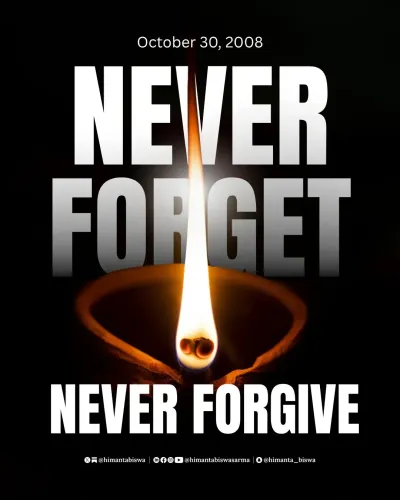
Eighteen years ago on this date, serial bomb blasts tore through Assam — killing over 80 people in a single day and marking the bloody peak of insurgency in the Northeast. On Friday, 30 October 2026, Assam Chief Minister Himanta Biswa Sarma invoked that anniversary with deliberate weight, posting on X: '30 October — Same date but two different eras. A new Assam has risen.'
The day that haunted Assam — 30 October 2008
The 2008 Assam serial blasts were a coordinated campaign of terror, with explosions ripping through Guwahati and several other districts in a single morning. The attack — attributed to operatives linked to the United Liberation Front of Asom (ULFA) — left over 80 dead and hundreds injured, and came at a moment when the state felt ungovernable to many who lived through it. For Assam, 30 October became a date stamped with grief.
From peace talks to the 'new Assam' narrative
The transformation Sarma references did not happen overnight. The years following 2008 saw successive state and central governments pursue sustained dialogue with insurgent outfits. Talks and rehabilitation packages with ULFA factions and Bodo groups through the 2010s and into the 2020s gradually wound down the cycle of violence that had defined Northeast India for a generation.
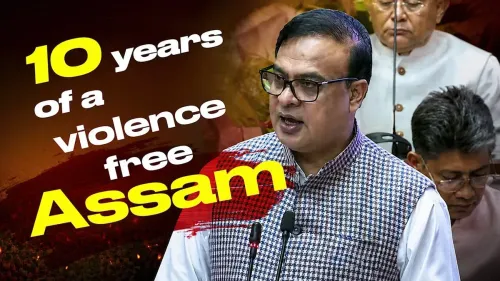
Since the BJP came to power in Assam in 2016, the state government has doubled down on a development-and-stability narrative — flagging investment summits, infrastructure projects, and the near-end of active militancy as evidence of a structural break from the past. Sarma, who became Chief Minister in 2021, has made this contrast a recurring theme of his political communication.
Why the anniversary matters as a political marker
Invoking 30 October is not just commemoration — it is framing. By placing the horror of 2008 against a claimed present of peace and progress, Sarma anchors BJP governance to a before-and-after story that resonates powerfully with residents who lived through the violence. The message is precise: the date has not changed, but Assam has. That is a bold claim — and one the state's development indicators and remaining peace-process milestones will continue to be measured against.
Point of View
He ties BJP rule directly to the peace dividend, making the transformation feel personal to every Assamese who remembers that morning. The risk is that the framing invites scrutiny: if peace and development are the yardstick, any unresolved grievances — remaining peace-process clauses, economic disparity in the Northeast — become visible. For now, it lands as a confident, emotionally resonant political communication from a leader who has made Assam's transformation the centrepiece of his brand.
NationPress
30 Oct 2026
Frequently Asked Questions
What happened in Assam on 30 October 2008?
On 30 October 2008 , a series of coordinated bomb blasts struck Guwahati and several other districts in Assam, killing over 80 people . The attacks were attributed to operatives linked to the insurgent group ULFA and represented one of the deadliest days of militancy-related violence in the state's history.
What did CM Himanta Biswa Sarma post on 30 October 2026?
Assam Chief Minister Himanta Biswa Sarma posted on X: '30 October — Same date but two different eras. A new Assam has risen.' The post invoked the contrast between the deadly 2008 serial blasts and what he described as a transformed, peaceful Assam today.
How has Assam changed since the 2008 blasts?
Following the 2008 peak of insurgency, successive state and central governments pursued peace talks and rehabilitation packages with groups including ULFA and Bodo factions. By the 2020s, active militancy had significantly declined, and the state shifted focus to investment and infrastructure under BJP governance since 2016 .
Who is Himanta Biswa Sarma?
Himanta Biswa Sarma is the Chief Minister of Assam, in office since 2021 . He is a senior BJP leader and serves as the convenor of the North-East Democratic Alliance (NEDA) , a political grouping of Northeast India's BJP-aligned parties.
What is ULFA and what role did it play in Assam's violence?
The United Liberation Front of Asom (ULFA) was the primary insurgent organisation active in Assam from the late 1970s, responsible for widespread violence through the 1990s and 2000s. Peace talks and surrender policies through the 2010s and 2020s substantially ended its armed campaign.