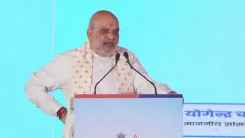
CM Himanta honours Ahom legacy at Jamugurihat

Synopsis
Assam Chief Minister Himanta Biswa Sarma received a symbol of Ahom heritage at Jamugurihat on October 22, 2026, honouring a dynasty whose 600-year reign and resistance against Mughal expansion remains central to Assamese identity and the state government's cultural politics.
Key Takeaways
CM Himanta Biswa Sarma received a symbol of Ahom dynasty heritage at Jamugurihat, Sonitpur district , on October 22, 2026 .
The Ahom dynasty ruled Assam for over 600 years , from the 13th to 19th centuries , and is renowned for defeating Mughal forces.
The Battle of Saraighat (1671) stands as the most celebrated symbol of Ahom military resistance on the Brahmaputra.
Jamugurihat in Sonitpur district is a periodic venue for cultural events linked to upper Assam's regional heritage.
Assam's government has consistently integrated Ahom-era history into state identity-building and public ceremonies.
The gesture reflects a broader North-East India pattern of highlighting pre-colonial kingdoms as sources of contemporary regional pride.
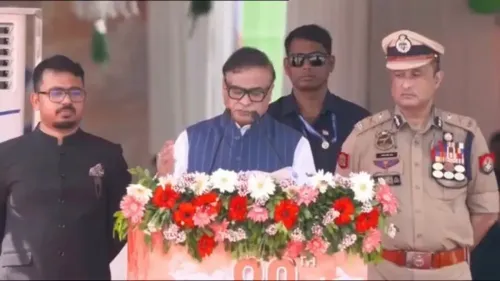
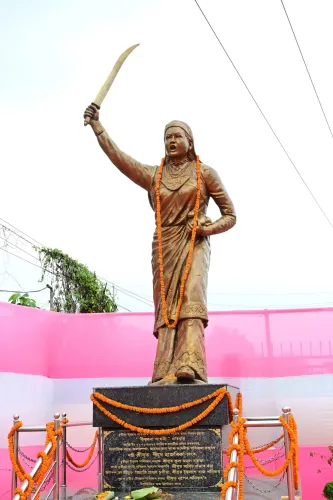
A sword, a shield, or some ancient emblem of warrior kings — whatever the symbol, the message was unmistakable. Assam Chief Minister Himanta Biswa Sarma on Thursday, October 22, 2026, received a cultural symbol representing the Ahom dynasty's heritage at Jamugurihat in Sonitpur district, invoking the memory of a kingdom that held off the Mughal empire for centuries.
Posting on X, CM Sarma wrote: 'The legacy of the Ahoms is written in courage, sacrifice and an unyielding love for our motherland. Honoured to have received this symbol of Assam's rich heritage at Jamugurihat.' The post, paired with a video, carried the unmistakable weight of a politician who sees cultural memory as living politics — not archived history.
The Ahoms: Six centuries of defiance in the Brahmaputra valley
The Ahom dynasty ruled large swathes of Assam for over 600 years, from the 13th to the 19th century — one of the longest-running medieval kingdoms in the subcontinent. What makes their story resonate even today is their military record: the Ahoms defeated Mughal forces across multiple campaigns, most famously at the Battle of Saraighat in 1671, a naval engagement on the Brahmaputra that has become the defining symbol of Assamese resistance.
That legacy is not merely commemorative. It sits at the heart of how Assam's political leadership frames regional identity — a pre-colonial, self-determined civilisation that was never fully subdued. For a state that has navigated complex questions of migration, demography, and belonging, the Ahom narrative offers a powerful anchor.
Jamugurihat and the politics of upper Assam's heritage circuit
Jamugurihat, a town in Sonitpur district, periodically hosts cultural events that draw on the region's deep historical roots. Upper Assam districts — geographically and historically the heartland of the Ahom kingdom — have become an increasingly active venue for state-sponsored heritage programming under successive governments.
CM Sarma's administration has continued and amplified this pattern, weaving references to Ahom-era martial tradition into public ceremonies, educational initiatives, and infrastructure namings. The gesture at Jamugurihat fits a wider effort to position Assam's pre-colonial identity as a source of contemporary pride rather than a footnote in textbooks.
Across the North-East, state leaders have leaned more visibly into the histories of pre-colonial regional kingdoms — partly as a counter-narrative to colonial-era frameworks that often marginalised these polities. Assam, with the Ahoms' documented resistance record, arguably has the richest material to work with.
As heritage events and potential museum inaugurations across upper Assam districts gather momentum in the months ahead, Jamugurihat's moment on October 22 marks one more deliberate link forged between a centuries-old dynasty and the state's present political imagination.
Point of View
Migration, and belonging are perennial flashpoints, invoking the Ahoms frames the current political moment as heir to a centuries-long continuum of Assamese self-determination. The pattern also fits a North-East-wide trend of pre-colonial kingdom revival as a soft-power instrument of regional consolidation. How deeply this heritage programming translates into institutional investment — museums, curricula, conservation — will determine whether it endures beyond the political cycle.
NationPress
22 Oct 2026
Frequently Asked Questions
Who were the Ahoms and why are they important to Assam?
The Ahoms were a dynasty that ruled large parts of Assam for over 600 years, from the 13th to the 19th century. They are celebrated for their military resistance against Mughal expansion, most famously at the Battle of Saraighat in 1671, and are considered the foundation of Assamese identity.
Where is Jamugurihat and what happened there?
Jamugurihat is a town in Sonitpur district of Assam. On October 22, 2026, Assam Chief Minister Himanta Biswa Sarma visited the town and received a cultural symbol representing the heritage of the Ahom dynasty at a local event.
What symbol did CM Himanta receive at Jamugurihat?
CM Himanta Biswa Sarma described it as 'a symbol of Assam's rich heritage' connected to the Ahom legacy. The exact nature of the item has not been independently specified beyond his post.
How does the Assam government commemorate Ahom history?
Assam governments have periodically organised events, ceremonies, and heritage programmes to commemorate the Ahom era as a core part of state identity, including public events in upper Assam districts like Sonitpur.
What was the Battle of Saraighat?
The Battle of Saraighat was a naval battle fought in 1671 on the Brahmaputra River, in which Ahom forces decisively defeated the Mughal army. It is the most celebrated military event in Assam's history and a defining symbol of Assamese resistance.