CM Majhi backs Amit Shah's counter to Rahul on 'vote chori'
Synopsis
Odisha CM Mohan Charan Majhi amplified Union Home Minister Amit Shah's sharp counter to Rahul Gandhi on vote chori, accusing Congress of shielding illegal infiltrators in voter rolls — continuing a well-worn BJP frame on electoral integrity and immigration.
Key Takeaways
Odisha CM Mohan Charan Majhi on October 22, 2026 shared a quote from Union Home Minister Amit Shah targeting Rahul Gandhi over 'vote chori' claims.
Shah accused Gandhi of using 'vote chori' rhetoric to protect infiltrators' votes rather than address genuine electoral concerns.
The BJP has consistently linked electoral-roll integrity to illegal immigration from Bangladesh since 2014 , especially in Assam and West Bengal .
The NRC exercise concluded in 2019 and the Assam Accord of 1985 underpin the party's policy argument on removing post- 1971 immigrants from rolls.
Majhi's amplification reflects a coordinated BJP effort to extend the national immigration-and-elections narrative to state-level audiences.
Election Commission actions on special summary revision of rolls in border states are the key development to watch next.
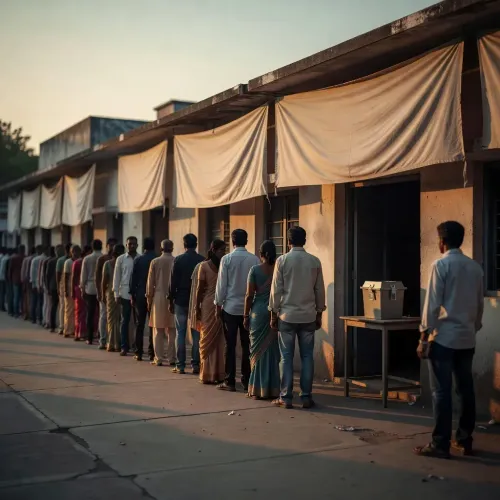
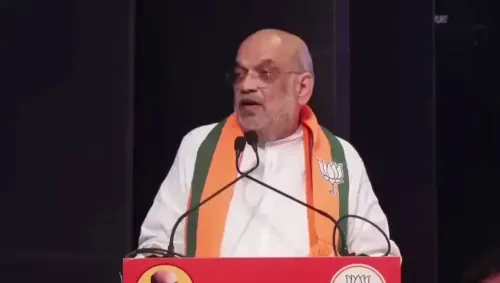
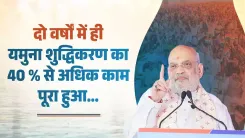
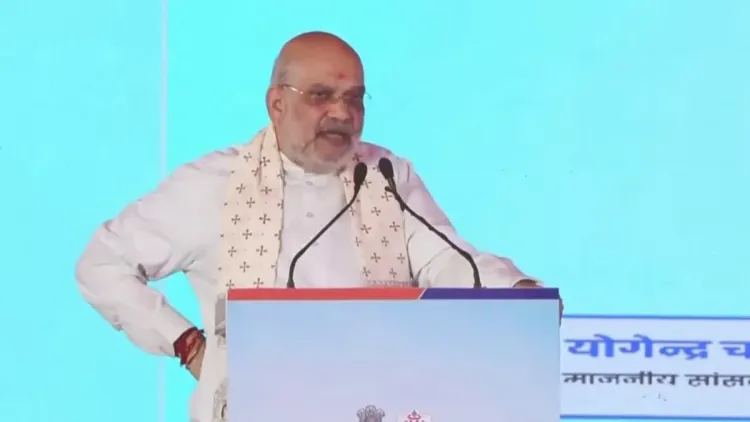
The fight over who controls India's electoral rolls just got sharper. Odisha Chief Minister Mohan Charan Majhi on Thursday, October 22, 2026 amplified a pointed broadside from Union Home Minister Amit Shah — aimed squarely at Rahul Gandhi over what the BJP is framing as a calculated bid to shield illegal infiltrators through the language of 'vote chori' (vote theft).
Posting on X, CM Majhi quoted Shah directly: 'Rahul Gandhi ji, the country understands the attempts to protect infiltrators' votes by making noise about vote chori.' The line is blunt and deliberate — a counter-accusation that turns the Congress narrative on its head.
The 'vote chori' frame and BJP's infiltrator charge
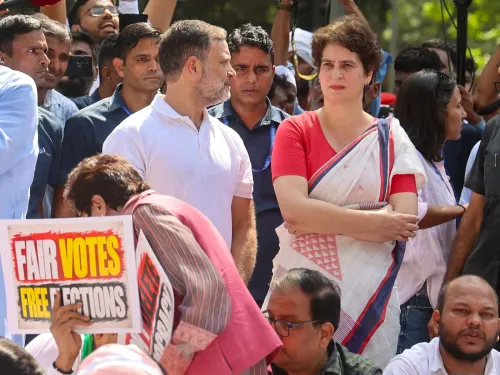
The term 'vote chori' — literally 'vote theft' — has been a recurring Congress rallying cry, used to allege that electoral processes are being manipulated against opposition voters. The BJP's response, amplified here by both Shah and Majhi, is to invert the charge: that raising alarm over voter-list irregularities is itself a smokescreen to prevent the identification and deletion of unauthorised immigrants from rolls. This framing is not new. Since 2014, BJP leaders have repeatedly linked electoral-roll integrity to illegal immigration from Bangladesh, particularly in Assam, West Bengal, and northeastern border states. The Assam Accord of 1985 and the National Register of Citizens exercise concluded in 2019 form the policy backbone of this argument — the idea that post-1971 illegal immigrants remain embedded in voter lists, and any attempt to clean them out gets labelled 'voter suppression' by the opposition.Why Majhi's amplification matters
Majhi became Chief Minister after BJP's decisive Odisha assembly victory in 2024 — a state that had been under Biju Janata Dal rule for 24 years. His decision to boost Shah's statement signals the party's coordinated intent: state-level leaders are being mobilised to carry the national message down to regional audiences ahead of any electoral revision exercise. Odisha does not share a border with Bangladesh, but the broader BJP narrative on infiltration and electoral integrity is designed to resonate nationally — framing the party as the defender of the 'genuine voter' against a Congress that, in this telling, prefers ambiguity on who is actually on the roll.The Election Commission in the crosshairs
What to watch now is whether the Election Commission of India accelerates any special summary revision of electoral rolls in states flagged for demographic pressure — Assam, West Bengal, Tripura, Meghalaya. Each such revision will be contested terrain: the BJP will invoke NRC logic; the opposition will invoke disenfranchisement. This exchange between Shah and Gandhi, amplified by Majhi, is the opening round of that argument. The country is not just debating who stole votes — it is debating whose votes count in the first place.Point of View
Forcing the Congress into the awkward position of defending roll inclusions that the party frames as democratic but the BJP frames as illegal. By having a state CM like Majhi relay Shah's line, the BJP is also stress-testing whether the infiltration-and-elections narrative — historically most potent in the northeast — can be normalised across non-border states. The timing, ahead of any potential electoral roll revision, is unlikely to be accidental; it pre-emptively delegitimises opposition objections as self-serving. Rahul Gandhi's actual remarks remain the missing piece — how he responds will define whether this becomes a defensive battle for Congress or a chance to reframe voter protection as a democratic principle.
NationPress
22 Oct 2026
Frequently Asked Questions
What does 'vote chori' mean in Indian politics?
'Vote chori' literally means 'vote theft' in Hindi and is used by opposition parties, including Congress, to allege that electoral processes or voter lists are being manipulated to disadvantage them. The BJP counters that such allegations are used to block scrutiny of illegal immigrants on voter rolls.
What is Amit Shah's argument about infiltrators and votes?
Home Minister Amit Shah argues that Congress leaders who raise 'vote chori' allegations are actually trying to protect illegal immigrants — primarily from Bangladesh — who may be registered as voters, and that cleaning electoral rolls of such entries is being falsely labelled as voter suppression.
Why is Odisha CM Mohan Majhi sharing this statement?
Majhi, who led BJP to its first Odisha government in 2024, is amplifying the national party line at state level, signalling coordinated messaging that the infiltration-and-elections narrative is a BJP-wide position and not confined to border states.
What is the NRC and how does it relate to voter lists?
The National Register of Citizens , whose Assam exercise was concluded in 2019 , was designed to identify residents who entered after March 24, 1971 . The BJP has argued that those excluded from the NRC or similar exercises should also be removed from electoral rolls, while critics warn this risks disenfranchising genuine citizens.
Which states are most affected by the infiltration-voter-list debate?
The debate is most intense in Assam , West Bengal , Tripura , and other northeastern border states that share a frontier with Bangladesh , where demographic changes since 1971 have had visible political consequences.