Pralhad Joshi: Gujarat verdict exposes Congress, Shah fires back
Synopsis
Minister Pralhad Joshi amplifies Amit Shah's counter to Rahul Gandhi's electoral allegations on October 14, 2026, invoking Gujarat's long BJP record as evidence of Congress's failure to earn public trust — and projecting the fight forward to 2029.
Key Takeaways
Pralhad Joshi posted on October 14, 2026 , backing Amit Shah 's rebuttal of Rahul Gandhi's allegations against India's electoral process.
BJP frames Congress's questioning of elections as an attempt to 'discredit the electoral process' rather than accept the people's verdict.
Gujarat has returned BJP majorities in every assembly election since 1995 , making it a centrepiece of the BJP's legitimacy argument.
Opposition parties including Congress have raised EVM-VVPAT and electoral roll concerns after both the 2019 and 2024 general elections.
Joshi's post explicitly projects the contest forward to the 2029 Lok Sabha elections , signalling BJP intends to fight on the same narrative terrain.
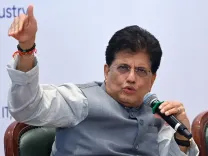
Gujarat has become the latest flashpoint in India's sharpest political rivalry — and Union Consumer Affairs Minister Pralhad Joshi is making sure the message lands. On Wednesday, October 14, 2026, Joshi took to X to amplify Union Home Minister Amit Shah's counter-offensive against Congress leader Rahul Gandhi, framing Gujarat's electoral record as proof that the Congress has simply failed to win the public's trust.
Shah fires back at Rahul Gandhi's 'baseless allegations'
Joshi's post puts Shah front and centre, crediting him with hitting back at what the BJP characterises as Rahul Gandhi's 'baseless allegations' against India's electoral process. The charge is a familiar one in New Delhi's political arena: BJP leaders consistently argue that Congress's repeated questioning of election outcomes — from EVM-VVPAT reliability to electoral roll integrity — amounts to an attempt to delegitimise democratic mandates rather than address real governance failures.
Shah's pushback, as framed by Joshi, carries a pointed edge: 'no amount of excuses or attempts to discredit the electoral process can erase the people's verdict.' It is a line calibrated to resonate well beyond Gujarat — directed at a national audience still absorbing the after-effects of the 2024 Lok Sabha elections.
Gujarat's electoral weight in the BJP-Congress battle
Gujarat is not chosen randomly. The western state has returned BJP majorities in every assembly election since 1995 — a three-decade dominance that the party regularly deploys as evidence of organic popular support. For Congress, it remains one of the most difficult states to crack, and that sustained underperformance makes it a potent symbol in the BJP's broader narrative about the opposition's disconnect from voters.
The pattern here is well-worn but politically durable. After every major election cycle — 2019 and 2024 most recently — Congress and allied opposition parties have raised institutional questions around EVMs and voter rolls, while BJP leaders have responded by pointing to scale and consistency of their victories as the only verdict that counts.
Eyes on 2029 — the countdown has begun
Joshi closes with a forward thrust: 'The message from Gujarat is clear — the people will have their say again in 2029.' It is early in the cycle, but that is precisely the point. BJP is signalling that it intends to fight the next Lok Sabha contest on the same terrain — institutional credibility, electoral legitimacy, and the Congress's inability to convert opposition rhetoric into votes.
With Rahul Gandhi expected to respond and the broader opposition coalition recalibrating after 2024, this exchange is less a closing statement and more an opening salvo of a three-year war of narratives. Gujarat, it seems, is just where the latest round began.
Point of View
BJP responds by pointing to the scale and consistency of its victories as the only credible answer. By deploying Gujarat — a state the BJP has held for over three decades — Joshi and Shah are not just defending a result; they are reinforcing a broader argument that opposition scepticism about EVMs is a substitute for electoral strategy. The early invocation of 2029 is strategically deliberate: it frames the BJP as already campaigning on a proven record, while positioning Congress as still litigating 2024.
NationPress
14 Oct 2026
Frequently Asked Questions
What did Pralhad Joshi say about Gujarat and the Congress?
Joshi posted on October 14, 2026, claiming that Gujarat has exposed Congress's failure to win public trust, amplifying Amit Shah's rebuttal of Rahul Gandhi's allegations against India's electoral process.
What allegations did Rahul Gandhi make about elections?
Rahul Gandhi and the Congress party have publicly questioned the reliability of EVMs and the integrity of electoral rolls, particularly following the 2019 and 2024 general elections.
Why does BJP keep referring to Gujarat in election debates?
Gujarat has returned BJP majorities in every assembly election since 1995, making it the party's most cited example of sustained, democratically verified public support.
What did Amit Shah say in response to Rahul Gandhi?
As characterised by Pralhad Joshi, Shah asserted that no excuses or attempts to discredit the electoral process can erase the people's verdict, directly countering Gandhi's allegations.
What is the significance of mentioning 2029 in Joshi's post?
Invoking 2029 signals that BJP is already framing the next Lok Sabha election as a continuation of the same electoral legitimacy argument, positioning itself well ahead of the next major cycle.