India-US ties will only grow stronger, no major obstacles: Piyush Goyal
Synopsis
Commerce Minister Piyush Goyal used the Bloomberg New Economy Forum to send a clear signal: the India-US partnership is built on economic, security, and democratic foundations deep enough to outlast any political change in either capital. With India’s trade agreement coverage now spanning $70 trillion in global GDP — up from $10 trillion before 2014 — Goyal’s remarks frame India as a confident, outward-looking trade power with Washington at its centre.
Key Takeaways
Commerce Minister Piyush Goyal said the India-US relationship will grow stronger regardless of political changes in either country, speaking at the Bloomberg New Economy Forum on 14 October 2026 .
Goyal stated he sees no major obstacles to reaching trade agreements with the United States , India’s largest trading partner.
The partnership spans trade, defence cooperation, technology , and critical supply chains , according to the minister.
India has signed preferential trade agreements with 38 developed nations in the past four to four-and-a-half years.
India’s trade agreement coverage has grown from economies worth $10 trillion in GDP (pre-2014) to $70 trillion today.
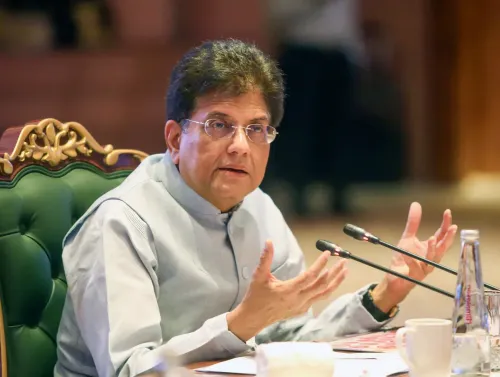
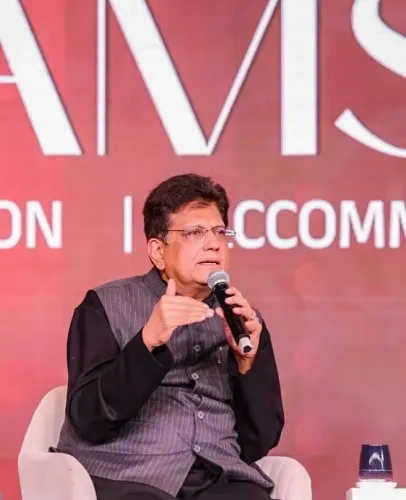
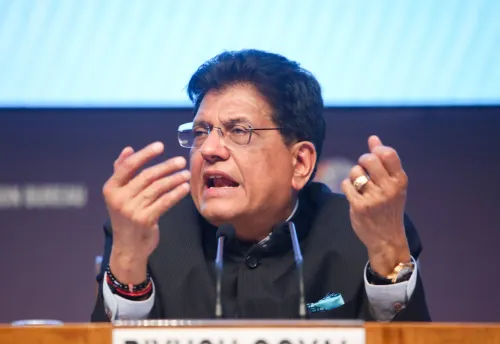
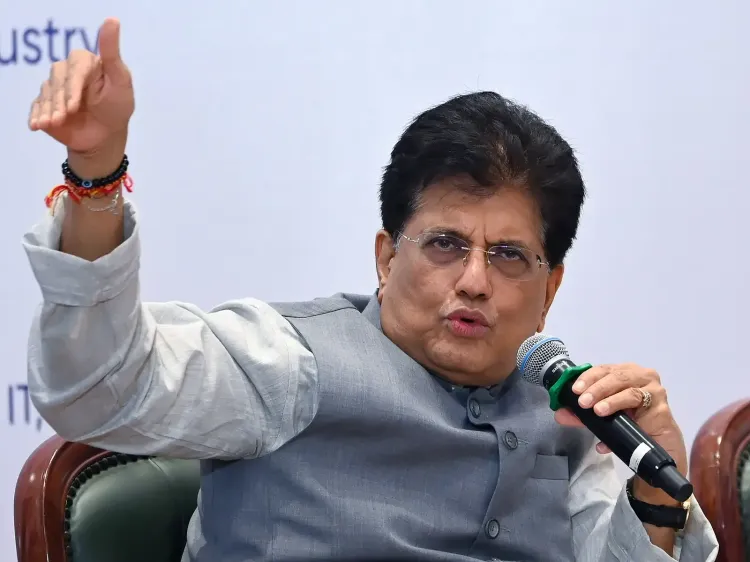
Commerce and Industry Minister Piyush Goyal on Wednesday, 14 October 2026, declared that the India-US relationship is “highly consequential” and will only grow stronger, regardless of shifts in political leadership in either country. Speaking at the Bloomberg New Economy Forum in New Delhi, Goyal said he sees “no major obstacles” to reaching agreements with Washington.
What Goyal Said
Addressing the forum, the minister offered an unambiguous endorsement of the bilateral relationship. “In my view, the partnership between the two countries is highly substantive and consequential for the world, given that both are large democracies,” Goyal said. “The United States is India’s largest trading partner, and I believe it will continue to be so in the years to come. By and large, I do not see any major obstacles to reaching agreements with the United States.”
Goyal stressed that the relationship is not confined to trade alone. “The India-US relationship is highly consequential and, I believe, will only grow stronger irrespective of changes in political thinking in either country,” he said, pointing to joint defence exercises, open technology supply chains, and people-to-people ties as pillars of the partnership.
The Breadth of the Partnership
The minister outlined four core dimensions of the bilateral engagement: trade, defence cooperation, technology, and critical supply chains. He described the relationship as drawing its strength from “economic, political and security imperatives,” adding that it constitutes “a stable and resilient partnership.”
Notably, Goyal framed the durability of the relationship as a message to the broader world, saying, “I do not think the rest of the world needs to worry about it.” This comes amid global speculation about the trajectory of US foreign policy and its implications for key bilateral relationships.
India’s Expanding Trade Footprint
Goyal also highlighted India’s accelerating push for preferential trade agreements. According to the minister, India has signed preferential trade agreements with 38 developed nations over the past four to four-and-a-half years alone. “Until 2014, India had preferential market access covering economies with a combined GDP of approximately $10 trillion. Today, our trade agreements cover economies representing around $70 trillion in GDP,” he said.
The minister framed India’s trade strategy as a two-way opening: “Our objective is to open India’s markets to the world while ensuring that other markets are equally accessible to Indian businesses.”
Context and Significance
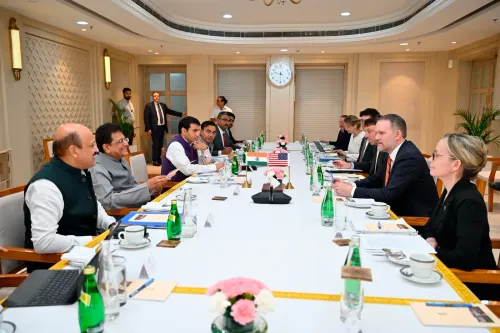
Goyal’s remarks carry weight at a time when global trade architectures are under pressure from protectionist trends and geopolitical realignments. India and the United States have been engaged in negotiations on a bilateral trade deal, with tariffs and market access remaining sticking points in past rounds. The minister’s confidence about removing “major obstacles” signals continued diplomatic momentum, even if a finalised agreement remains pending.
With India’s trade agreement coverage expanding from economies worth $10 trillion to $70 trillion in GDP over the past decade, the scale of ambition is clear — though the gap between agreements signed and tangible trade gains will be closely watched by analysts and industry.
Point of View
But coverage is not the same as utilisation; India’s trade-to-GDP ratio and export diversification will be the real scorecard. The minister’s insistence that the bilateral is ‘resilient to political change’ is also a quiet acknowledgement that the political risk is real enough to address publicly. The harder question — whether a finalised India-US bilateral trade deal is genuinely within reach, given persistent disagreements on tariffs and market access — was notably left unaddressed.
NationPress
14 Oct 2026
Frequently Asked Questions
What did Piyush Goyal say about the India-US relationship at the Bloomberg New Economy Forum?
Commerce and Industry Minister Piyush Goyal said the India-US relationship is ‘highly consequential’ and will only grow stronger regardless of political changes in either country. He added that he sees no major obstacles to reaching trade agreements with the United States, which remains India’s largest trading partner.
Why does Goyal believe India-US ties are resilient to political change?
Goyal argued that the partnership is grounded in economic, political, and security imperatives shared by both countries. He pointed to joint defence exercises, technology cooperation, critical supply chains, and people-to-people ties as structural pillars that go beyond any single government or political cycle.
How much has India expanded its trade agreement coverage?
According to Goyal, India has signed preferential trade agreements with 38 developed nations over the past four to four-and-a-half years. Trade agreement coverage has grown from economies representing a combined GDP of approximately $10 trillion before 2014 to around $70 trillion today.
What areas beyond trade does the India-US partnership cover?
The India-US partnership extends to defence cooperation through joint exercises, technology collaboration, open critical supply chains in goods and services, and people-to-people ties, according to Goyal’s remarks at the Bloomberg New Economy Forum.
Is there a finalised India-US trade deal?
No finalised bilateral trade deal has been announced. While Goyal expressed confidence that there are no major obstacles to reaching agreements, ongoing negotiations on tariffs and market access have yet to produce a concluded deal.