Goyal: India-US Relationship 'Very Consequential for the World'
Synopsis
Commerce Minister Piyush Goyal on October 14, 2026 called the India-US relationship 'very consequential for the world,' reaffirming a partnership backed by over $190 billion in bilateral trade and deepening strategic ties since the 2008 Civil Nuclear Agreement.
Key Takeaways
Piyush Goyal , Union Commerce and Industry Minister, described the India-US relationship as 'very consequential for the world' on October 14, 2026 .
Bilateral goods and services trade between India and the US has exceeded $190 billion in recent years.
The 2008 India-US Civil Nuclear Agreement was the turning point that shifted the relationship from estrangement to strategic partnership.
The 2015 US-India Joint Strategic Vision expanded the framework to cover the Asia-Pacific and Indian Ocean Region.
The next round of the India-US Trade Policy Forum is a key near-term venue for supply-chain and technology cooperation announcements.
Goyal serves as both Commerce Minister and Leader of the House in the Rajya Sabha , giving his public statements diplomatic as well as legislative weight.
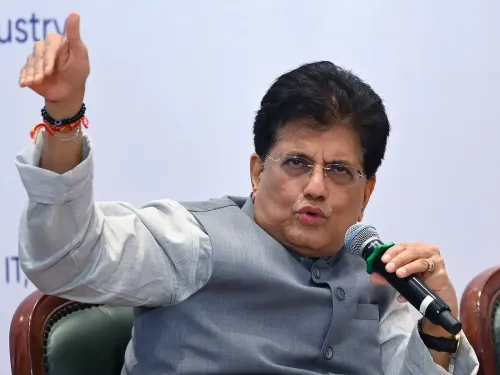
The bond between the world's largest democracy and its most powerful has a minister's full attention. Union Commerce and Industry Minister Piyush Goyal on Wednesday, October 14, 2026, described the India-US relationship as 'very consequential for the world' — a pointed, confident affirmation of a partnership that has moved from decades of estrangement to one of the defining strategic alignments of the 21st century.
From nuclear breakthrough to $190-billion trade corridor
The relationship Goyal is championing has been years in the making. The landmark 2008 India-US Civil Nuclear Agreement cracked open a door that had been shut since India's nuclear tests, transforming the two nations from wary bystanders into strategic partners. By the time the 2015 US-India Joint Strategic Vision for the Asia-Pacific and Indian Ocean Region was signed, the framework had expanded well beyond atoms — encompassing defence, technology, and a shared read on regional stability.
The economic scaffolding underneath that strategic architecture is formidable. Bilateral goods and services trade between the two countries has surpassed $190 billion in recent years, with Indian exporters and US investors increasingly woven into each other's supply chains. For a Commerce Minister whose brief is precisely that web of trade and investment, the stakes are anything but abstract.
Why a Commerce Minister is speaking in geopolitical terms
Goyal's framing is deliberate. As Leader of the House in the Rajya Sabha and a senior BJP figure, he occupies a perch where trade and politics are inseparable. Successive Indian and US administrations — across parties on both sides — have called this partnership a 'defining' one for the century, and Goyal's post fits squarely into that long-running official positioning.
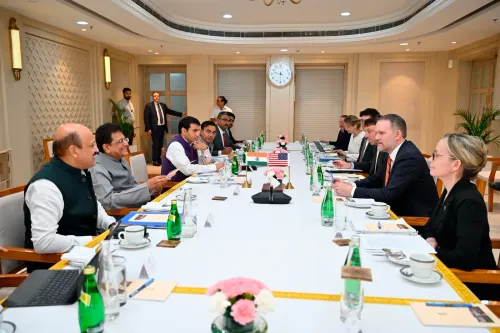
The next concrete test of that positioning will come at the next round of India-US Trade Policy Forum meetings, where both sides are expected to surface fresh proposals on supply-chain resilience and technology cooperation. A minister's public affirmation — brief but unambiguous — is rarely noise ahead of those conversations.
Point of View
While brief, is consistent with India's long-standing strategy of publicly anchoring the US relationship in global — rather than purely bilateral — terms, signalling to allies and rivals alike that New Delhi sees Washington as a peer-level partner in shaping world order. For a Commerce Minister heading into what are expected to be complex trade forum negotiations, the framing also performs a quiet diplomatic function: it elevates the conversation above transactional tariff disputes toward shared strategic interest. The remark fits a broader BJP pattern of projecting India as an indispensable player in great-power dynamics, not merely a recipient of partnership. Whether it precedes a concrete deliverable or stands alone as reaffirmation, it keeps the political temperature of the relationship warm.
NationPress
14 Oct 2026
Frequently Asked Questions
What did Piyush Goyal say about India-US relations in October 2026?
On October 14, 2026, Union Commerce and Industry Minister Piyush Goyal posted on X that 'The India-US relationship is very consequential for the world,' reaffirming India's long-standing position on the strategic importance of the partnership.
How large is the India-US bilateral trade relationship?
Bilateral goods and services trade between India and the United States has exceeded $190 billion in recent years, making the US one of India's most significant economic partners.
What was the turning point in India-US relations?
The 2008 India-US Civil Nuclear Agreement is widely regarded as the landmark moment that transformed the bilateral relationship from estrangement — rooted in Cold War-era differences — into a full-fledged strategic partnership.
What is the India-US Trade Policy Forum?
The India-US Trade Policy Forum is a high-level bilateral mechanism through which both governments discuss and negotiate trade issues, including market access, supply-chain cooperation, and technology transfer. It is one of the primary institutional channels for advancing commerce between the two countries.
What is Piyush Goyal's role in the Indian government?
Piyush Goyal is India's Union Minister of Commerce and Industry and also serves as the Leader of the House in the Rajya Sabha. He is a senior leader of the Bharatiya Janata Party (BJP) and oversees India's trade and investment policies.