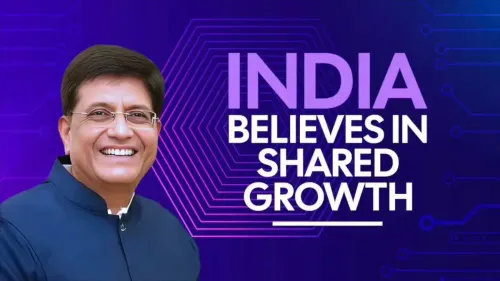
Goyal: India's Rise Is an Opportunity for the World
Synopsis
Union Commerce Minister Piyush Goyal on 27 May 2026 declared India's rise a global opportunity, reinforcing the Modi government's pitch to foreign investors and trade partners as India cements its place as the world's fifth-largest economy.
Key Takeaways
Piyush Goyal , Union Commerce and Industry Minister, posted on 27 May 2026 that 'India's rise is an opportunity for the world.' India is currently the fifth-largest economy globally, backed by sustained high GDP growth over the past decade.
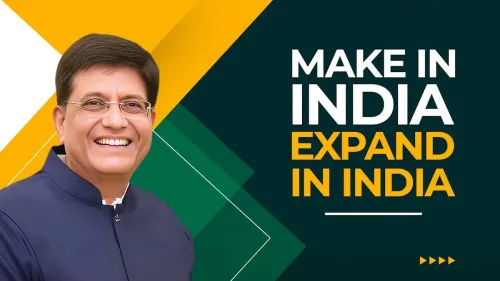
The Make in India initiative (launched September 2014 ) and the Production Linked Incentive schemes (from 2020 ) form the structural backbone of this growth narrative.
The India-UAE Comprehensive Economic Partnership Agreement ( 2022 ) marked a renewed push for bilateral trade deals to expand market access.
Progress on new trade agreements and quarterly FDI data will be the key indicators of whether the narrative converts into investment inflows.
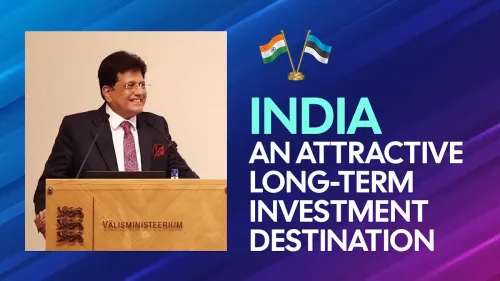
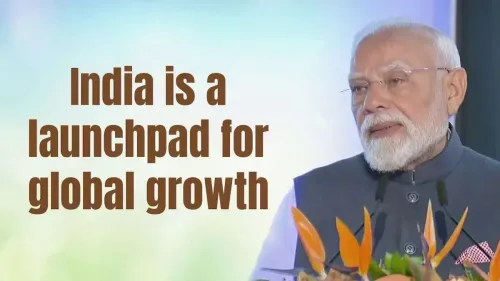
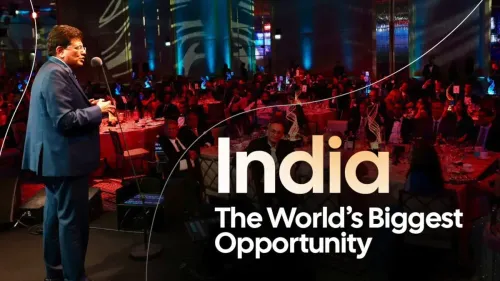
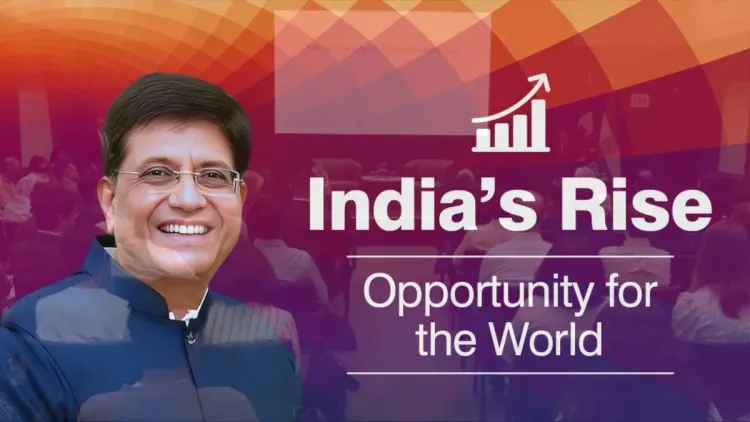
Union Commerce and Industry Minister Piyush Goyal on Wednesday, 27 May 2026 declared that India's ascent on the global stage represents an opportunity for the entire world, sharing the message on X alongside a video post.
Context
In a brief but pointed post, Goyal wrote: 'India's rise is an opportunity for the world.' The statement, accompanied by the Indian tricolour emoji and a video, distils a core pillar of the current government's foreign economic policy — that India's scale and growth trajectory benefit partner nations and global investors, not just domestic stakeholders.
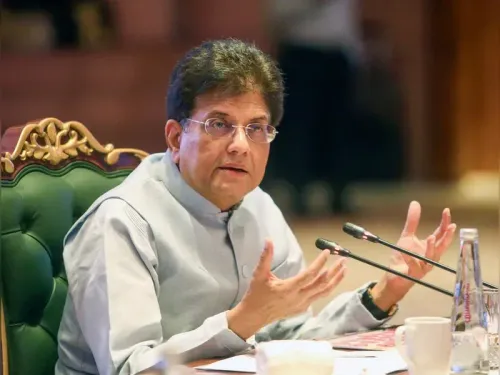
As Leader of the House in the Rajya Sabha and the minister responsible for trade policy, exports promotion, and investment facilitation, Goyal is among the most prominent voices articulating India's economic ambitions to international audiences.
Policy Backdrop
India has emerged as the fifth-largest economy in the world over the past decade, recording sustained high GDP growth and becoming a favoured destination for supply-chain diversification. This trajectory has been underpinned by a series of structural policy interventions.
The Make in India initiative, launched in September 2014 by Prime Minister Narendra Modi, set out to raise manufacturing's share of GDP and attract foreign direct investment across 25 sectors. From 2020 onward, the Production Linked Incentive (PLI) scheme family extended financial incentives to priority sectors including electronics and pharmaceuticals, aiming to anchor global manufacturers in Indian supply chains.
On the trade front, India signed the India-UAE Comprehensive Economic Partnership Agreement in 2022, expanding market access for goods and services and signalling a renewed appetite for bilateral trade deals after years of multilateral caution.
Stakeholders and Impact
Global investors and Indian exporters are the primary constituencies for this messaging. For multinationals seeking alternatives in global value chains — accelerated by post-pandemic supply disruptions and geopolitical realignments — India's combination of a large domestic market, a young workforce, and improving infrastructure makes it a compelling proposition.
For Indian exporters, the framing reinforces government backing for outward-looking growth strategies and signals continued policy support for sectors targeting global markets. The consistent articulation of this narrative by a senior cabinet minister also serves to reassure foreign governments and trade partners that India's economic openness is a settled political position, not a transient stance.
What's Next
The proof of the proposition will lie in concrete data points: progress on new bilateral and regional trade agreements, quarterly foreign direct investment inflows, and export growth figures across goods and services. Goyal's ministry is the nodal body tracking these metrics and driving negotiations.
As India continues to engage trading partners on multiple fronts simultaneously, statements of this kind from the commerce minister serve as diplomatic signalling — reinforcing that New Delhi views deeper global economic integration as a strategic priority. Whether that translates into landmark deal closures in the near term will be the test that investors and partner governments will watch closely.
Point of View
Positioning New Delhi as a partner rather than a competitor in global value chains. Whether this messaging is followed by tangible deal closures will determine its credibility with the investor community.
NationPress
11 Oct 2026
Frequently Asked Questions
What did Piyush Goyal post on 27 May 2026?
Piyush Goyal posted on X that 'India's rise is an opportunity for the world,' accompanied by an Indian flag emoji and a video, reinforcing the government's global economic pitch.
Why is India considered a global economic opportunity?
India is the fifth-largest economy in the world with sustained high GDP growth, a large domestic market, a young workforce, and improving infrastructure, making it attractive for supply-chain diversification.
What is the Make in India scheme?
Make in India is a flagship initiative launched by Prime Minister Narendra Modi in September 2014 to increase manufacturing's share of GDP and attract foreign direct investment across 25 sectors.
What are Production Linked Incentive (PLI) schemes?
PLI schemes, rolled out from 2020 onward, offer financial incentives to domestic and foreign manufacturers in priority sectors such as electronics and pharmaceuticals to boost India's production capacity.
What trade agreements has India signed recently?
India signed the India-UAE Comprehensive Economic Partnership Agreement in 2022, expanding market access for goods and services and signalling a renewed focus on bilateral trade deals.