Goyal pitches India as global tech leader
Synopsis
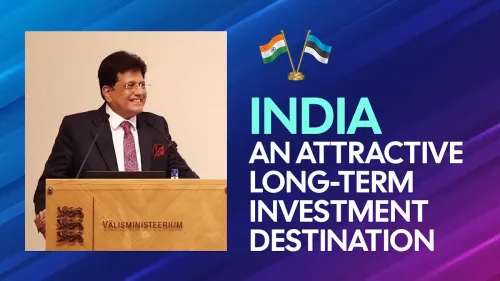
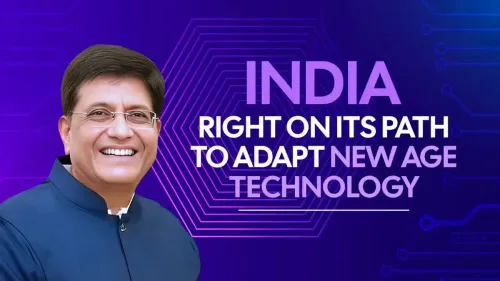
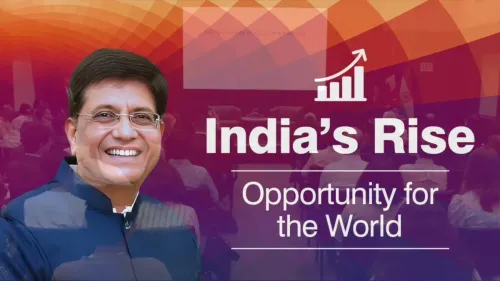
Union Commerce Minister Piyush Goyal on June 18 declared India a compelling case for the world, pointing to its young population, affordable data and growing tech capabilities as factors placing the country at the forefront of global technological development.
Key Takeaways
Piyush Goyal , Union Minister of Commerce and Industry, on June 18, 2026 publicly positioned India as a global technology leader on X.
He cited India 's young and talented population, affordable data, and a vision for shared growth as core competitive advantages.
The statement builds on a decade of policy groundwork including Digital India (2015), Make in India (2014), and PLI schemes (from 2020).
India is the world's most populous nation with one of the most affordable mobile data markets globally.
Key stakeholders include tech startups, global investors, telecom operators, and India 's large working-age population.
Upcoming Union Budget decisions on PLI tranches and FDI policy will test whether the government's ambitions translate into concrete investment commitments.
Union Commerce and Industry Minister Piyush Goyal on Thursday, June 18, 2026, positioned India as a compelling destination for global technology investment, citing the country's young population, affordable data, and a vision for shared growth as structural advantages that place it at the forefront of technological development.
Context
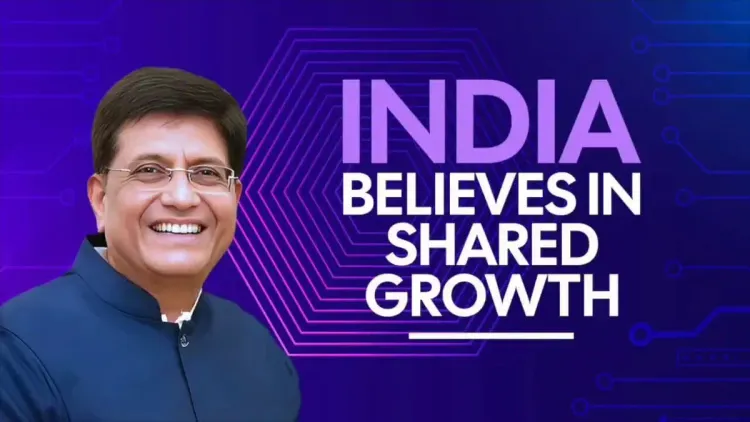
In his post on X, Goyal wrote: 'India is a compelling case for the world. Our young and talented population, affordable data, growing capabilities and a vision for shared growth, position India at the forefront of technological development.' The statement comes as India continues to assert itself as a preferred destination for global technology firms and investors looking to diversify beyond established tech ecosystems.
As Leader of the House in the Rajya Sabha and the minister overseeing trade and industrial policy, Goyal is among the government's most prominent voices on economic positioning. His remarks reflect an official narrative that frames demographic scale and digital connectivity as competitive advantages rather than developmental challenges.
Policy Backdrop
The argument Goyal makes rests on a decade-long policy foundation. The Digital India programme, launched in July 2015, set out to expand broadband infrastructure, deliver government services electronically, and improve digital literacy at scale. The result has been one of the world's most affordable mobile data markets, with hundreds of millions of Indians now connected to the internet.
Complementing this, the Make in India campaign, announced in September 2014, and the Production Linked Incentive (PLI) schemes — notified from 2020 onwards — have targeted domestic manufacturing of electronics, mobile devices, and IT hardware. Together these initiatives form part of the broader Atmanirbhar Bharat framework, which seeks to reduce import dependence while integrating Indian industry into global value chains.
The emphasis on 'shared growth' in Goyal's post is notable: it positions India not merely as a manufacturing hub but as a partner in a more distributed global technology order, a counterpoint to concentrated tech ecosystems that have drawn regulatory and geopolitical scrutiny elsewhere.
Stakeholders and Impact
The primary beneficiaries of the policy direction Goyal describes are India's technology startups, global investors seeking alternatives to established markets, telecom operators who have built out the data infrastructure, and the country's large working-age population seeking skilled employment. India's demographic profile — the world's most populous nation with a significant share of its population under 35 — is central to the minister's pitch.
For global technology companies, affordable data and a large domestic consumer base reduce the cost of user acquisition, while PLI incentives lower the threshold for committing to local manufacturing. The convergence of these factors has drawn semiconductor, electronics, and software investment into the country over recent years.
What's Next
Attention will focus on the rollout progress of approved semiconductor and electronics manufacturing projects, as well as any new PLI tranches or foreign direct investment policy adjustments that may emerge from the commerce ministry or the forthcoming Union Budget. Goyal's public framing of India's technology credentials suggests the government is actively building the narrative ahead of potential policy announcements. If the investment pipeline translates into on-ground capacity, India's claim to technological leadership could shift from aspiration to measurable reality in the years ahead.
Point of View
Shareable articulation of the government's technology pitch aimed at global audiences. By anchoring the argument in structural factors (demography, data affordability, capabilities) rather than specific schemes, the minister is signalling confidence that India's fundamentals are now strong enough to stand on their own. The framing of 'shared growth' is also strategically significant: it positions India as an alternative to concentrated, closed tech ecosystems, appealing to partners wary of over-dependence on any single geography. Whether the rhetoric converts into binding investment commitments will be the real test of this narrative in the months ahead.
NationPress
17 Sept 2026
Frequently Asked Questions
Why is Piyush Goyal calling India a compelling case for the world?
Commerce Minister Piyush Goyal is highlighting India's structural advantages — a large young population, affordable internet data, and expanding technological capabilities — to attract global investment and position India as a leading destination for technology development.
What is the Digital India programme?
Digital India is a flagship government programme launched in July 2015 aimed at expanding broadband infrastructure, delivering public services electronically, and improving digital literacy across the country.
How does India's data affordability help its tech sector?
Affordable mobile data, a result of intense telecom competition and government policy, has connected hundreds of millions of Indians to the internet, creating a massive user base that lowers customer acquisition costs for technology companies and startups.
What are PLI schemes and how do they relate to India's tech ambitions?
Production Linked Incentive schemes, introduced from 2020, offer financial incentives to companies that manufacture electronics, mobile devices, and IT hardware domestically, helping India build local production capacity and reduce import dependence.
What should investors watch for after Goyal's statement on India's tech potential?
Investors should track the rollout of approved semiconductor and electronics manufacturing projects, any new PLI tranches, and FDI policy changes expected in the forthcoming Union Budget, which will indicate how the government plans to back its technology ambitions with concrete policy action.