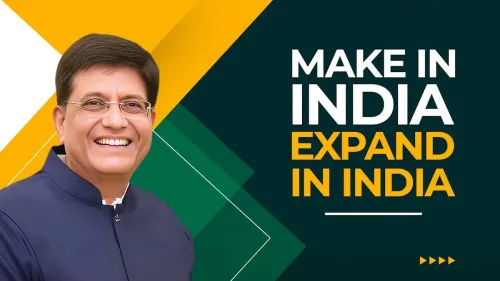
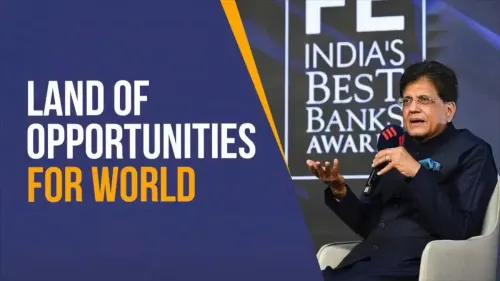
Piyush Goyal calls India a top long-term investment hub
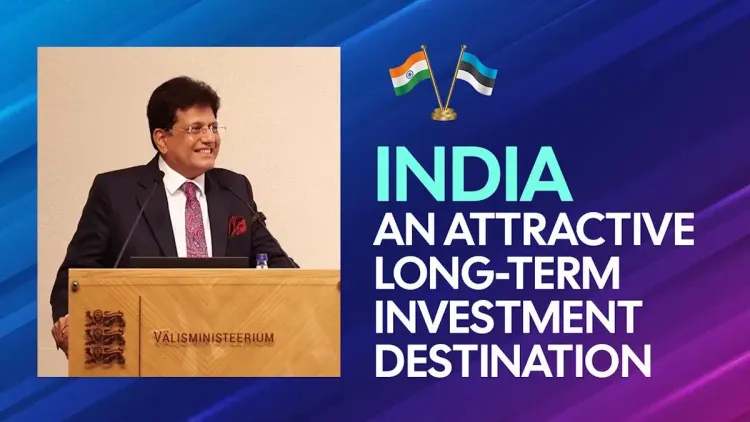
Synopsis
Union Commerce Minister Piyush Goyal on 17 July 2026 publicly reaffirmed India as a premier long-term investment destination, reinforcing a decade-long policy push spanning Make in India, PLI schemes, and progressive FDI liberalisation across 14-plus sectors.
Key Takeaways
Piyush Goyal , Union Commerce and Industry Minister, on 17 July 2026 declared India a 'very attractive long-term investment destination' on X.
The statement aligns with a decade-long policy architecture including Make in India (launched September 2014 ) and PLI schemes across 14 sectors from 2020.
DPIIT oversees FDI policy, ease-of-doing-business reforms, and investment facilitation that underpin the minister's claim.
Global supply-chain diversification away from single-country dependence has increased scrutiny of India as an alternative manufacturing hub.
Quarterly FDI data from DPIIT and any PLI scheme expansions in the next Union Budget will be key indicators of follow-through.
MSMEs and domestic component makers stand to benefit indirectly if large anchor investments materialise.
Union Commerce and Industry Minister Piyush Goyal on Friday, 17 July 2026, reaffirmed India's standing as a premier destination for long-term foreign investment, posting a brief but pointed message on X that signals continued government focus on drawing global capital into the country.
Context
The minister's statement — 'India is a very attractive long-term investment destination' — is brief but carries institutional weight coming from the Cabinet minister who oversees trade policy, the Department for Promotion of Industry and Internal Trade (DPIIT), and ease-of-doing-business reforms. Such public affirmations by senior ministers typically accompany or precede fresh FDI data releases, bilateral investor meetings, or new scheme notifications.
Goyal, who also serves as Leader of the House in the Rajya Sabha, has been a consistent voice for positioning India as a manufacturing and investment alternative in a shifting global economic order, particularly as supply chains diversify away from single-country dependence.
Policy Backdrop
India's investment-promotion architecture has been built in layers over the past decade. The Make in India initiative, launched in September 2014, set the foundational ambition of turning India into a global manufacturing hub by liberalising FDI norms across dozens of sectors. Between 2014 and 2020, the government progressively opened up sectors including defence, insurance, retail, and civil aviation to higher foreign equity participation.
From 2020 onwards, the government rolled out Production Linked Incentive (PLI) schemes across 14 sectors — including electronics, pharmaceuticals, textiles, and food processing — offering direct financial incentives tied to incremental domestic production. The Atmanirbhar Bharat package, announced in May 2020, layered additional support for manufacturing self-reliance on top of these measures. Together, these policies form the structural underpinning behind ministerial claims of India's investment attractiveness.
Stakeholders and Impact
The primary audience for such ministerial signalling includes foreign institutional investors, multinational corporations scouting for manufacturing bases, and sovereign wealth funds evaluating long-term equity positions in emerging markets. Global firms seeking alternatives to concentrated supply chains in other Asian economies have increasingly looked at India as a viable destination, particularly in semiconductors, electronics assembly, and green energy.
Micro, small and medium enterprises (MSMEs) also stand to benefit indirectly: large anchor investments by multinationals typically generate downstream demand for local suppliers and component makers. Industry bodies and state governments competing for investment projects will likely use the minister's statement as a cue to amplify their own outreach to investors.
What's Next
Investors and analysts will watch for quarterly FDI inflow data released by DPIIT to assess whether inflows are matching the government's investment narrative. Any expansion of PLI scheme budgets, new sector additions, or FDI policy tweaks in the upcoming Union Budget or commerce ministry notifications will be the concrete follow-through that gives the minister's statement its measurable weight. Bilateral trade and investment talks with major partner economies — including the United States, European Union, and United Kingdom — remain a key channel through which India's investment pitch is being actively prosecuted at the diplomatic level.
Point of View
Often ahead of FDI data releases or bilateral economic engagements. The statement draws its credibility from a decade of structural reforms — FDI liberalisation, PLI incentives, and the Atmanirbhar Bharat framework — rather than any single new measure. At a time when geopolitical realignments are prompting multinationals to diversify supply chains, such ministerial affirmations serve a dual purpose: sustaining investor confidence domestically and projecting a stable policy environment internationally. The real test, however, will be whether quarterly FDI inflow numbers and fresh scheme announcements substantiate the pitch.
NationPress
16 Oct 2026
Frequently Asked Questions
Why did Piyush Goyal say India is an attractive investment destination?
Goyal posted on 17 July 2026 that India is a 'very attractive long-term investment destination,' reflecting the government's ongoing effort to draw foreign capital through policies like Make in India and PLI schemes across 14 sectors.
What is the Make in India initiative?
Make in India is a flagship government programme launched in September 2014 to position India as a global manufacturing hub by liberalising FDI norms and improving ease of doing business.
What are PLI schemes and how do they attract investment?
Production Linked Incentive schemes, introduced from 2020, offer direct financial incentives tied to incremental domestic production across 14 sectors including electronics and pharmaceuticals, making India competitive for global manufacturers.
What does DPIIT do for foreign investors in India?
The Department for Promotion of Industry and Internal Trade frames FDI policy, implements ease-of-doing-business reforms, and facilitates investment approvals, making it the nodal body for foreign investors entering India.
How can investors track India's FDI performance?
DPIIT releases quarterly FDI inflow data that tracks actual foreign investment across sectors and states, serving as the primary benchmark for whether India's investment-attractiveness narrative is translating into real capital flows.