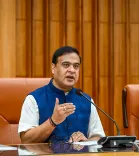
Rahul Gandhi Holds Live Student Outreach in Dehradun
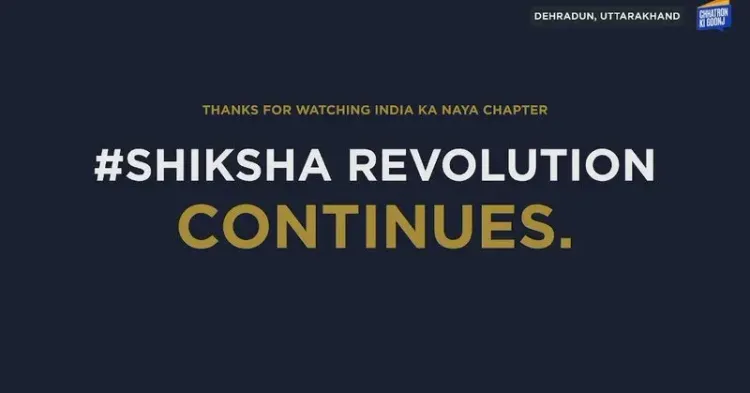
Synopsis
Congress leader Rahul Gandhi held a live student interaction — Chhatron Ki Goonj — in Dehradun, Uttarakhand on 17 July 2026, spotlighting the #ShikshaRevolution campaign. The event targeted youth in a state where education access and out-migration are key political concerns, reinforcing Congress's opposition stance on education policy.
Key Takeaways
Rahul Gandhi conducted a live student outreach event titled Chhatron Ki Goonj in Dehradun on 17 July 2026 .
The event was broadcast live under the campaign hashtag #ShikshaRevolution .
Dehradun , as Uttarakhand's capital and a major education hub, was chosen for its high concentration of students and coaching aspirants.
The Indian National Congress has historically used the Right to Education Act, 2009 as a benchmark to critique current education governance.
Congress has raised federalism and access concerns over the National Education Policy 2020 .
Youth out-migration and education quality remain recurring political themes in Uttarakhand .
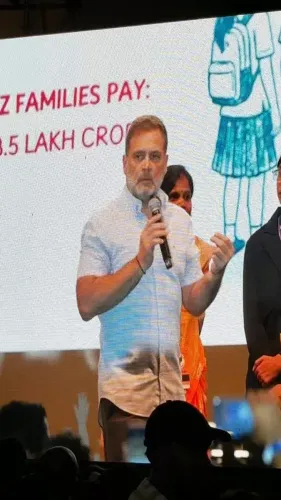
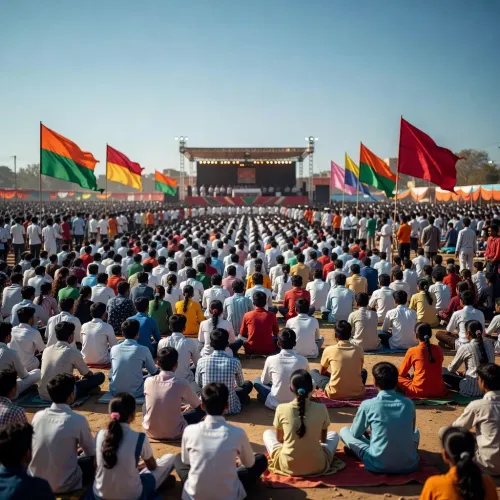
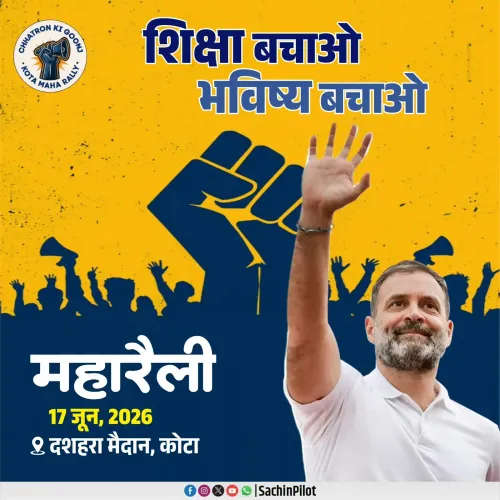
Congress leader and Leader of the Opposition in Lok Sabha Rahul Gandhi launched a live public interaction titled Chhatron Ki Goonj (Voice of Students) in Dehradun, Uttarakhand, on Friday, 17 July 2026, as part of what his office tagged the #ShikshaRevolution campaign.
Context
The event, broadcast live on X (formerly Twitter), brought Gandhi directly before students and youth in Dehradun, the capital of Uttarakhand. The hashtags #ChhatronKiGoonj and #ShikshaRevolution framed the outreach as part of a broader Congress push to centre education in its opposition narrative ahead of future electoral cycles.
Dehradun serves as a hub for schools, colleges, and coaching institutes, drawing students from across the hill state and neighbouring regions. It provides a high-visibility stage for political engagement with the youth demographic.
Policy Backdrop
Education access and quality have been recurring political fault lines in Uttarakhand, where youth out-migration in search of better schooling and employment remains a persistent concern. Gandhi and the Indian National Congress have consistently positioned the party as a champion of equitable education, pointing to the Right to Education Act, 2009 — enacted during the UPA government — which mandated free and compulsory schooling for children aged 6 to 14.
The Congress has also been a vocal critic of the National Education Policy 2020, raising objections on grounds of federalism and the risk of reduced access for marginalised communities. Live student interactions of this kind allow Gandhi to amplify those concerns directly through youth voices rather than parliamentary floor speeches.
Stakeholders and Impact
The primary audience for #ChhatronKiGoonj is students and young voters in Uttarakhand, a state where education infrastructure gaps and limited local employment opportunities shape political sentiment. By holding the session in Dehradun, Gandhi's team targeted a concentration of enrolled students and aspirants preparing for competitive examinations.
For the Indian National Congress, such events serve a dual purpose: building grassroots connect with first-time and young voters while generating a documented opposition record on education policy that can be cited in parliamentary debates and campaign materials.
What's Next
State-level education budget allocations in Uttarakhand and any parliamentary debate on the implementation of NEP 2020 provisions will be closely watched in the wake of this outreach. Gandhi's team is expected to use the student inputs gathered during the live session to sharpen the Congress party's legislative and campaign positions on school access, teacher vacancies, and higher-education funding in hill states.
Point of View
Congress is constructing a sustained opposition identity on education that goes beyond parliamentary rhetoric. The live format also allows the party to crowdsource grievances that can be converted into legislative questions and campaign talking points. In a state that has oscillated between the BJP and Congress, capturing the youth narrative on education could have measurable electoral consequences.
NationPress
18 Jul 2026
Frequently Asked Questions
What is Chhatron Ki Goonj?
'Chhatron Ki Goonj' translates to 'Voice of Students' and is a live public outreach event organised by Congress leader Rahul Gandhi to hear directly from students about education-related concerns. The 17 July 2026 edition was held in Dehradun, Uttarakhand.
Why did Rahul Gandhi visit Dehradun for the education event?
Dehradun is the capital of Uttarakhand and a major hub for schools, colleges and coaching institutes, making it an ideal location to engage a large concentration of students and youth. Education access and youth out-migration are also key political issues in the hill state.
What is the #ShikshaRevolution campaign?
#ShikshaRevolution is a campaign hashtag used by Rahul Gandhi and the Indian National Congress to frame their education-focused outreach events, positioning education equity as a central opposition demand against current government policy.
What is the Congress party's stance on the National Education Policy 2020?
The Indian National Congress has criticised the National Education Policy 2020 on grounds of federalism, arguing that it centralises decision-making and may reduce access to quality education for marginalised and rural communities.
What education law did the Congress-led UPA government pass?
The UPA government enacted the Right to Education Act in 2009, which mandated free and compulsory education for all children between the ages of 6 and 14 in India.