Rahul Gandhi launches 'Chhatron Ki Goonj' campaign on exam fraud

Synopsis
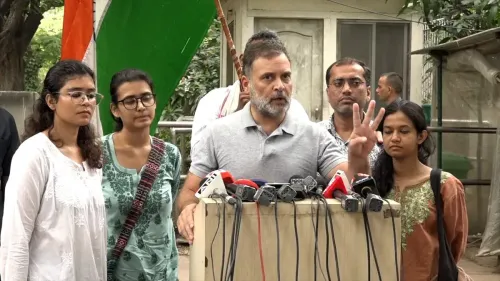
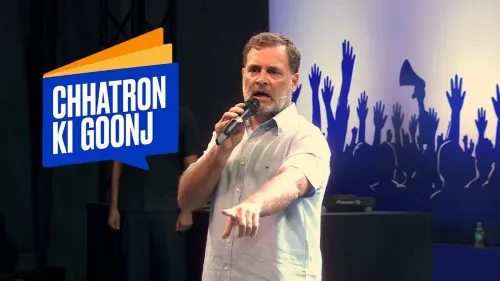
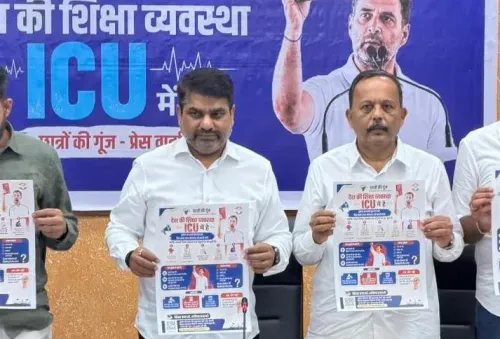
Congress leader Rahul Gandhi on 18 June 2026 launched 'Chhatron Ki Goonj' (Students' Echo), a campaign urging students affected by paper leaks, examination fraud, and steep tuition fees to raise their demands with the government, amid sustained scrutiny of the National Testing Agency.
Key Takeaways
Rahul Gandhi announced the 'Chhatron Ki Goonj' (Students' Echo) campaign on 18 June 2026 via a Hindi-language post on X.
The campaign targets students and families who have faced paper leaks , examination irregularities , and high tuition fees .
The National Testing Agency (NTA) , which conducts NEET and JEE, has been under scrutiny after alleged paper leaks in the 2024–25 examination cycles.
The Right to Education Act 2009 and National Education Policy 2020 left fee regulation and competitive exam integrity largely unresolved.
The campaign is positioned ahead of the Monsoon Session of Parliament , where NTA reforms and a new examination regulator bill may be debated.
Congress has framed recurring exam scandals as evidence of systemic governance failure affecting crores of aspirants.
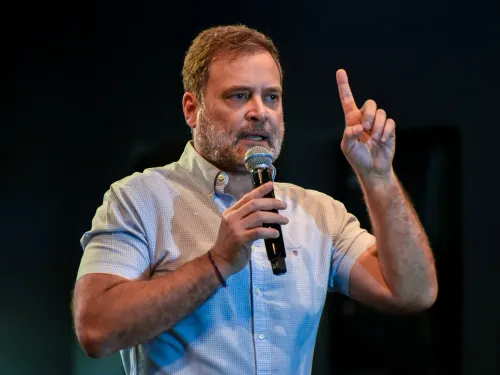
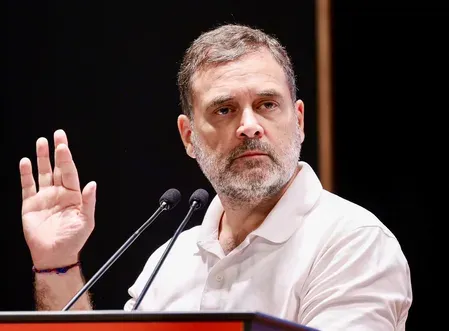
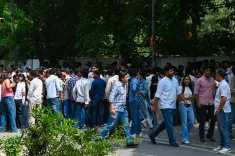
Congress leader Rahul Gandhi on Thursday, 18 June 2026 launched a public campaign titled 'छात्रों की गूंज' (Students' Echo), calling on students who have suffered from paper leaks, examination irregularities, and unaffordable tuition fees to make their voices heard and channel their grievances to the government.
In a Hindi-language post on X, Gandhi addressed students directly: 'अगर आपने पेपर लीक, परीक्षा में धांधली, या महँगी fees का दर्द झेला है' — 'If you have suffered the pain of paper leaks, examination fraud, or high fees' — and extended the appeal to families who have spent a lifetime's savings on a child's education. He described the campaign as 'not just a movement, but a vehicle to carry your demands to the government.'
Context
The campaign comes against the backdrop of recurring examination integrity crises in India. The National Testing Agency (NTA), established in 2017 to conduct high-stakes entrance tests including NEET and JEE, has faced sustained scrutiny following alleged paper leaks and irregularities reported across the 2024–25 examination cycles. Street protests and court petitions have made examination integrity a live political issue.
Gandhi, as Leader of the Opposition in Lok Sabha and Congress MP from Rae Bareli, has consistently raised concerns about unequal access to quality education and youth unemployment. The 'छात्रों की गूंज' campaign appears to be a structured extension of that political positioning.
Policy Backdrop
The Right to Education Act, 2009 guaranteed free and compulsory schooling for children aged 6 to 14 but left competitive examination access and higher-education fee regulation largely unaddressed. The National Education Policy 2020, introduced by the central government, restructured school and higher education curricula and brought in multiple entry-exit options, but parliamentary discussions from 2022 onwards have flagged persistent gaps in fee regulation and exam integrity under the new framework.
Rising private coaching costs, which can run into several lakh rupees annually for aspirants preparing for medical and engineering entrance tests, have added a socio-economic dimension to the debate, with critics arguing that the system disproportionately disadvantages students from lower-income households.
Stakeholders and Impact
The campaign's primary audience is competitive exam aspirants and their families — a demographic numbering in the crores across India. For many households in states such as Uttar Pradesh, Bihar, Rajasthan, and Madhya Pradesh, a single government job or professional college seat represents decades of family investment.
Opposition parties, including Congress, have framed recurrent paper-leak scandals as evidence of systemic governance failure. By branding a campaign specifically around student grievances, Gandhi is seeking to consolidate this demographic ahead of forthcoming state elections and the Monsoon Session of Parliament.
What's Next
Attention will now turn to whether the central government responds to the campaign's demands — particularly on NTA reforms or the introduction of a new examination-regulator bill — during the upcoming Monsoon Session of Parliament. State-level student protests and pending high-court hearings on unresolved paper-leak cases are also expected to keep the issue in the public domain. The 'छात्रों की गूंज' campaign could serve as an organisational platform for Congress to aggregate student voices into a sustained political pressure point on education governance.
Point of View
Exam fraud, and family financial sacrifice in a single appeal, Congress is targeting a cross-state, cross-caste demographic that has grown increasingly restive since the NTA controversies of 2024–25. The timing — ahead of the Monsoon Session — signals an intent to force the issue onto the parliamentary floor rather than let it dissipate after the examination season. Whether the campaign translates into sustained legislative pressure or remains a social-media moment will depend on the organisational infrastructure Congress deploys on the ground.
NationPress
19 Sept 2026
Frequently Asked Questions
What is the 'Chhatron Ki Goonj' campaign launched by Rahul Gandhi?
'Chhatron Ki Goonj' (Students' Echo) is a campaign launched by Congress leader Rahul Gandhi on 18 June 2026 to aggregate student grievances over paper leaks, examination fraud, and high tuition fees, and channel them as demands to the government.
Why is the NTA under criticism in India?
The National Testing Agency (NTA), which conducts NEET and JEE among other exams, has faced criticism over alleged paper leaks and irregularities during the 2024–25 examination cycles, triggering student protests and court petitions across the country.
What does Rahul Gandhi's campaign demand from the government?
While the post does not list specific demands, the campaign calls on students affected by paper leaks, exam fraud, and unaffordable fees to voice their concerns, with the stated aim of carrying those demands to the government, likely targeting NTA reforms and fee regulation.
How does the National Education Policy 2020 relate to student exam grievances?
The National Education Policy 2020 restructured education in India but has been criticised in parliamentary debates from 2022 onwards for leaving gaps in fee regulation and examination integrity, issues that form the core of Gandhi's campaign.
When is the next Parliament session where education reforms may be discussed?
The Monsoon Session of Parliament is the next likely forum where NTA reforms or a new examination regulator bill could be debated, and Gandhi's campaign appears timed to build public pressure ahead of that session.