Congress launches nationwide paper leak campaign, Rahul to lead student rallies
Synopsis
Congress has launched a nationwide student campaign targeting paper leaks and exam failures, with Rahul Gandhi headlining conventions in four cities through July. The party is demanding NEET decentralisation, fee abolition, and the Education Minister’s resignation — a direct escalation that could force a parliamentary reckoning on India’s examination integrity crisis.
Key Takeaways
The Indian National Congress announced the first phase of a nationwide campaign against paper leaks and exam irregularities on 13 June .
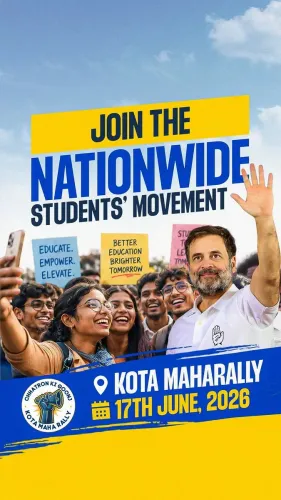
Rahul Gandhi will lead student conventions in Kota (17 June) , Allahabad (10 July) , Patna (11 July) , and Delhi (14 July) .
The campaign was announced by General Secretary K.C.
Venugopal under the direction of Congress President Mallikarjun Kharge .
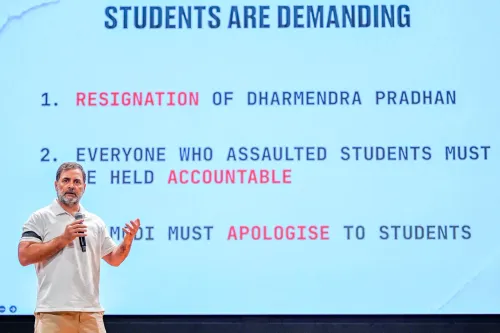
Key demands include decentralisation of NEET , abolition of exam fees, and resignation of Union Education Minister Dharmendra Pradhan .
Outreach will be conducted through NSUI , Youth Congress , and state and district units, combining physical events with digital campaigns.
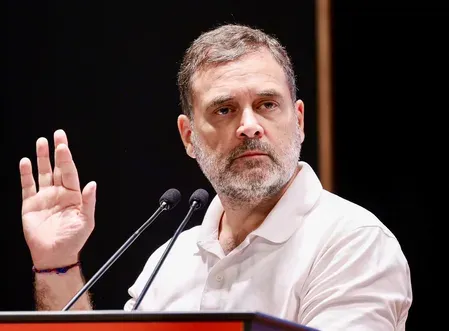
The Indian National Congress on Saturday, 13 June announced the first phase of a nationwide campaign against paper leaks, examination irregularities, and unemployment, framing the initiative as a direct challenge to what it described as a systemic failure in India's public recruitment and education system. The campaign will be led by Rahul Gandhi, beginning with a student convention in Kota on 17 June.
Key Developments
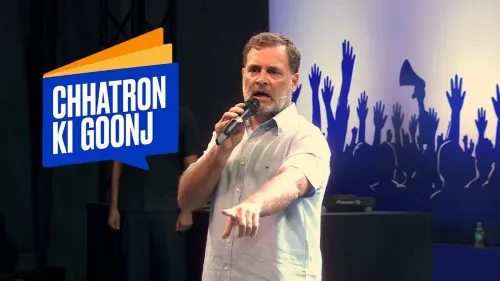
Congress General Secretary (Organisation) K.C. Venugopal announced the campaign in a formal statement, saying it was launched “under the guidance of Congress President Mallikarjun Kharge and the empowering leadership of Rahul Gandhi.” The party outlined a schedule of student conventions: Kota on 17 June, Allahabad on 10 July, Patna on 11 July, and Delhi on 14 July.
The events are designed to bring together students, aspirants, youth organisations, educators, and those directly affected by examination-related controversies. Outreach will be conducted through the party’s student wing NSUI, the Youth Congress, and state, district, and local units nationwide.
What the Congress Said
Venugopal’s statement said the campaign would highlight “the hardships faced by millions of young Indians whose futures are being repeatedly jeopardised by paper leaks, rising examination costs and the government’s failure to ensure a fair and transparent recruitment and education system.”
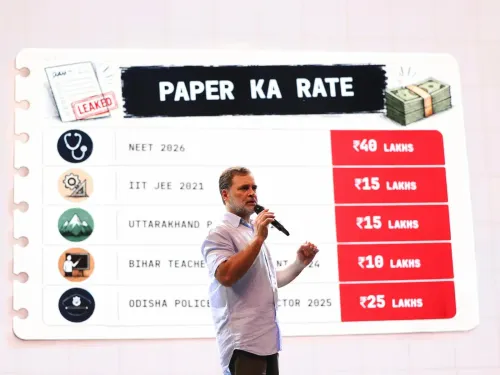
The party reiterated demands previously raised by Rahul Gandhi, including decentralisation of NEET, abolition of examination fees, strict legal action against those involved in paper leak rackets, and accountability at the highest levels of government — including the resignation of Union Education Minister Dharmendra Pradhan.
Scale and Outreach Strategy
The Congress said the movement would deploy “physical and digital invitations, campus outreach, interactions at coaching centres, universities, schools and youth hubs, social media campaigns, live screenings and direct engagement with students” at scale. The party positioned the campaign as one that seeks to unite students “beyond political lines,” providing a platform to share grievances and demand accountability.
Notably, this campaign follows a period of intense public scrutiny over multiple high-profile examination paper leak cases across states, which triggered widespread student protests and parliamentary debate. The Congress framed the issue as a “pressing matter of national importance.”
Parliamentary Push
Beyond the street-level campaign, the Congress said it would seek a comprehensive parliamentary discussion on issues affecting India’s youth and push for legislative safeguards. The party has consistently raised the paper leak issue in both Houses, and the upcoming convention circuit appears designed to build public pressure ahead of the next parliamentary session.
Whether the government responds with policy changes or dismisses the campaign as political mobilisation will likely shape the next phase of the student-rights debate in India.
Point of View
But its credibility hinges on whether it moves beyond convention optics to concrete legislative proposals. Paper leaks are not a new phenomenon — they have recurred across states governed by multiple parties, including Congress-ruled ones. Demanding the Education Minister’s resignation is a headline move; what students arguably need more is a cross-party consensus on a federal anti-leak statute with criminal deterrents. The party’s decision to anchor the campaign in Kota — India’s coaching capital, where student stress is already a crisis — is symbolically sharp, but the risk is that the movement gets absorbed into the 2025 electoral cycle rather than producing durable reform.
NationPress
29 Jul 2026
Frequently Asked Questions
What is the Congress nationwide campaign against paper leaks?
It is a multi-city student outreach initiative announced by the Indian National Congress on 13 June, targeting paper leaks, examination irregularities, and unemployment. Rahul Gandhi will lead conventions in Kota, Allahabad, Patna, and Delhi between June and July.
When and where will Rahul Gandhi hold student conventions?
Rahul Gandhi is scheduled to lead conventions in Kota on 17 June, Allahabad on 10 July, Patna on 11 July, and Delhi on 14 July. The events will bring together students, aspirants, educators, and youth organisations.
What are Congress’s key demands regarding examination reforms?
The Congress has demanded decentralisation of NEET, abolition of examination fees, strict legal action against those involved in paper leak rackets, and the resignation of Union Education Minister Dharmendra Pradhan. These demands were reiterated as part of the campaign announcement.
Who is organising the campaign and which wings are involved?
The campaign was announced by Congress General Secretary K.C. Venugopal and will be executed through NSUI, Youth Congress, and the party’s state, district, and local units. It will combine physical campus outreach with digital campaigns and live screenings.
Will Congress raise the paper leak issue in Parliament?
Yes. The Congress said it will seek a comprehensive parliamentary discussion on issues affecting India’s youth and push for legislative safeguards to protect student interests, indicating the campaign has both a street-level and a legislative dimension.