Anand Mahindra backs Indian Super Gaming League esports venture
Synopsis
Mahindra Group chairman Anand Mahindra has invested in Let's Game Now, the company behind the Indian Super Gaming League, drawing on lessons from building the Pro Kabaddi League and Global Chess League to create a full competitive ecosystem for Indian esports talent.
Key Takeaways
Anand Mahindra announced an investment in Let's Game Now , the company behind the Indian Super Gaming League (ISGL) , on 28 October 2026 .
ISGL founder Santanu Basu is a former professional esports player who competed internationally in FIFA and placed third at an international gaming tournament.
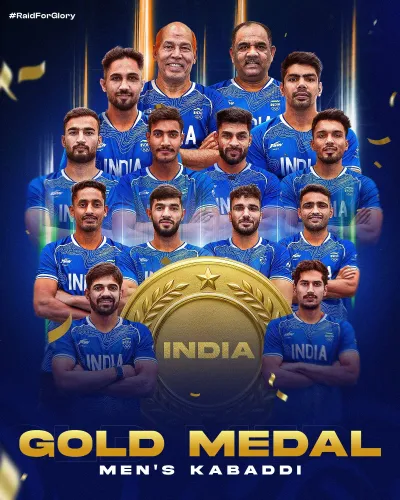
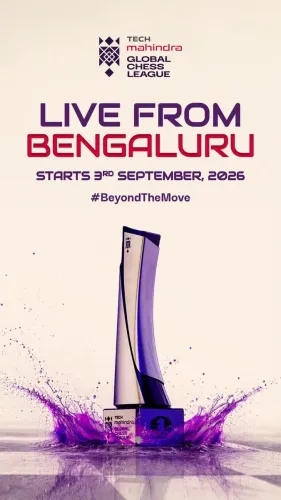
Mahindra drew direct parallels to his earlier league-building work — the Pro Kabaddi League (launched 2014 ) and the Global Chess League — stressing that champions need a full ecosystem, not just raw talent.
The chairman argued that competitive esports demands strategy, reflexes, teamwork and discipline, and creates careers for coaches, analysts, creators, designers and producers beyond the players themselves.
Rollout details including team structure and broadcast partnerships for ISGL are yet to be publicly announced.
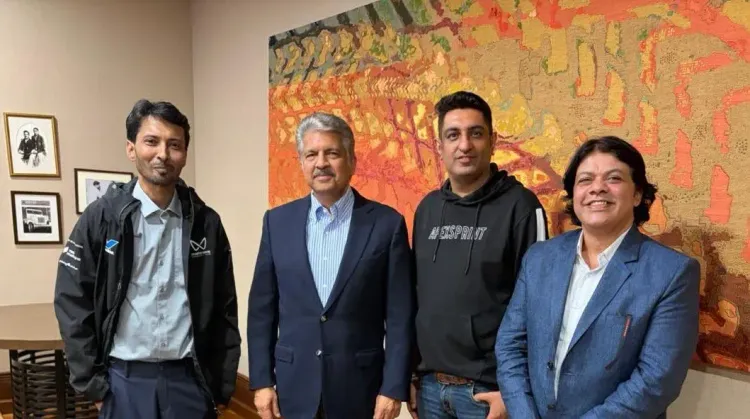
From kabaddi mats to gaming screens — Mahindra Group chairman Anand Mahindra has announced an investment in Let's Game Now, the company behind the emerging Indian Super Gaming League (ISGL), on Wednesday, 28 October 2026, signalling his conviction that India's next sporting dynasty could be built with a controller, not a jersey.
Santanu Basu's journey from FIFA podium to league founder
At the centre of the announcement is Santanu Basu, a figure Mahindra describes as 'one of India's pioneering professional esports players.' Basu competed internationally in the FIFA football video game and finished third at an international gaming tournament — a result that established him as a credible voice in a space where most Indian players never made it past domestic circuits. Now his ambition has scaled up dramatically: building an entire ecosystem of Indian gaming champions rather than being one himself.
Let's Game Now is the vehicle for that ambition, and ISGL is its flagship product. Mahindra's backing brings not just capital but a playbook — one forged across two earlier league-building experiments.
The league-builder's thesis: ecosystems over individual stars
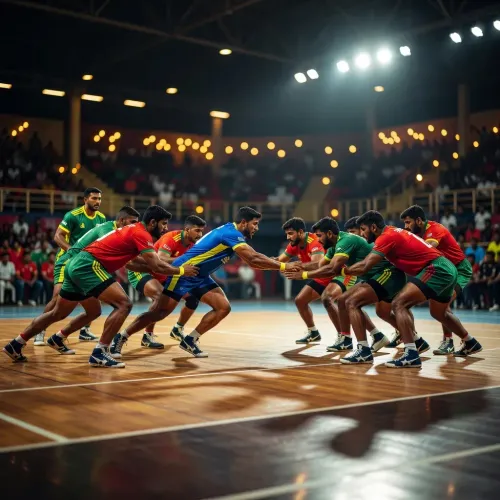
Mahindra has been explicit about the lesson drawn from his earlier ventures. 'Building Pro Kabaddi and the Global Chess League taught me that talent alone isn't enough,' he wrote on X. 'Champions need an ecosystem of coaching, leagues and serious competition.' The Pro Kabaddi League, launched in 2014, is the clearest proof of concept: a traditional sport that had no professional structure was transformed into a primetime broadcast property with franchises, coaches, and a global following. The Global Chess League followed the same logic for chess.
ISGL is positioned as the next iteration — applying the same franchise-and-ecosystem architecture to competitive gaming. Mahindra pointedly pushes back on parental anxiety around screens: 'Responsible, competitive esports is a different ball game. It demands strategy, reflexes, teamwork and discipline.' He also notes the career sprawl that a mature league generates — coaches, analysts, creators, designers, and producers all orbit a well-run competition.
Why India's gaming moment is now
India already carries one of the world's largest youth gaming communities, turbocharged by cheap mobile data and a generation that grew up on smartphones. That latent audience is exactly what every league needs before it can sell a broadcast deal or a franchise slot. The IPL demonstrated what happens when a domestic talent surplus meets a professional structure — and Mahindra's track record suggests he is betting the same formula translates to esports.
The rollout details — team count, city franchises, broadcast partnerships, viewership targets — for ISGL are yet to be disclosed publicly. But the chairman's opening move, as he framed it, is on the record. The question now is whether the Indian gaming community will show up the way kabaddi fans did.
India built a kabaddi economy from scratch in a decade. Esports has a far bigger headstart — the audience already exists. Now it just needs a league worthy of it.
Point of View
Undermonetised domestic audience, inject professional league architecture, and harvest franchise, broadcast and sponsorship revenue at scale. The IPL-to-PKL pattern has already validated this model twice in India. The risk calculus for ISGL is lower than it was for kabaddi in 2014, because the gaming audience already exists and digital distribution costs far less than stadium infrastructure. If ISGL secures a credible broadcast or streaming deal in its first season, it will signal that India's esports market has crossed the threshold from hobbyist community to investable media property.
NationPress
28 Oct 2026
Frequently Asked Questions
What is the Indian Super Gaming League (ISGL)?
The Indian Super Gaming League is an emerging competitive esports league founded by Santanu Basu through his company Let's Game Now, designed to build structured competitive gaming infrastructure and develop Indian gaming talent at a professional level.
Why did Anand Mahindra invest in esports?
Mahindra stated he invested because India has an enormous gaming community that deserves professional league structures, drawing on lessons from building the Pro Kabaddi League and the Global Chess League — both of which converted raw domestic talent into sustainable sporting ecosystems.
Who is Santanu Basu, the founder of Let's Game Now?
Santanu Basu is one of India's pioneering professional esports players who competed internationally in the FIFA football video game and finished third at an international gaming tournament before founding Let's Game Now to create a professional esports league in India.
Is competitive esports different from casual gaming?
According to Mahindra, responsible competitive esports demands strategy, reflexes, teamwork and discipline, and it creates career opportunities for coaches, analysts, creators, designers and producers — making it structurally different from recreational screen time.
When is the Indian Super Gaming League expected to launch?
Based on the league's social media handle @ISGL2k26, the Indian Super Gaming League is targeting a 2026 rollout, though specific details on team structure, city franchises and broadcast partnerships have not yet been publicly announced.