Sonowal in Seoul: $4 bn Thoothukudi Shipyard Deal Advances
Synopsis
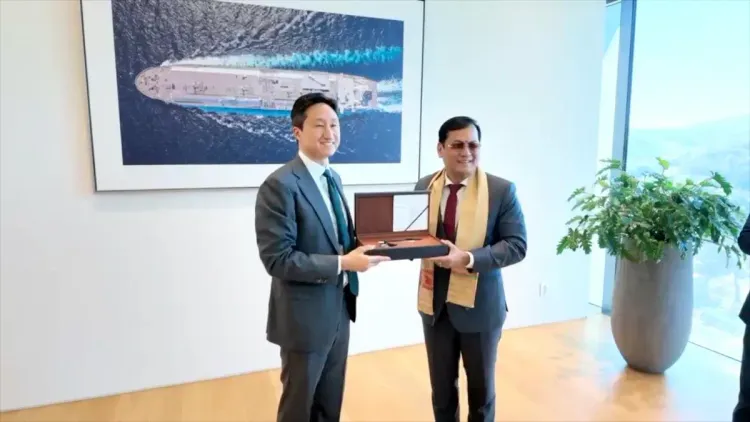
Union Minister Sarbananda Sonowal met HD Hyundai Chairman Chung Ki-sun in Seoul on 28 October 2026 to fast-track a $4 billion greenfield shipyard at Thoothukudi, Tamil Nadu, with a Joint Working Group tasked to finalise the JV structure and Detailed Project Report within six months.
Key Takeaways
HD Hyundai has reaffirmed its commitment as primary strategic investor in a $4 billion greenfield mega shipyard at Thoothukudi, Tamil Nadu .
Union Minister Sarbananda Sonowal held talks with HD Hyundai Chairman Chung Ki-sun in Seoul on 28 October 2026 .
A Joint Working Group of officials from both sides will steer the project, with a six-month deadline to finalise the joint venture structure and Detailed Project Report (DPR).
The project aims to drive deep technology transfer and localised manufacturing, combining South Korean shipbuilding expertise with India's domestic vessel demand.
The initiative is anchored in Maritime India Vision 2030 and the Sagarmala Project , the two core policy frameworks for India's port-led industrial development.
Thoothukudi was selected for its deepwater access and proximity to key Indian Ocean shipping lanes.
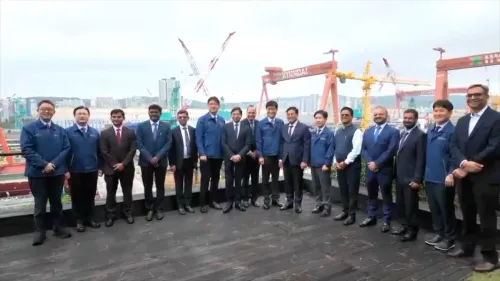
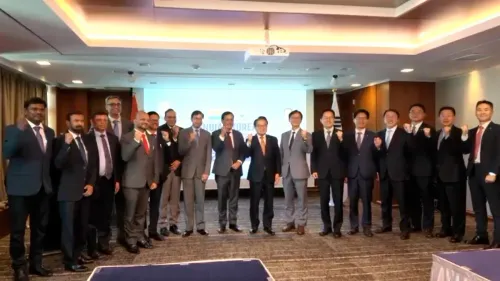
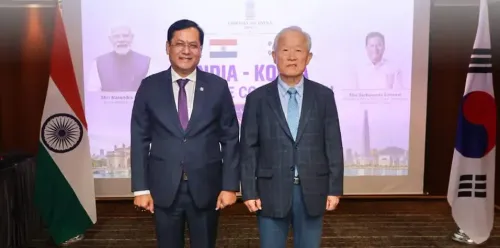
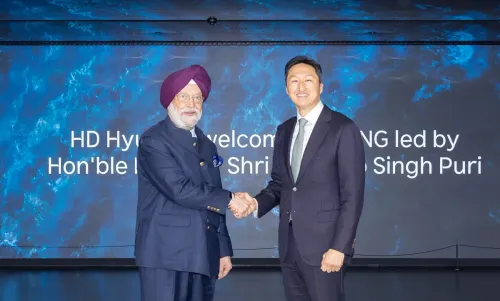
A $4 billion greenfield mega shipyard at Thoothukudi, Tamil Nadu moved closer to reality on Wednesday, 28 October 2026, when Union Minister of Ports, Shipping and Waterways Sarbananda Sonowal flew to Seoul and sat across the table from HD Hyundai Chairman Chung Ki-sun — one of the most consequential bilateral meetings India's maritime sector has seen in years.
What Seoul Agreed To — and the Clock It Set
The headline outcome: HD Hyundai has reiterated its commitment to participate as the primary strategic investor in the Thoothukudi shipyard, India's most ambitious greenfield port-industrial project. To move from intention to ground-breaking, both sides will constitute a Joint Working Group of officials, with a hard deadline — six months — to finalise the joint venture structure and the Detailed Project Report (DPR).
That six-month clock is significant. It converts a marquee announcement into a tracked deliverable, and it puts the project on a timeline that would push the JV structure into early 2027. After the DPR comes land acquisition, environmental clearances, and construction — a long pipeline, but one that now has a formal starting gun.
Why Thoothukudi — and Why HD Hyundai
Thoothukudi (also known as Tuticorin) sits on Tamil Nadu's southern coastline, commanding access to key Indian Ocean shipping lanes and backed by an existing major port. It has been on the radar for large-scale shipbuilding investment precisely because of its deepwater potential and the surrounding industrial ecosystem.
HD Hyundai is among the world's foremost shipbuilding conglomerates, with decades of expertise in vessel design, advanced hull fabrication, and marine propulsion systems. The partnership's pitch is explicit: South Korea's technological edge combined with India's massive domestic vessel demand — a demand currently served almost entirely by imports or foreign yards.
India's share of global shipbuilding output has historically been marginal. The country builds a fraction of the vessels its commercial and defence sectors require. That gap is what makes a project of this scale — and a partnership of this pedigree — structurally important, not just symbolically so.
The Policy Architecture Behind the Deal
The Thoothukudi project does not exist in a vacuum. It sits at the intersection of two landmark policy frameworks. The Sagarmala Project, launched in 2015, established the blueprint for port-led industrialisation across India's coastline. Maritime India Vision 2030, unveiled in 2021, set an explicit ambition: expand domestic shipbuilding capacity and raise India's competitiveness in global maritime markets.
Minister Sonowal framed the Seoul meeting squarely within Prime Minister Narendra Modi's broader maritime vision — positioning India not as a peripheral player but as 'a core pillar of HD Hyundai's global future.' That framing matters diplomatically: it signals India is seeking a structural role in global supply chains, not merely a vendor relationship.
Technology Transfer at the Heart of the Deal
The language in Sonowal's post is deliberate: 'deep technology transfer and localised manufacturing.' This is the crux. A greenfield yard that simply assembles imported components does not transform India's shipbuilding capability. Deep transfer — design IP, fabrication know-how, materials science — is what builds a genuinely competitive domestic industry over the long term.
Whether that transfer is codified in the final JV structure will be the real test of the DPR process. The six-month Joint Working Group mandate is where those terms get hammered out.
Seoul has given India its most credible shipbuilding partnership in a generation. The next six months will show whether a deal that looks good on the table holds together on the ground.
Point of View
A named site, and a named deadline. The six-month Joint Working Group mandate is the key accountability mechanism: if a JV structure and DPR emerge on schedule, the Thoothukudi project transitions from an aspiration into a capital-commitment story. The emphasis on 'deep technology transfer' signals that New Delhi is aware of the risk of hollow partnerships; whether that language survives the fine print of the JV agreement will define how transformative the deal actually is. Strategically, anchoring a $4 billion South Korean investment in Tamil Nadu also reinforces India's Act East policy on the economic plane, using maritime FDI to deepen the Seoul-New Delhi bilateral beyond trade diplomacy.
NationPress
28 Oct 2026
Frequently Asked Questions
What is the Thoothukudi mega shipyard project?
It is a proposed $4 billion greenfield shipyard to be built at Thoothukudi (Tuticorin) in Tamil Nadu , with South Korea's HD Hyundai committed as the primary strategic investor. The project aims to build a globally competitive domestic shipbuilding ecosystem through technology transfer and localised manufacturing.
What did Sonowal and HD Hyundai agree to in Seoul?
Union Minister Sarbananda Sonowal and HD Hyundai Chairman Chung Ki-sun agreed to form a Joint Working Group of officials from both sides. The group has a six-month mandate to finalise the joint venture structure and the Detailed Project Report (DPR) for the Thoothukudi shipyard.
Why is Thoothukudi chosen for the shipyard?
Thoothukudi on Tamil Nadu's southern coast offers deepwater access, proximity to major Indian Ocean shipping lanes, and an existing operational port, making it strategically suitable for a large-scale greenfield shipbuilding facility.
What is Maritime India Vision 2030?
Maritime India Vision 2030 was unveiled in 2021 as a policy framework to expand India's domestic shipbuilding capacity, attract foreign investment into port infrastructure, and raise India's competitiveness in global maritime markets. The Thoothukudi project is one of its flagship initiatives.
What is India's current share of global shipbuilding?
India's share of global shipbuilding output has historically been very small, with the country importing or relying on foreign yards for the majority of its commercial and defence vessel requirements. The Thoothukudi project is designed to structurally change that position through deep technology partnerships.