Sonowal invites South Korean firms to build India's shipyards
Synopsis
India's ports minister pitched South Korea's top shipbuilders and equipment makers directly in Busan — and the response was concrete: KOMEA opens its first India office in Mumbai on 30 October, with member firms including HD Hyundai, Hanwha Ocean and Samsung Heavy Industries eyeing market entry within two years. Behind the diplomacy sits a $7.8 billion shipbuilding incentive package approved in September 2025.
Key Takeaways
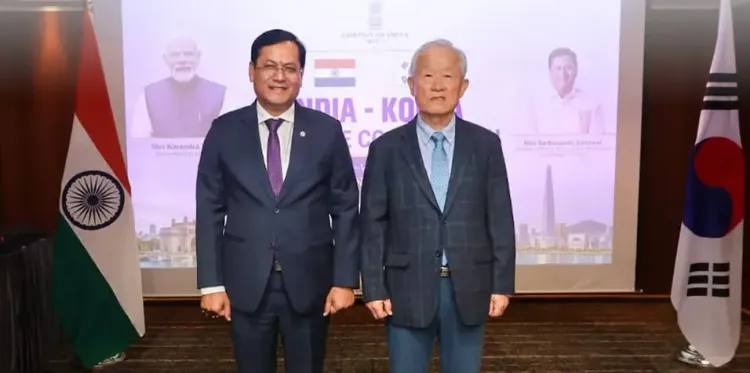
Sarbananda Sonowal invited South Korean firms to build shipyards and supply marine equipment in India during his Busan visit on 26 October 2026 .
KOMEA , representing 304 Korean marine equipment firms including HD Hyundai , Hanwha Ocean and Samsung Heavy Industries , will open its first India office in Mumbai on 30 October .
The engagement falls under VOYAGES , the India-South Korea bilateral framework for shipbuilding and maritime logistics cooperation.
India's five maritime laws enacted in 2025 took effect in March 2026 ; the Maritime Single Window now covers 69 ports and terminals .
India approved a shipbuilding incentive package worth approximately $7.8 billion in September 2025 .
KOMEA Chairman Ho-il Kang said member firms have begun preparing to enter the Indian market within the next two years .
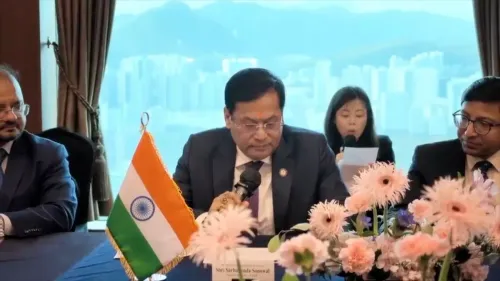
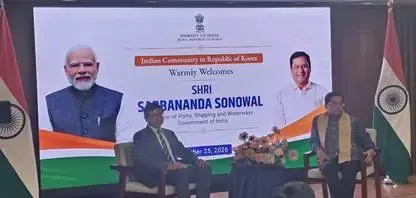
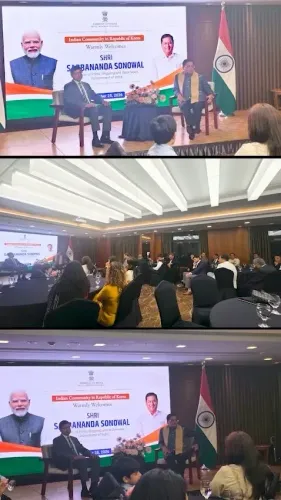
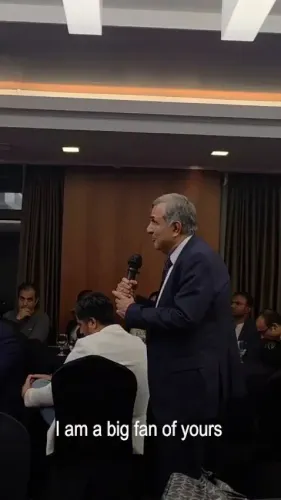
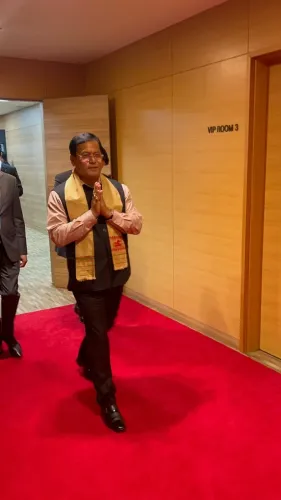
Union Minister of Ports, Shipping and Waterways Sarbananda Sonowal on 26 October 2026 invited South Korean companies to partner with India in building shipyards and supplying high-value marine equipment, making the pitch during a visit to Busan, South Korea. The outreach, framed around a high-level ministerial roundtable on World Maritime Day and a dedicated meeting with South Korea's marine equipment industry body, marks a significant step in India's push to reduce dependence on imported shipbuilding components.
India's Maritime Vision and Standards Stance
At the World Maritime Day ministerial roundtable, Sonowal articulated India's position on international maritime regulation: that global standards must remain ambitious and universal, but their implementation must account for differences in national circumstances, development levels, technology capacity and access to finance. He cited the principle of common but differentiated responsibilities and respective capabilities as the guiding framework.
'The objective should therefore be common standards and outcomes, supported by cooperation that enables every Member State to implement them effectively,' Sonowal said.
He described IMO conventions as an 'operational lighthouse' for global shipping — particularly vital at a time of geopolitical instability, piracy and disruption in the Red Sea — serving to protect seafarers, trade flows and supply chains. To narrow implementation gaps, Sonowal advocated practical partnerships: joint working groups pairing countries that have already implemented conventions with those still building capacity, training surveyors and inspectors, helping draft domestic laws and setting time-bound plans. The goal, he said, is to create 'permanent national capability rather than creating continuing dependence.'
India's Domestic Maritime Groundwork
Sonowal pointed to India's recent legislative and infrastructure strides as evidence of readiness for deeper partnership. Five maritime laws enacted in 2025 came into force in March 2026. India's Maritime Single Window now covers 69 ports and terminals. The Alang-Sosiya yard in Gujarat operates 115 ship recycling facilities that comply with the Hong Kong Convention (HKC) within the IMO framework. These milestones, he argued, demonstrate that India has done its own groundwork and is a credible partner for international shipbuilders and equipment makers.
The KOMEA Meeting and Mumbai Office Opening
The most concrete outcome of the visit came from Sonowal's engagement with the Korea Marine Equipment Association (KOMEA), a body founded in 1980 that represents 304 equipment makers, design firms, shipbuilders and repairers. Its membership includes heavyweights such as HD Hyundai, Hanwha Ocean and Samsung Heavy Industries.
Notably, KOMEA is set to open its first India office in Mumbai on 30 October, a development both governments had welcomed in April under VOYAGES — their bilateral framework for cooperation in shipbuilding, shipping and maritime logistics. KOMEA members including SB Sunbo, Daeyang, KASEMEC and JO Engineering discussed potential investment plans in India's maritime sector at the meeting.
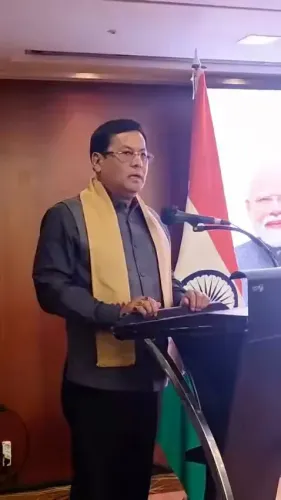
'Every ship built in India needs engines, propulsion, deck machinery, and electrical and navigation systems,' Sonowal said, noting that much of this high-value equipment is currently imported — a gap he framed as the primary commercial opportunity for Korean suppliers.
KOMEA Chairman Ho-il Kang said members have begun preparing to enter the Indian market within the next two years.
The ₹65,000 Crore Shipbuilding Package as Backdrop
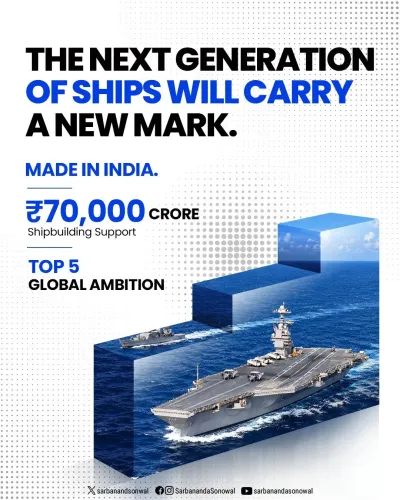
The diplomatic outreach is anchored by India's approval in September 2025 of a shipbuilding incentive package worth approximately $7.8 billion (roughly ₹65,000 crore). The package is designed to attract global players and catalyse domestic production capacity. This comes amid a broader government push under the Maritime India Vision to position India among the world's top shipbuilding nations — a goal that currently faces a substantial deficit, given that India accounts for a fraction of global shipbuilding output compared to South Korea, China and Japan.
With KOMEA's Mumbai office operational from 30 October and Korean firms signalling entry within two years, the India-South Korea maritime corridor is entering an operational phase.
Point of View
But the harder test is whether Korean firms will commit capital and technology transfer rather than just sales of imported equipment. The VOYAGES framework is a promising architecture, but India's past bilateral maritime agreements have produced more MoUs than shipyards. The real indicator to watch is not KOMEA's Mumbai office opening, but whether any of the 304 member firms announces a greenfield manufacturing investment on Indian soil within the two-year window Kang cited.
NationPress
26 Oct 2026
Frequently Asked Questions
Why did Sarbananda Sonowal visit Busan, South Korea?
Sonowal visited Busan to attend a high-level ministerial roundtable on World Maritime Day and to meet the Korea Marine Equipment Association (KOMEA), inviting South Korean firms to invest in India's shipbuilding and marine equipment sectors. The visit aimed to advance the VOYAGES bilateral framework agreed upon by both governments in April.
What is KOMEA and why is its India office significant?
KOMEA, the Korea Marine Equipment Association, is a body founded in 1980 representing 304 firms including HD Hyundai, Hanwha Ocean and Samsung Heavy Industries. Its first India office, opening in Mumbai on 30 October 2026, marks the association's formal institutional presence in India and is expected to facilitate member firms' entry into the Indian market within two years.
What is the VOYAGES framework between India and South Korea?
VOYAGES is a bilateral cooperation framework between India and South Korea focused on shipbuilding, shipping and maritime logistics. Both governments welcomed it in April, and it provides the formal structure under which engagements like the KOMEA India office and Sonowal's Busan outreach are taking place.
What is India's $7.8 billion shipbuilding package?
India approved a shipbuilding incentive package worth approximately $7.8 billion in September 2025, designed to attract global shipbuilders and equipment makers to set up or expand capacity in India. The package underpins the government's broader Maritime India Vision to raise India's share of global shipbuilding output.
What maritime reforms has India recently undertaken?
India enacted five maritime laws in 2025, which came into force in March 2026. The government's Maritime Single Window now covers 69 ports and terminals, and the Alang-Sosiya yard operates 115 ship recycling facilities that comply with the Hong Kong Convention under the IMO framework.