Sonowal meets KOMEA in Busan, backs $7.8 bn shipbuilding push
Synopsis
Union Minister Sarbananda Sonowal met KOMEA Chairman Ho-il Kang in Busan, welcoming Korea's first India office in Mumbai as India pursues a $7.8 billion shipbuilding package and greenfield mega clusters under Maritime India Vision 2030.
Key Takeaways
Minister Sonowal held a bilateral meeting with Korea Marine Equipment Association (KOMEA) in Busan on 26 October 2026 .
KOMEA represents over 300 top Korean marine equipment makers and shipbuilders, led by Chairman Ho-il Kang .
KOMEA will open its first-ever India office in Mumbai , marking a milestone in bilateral maritime ties.
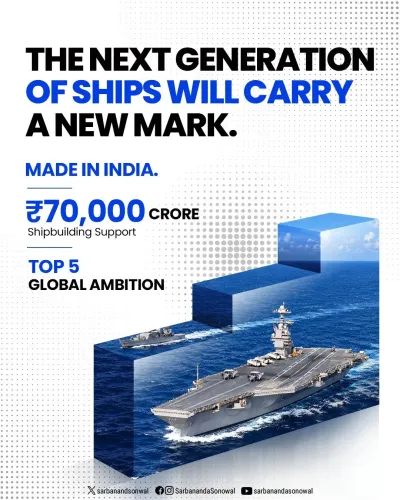
India has announced a $7.8 billion shipbuilding financial package to boost domestic manufacturing capacity.
India urged Korean firms to enter joint ventures and local manufacturing to serve India's domestic vessel pipeline.
The engagement builds on the India-Korea CEPA (2010) and aligns with Maritime India Vision 2030 and the Sagarmala Project .
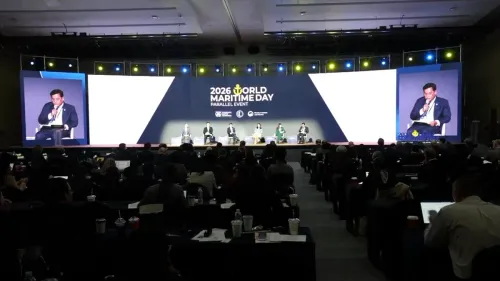
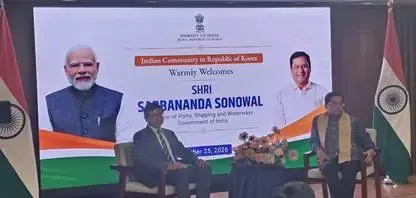
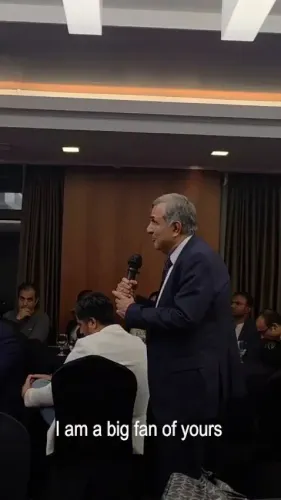
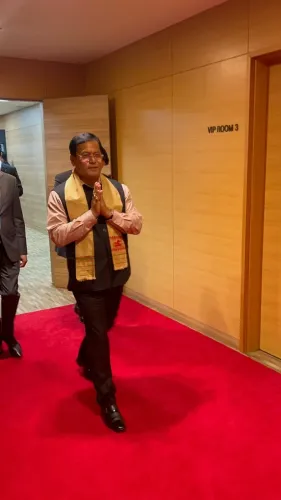
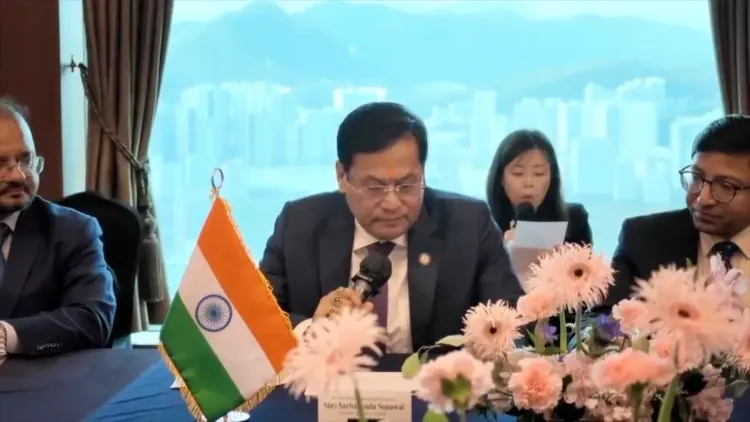
India's maritime ambitions just got a Korean handshake. Union Minister of Ports, Shipping and Waterways Sarbananda Sonowal held a bilateral meeting in Busan, South Korea, on Monday, 26 October 2026 with the Korea Marine Equipment Association (KOMEA), the apex body representing over 300 of Korea's top marine equipment makers and shipbuilders — and left the room with a headline commitment: KOMEA will open its first-ever India office in Mumbai.
KOMEA's Mumbai foothold and what it signals
The Mumbai office announcement is more than a flag-planting exercise. KOMEA, led by its Chairman Mr. Ho-il Kang, commands the full breadth of South Korea's marine manufacturing ecosystem — one of the world's most advanced. Its decision to establish a permanent India presence marks a vote of confidence in India's shipbuilding trajectory, giving Korean firms a base to scout joint ventures, navigate regulatory requirements, and embed themselves in India's domestic vessel supply chain before the competition does.
Sonowal described the meeting as 'highly productive' and warmly welcomed the office launch, calling it 'a significant milestone in our bilateral maritime partnership.' The choice of Mumbai — India's commercial and maritime nerve centre — underlines that this is industrial intent, not ceremonial goodwill.
The $7.8 billion shipbuilding package driving the pitch
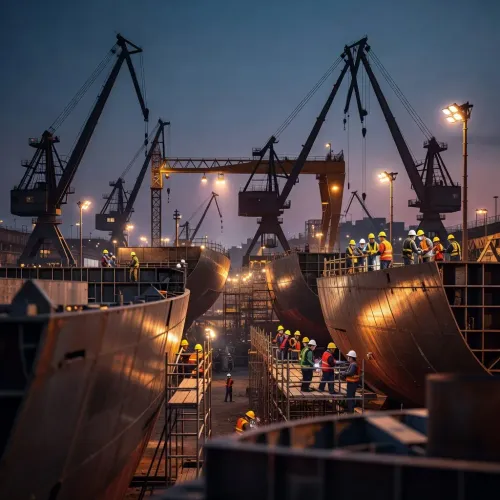
The centrepiece of India's offer to Korean industry is a $7.8 billion shipbuilding financial package announced under Prime Minister Narendra Modi's maritime manufacturing vision, alongside the rapid development of greenfield mega clusters across the Indian coastline. Together, these measures are designed to transform India from a marginal shipbuilding player into a globally competitive hub — a goal codified in the Maritime India Vision 2030, unveiled in 2021, and backed by the infrastructure groundwork of the Sagarmala Project, launched in 2015.
The scale of ambition is deliberate. India's domestic vessel pipeline — spanning commercial cargo ships, coastal ferries, and defence platforms — represents a massive, time-bound procurement wave. Sonowal's pitch to Korean leaders was direct: 'capitalise on our massive domestic vessel pipeline through joint ventures and local manufacturing.'
India-Korea maritime ties: a decade of CEPA, now a manufacturing moment
The diplomatic scaffolding for this industrial push has been in place since 2010, when India and South Korea signed their Comprehensive Economic Partnership Agreement (CEPA), opening channels for trade and investment across manufacturing sectors. What is new in 2026 is the scale of India's incentive architecture — and the urgency. Korean shipbuilders, facing global overcapacity pressures of their own, have strong reasons to diversify into a high-growth emerging market with a government-backed order book.
Sonowal's Busan visit fits a deliberate pattern of sector-specific ministerial outreach: travel to where the technology and capital live, make the economic case in person, and convert diplomatic warmth into investment commitments. The 'Make in India, Make for the World' close to his post is a phrase now freighted with policy specifics — clusters, packages, pipelines — not just rhetoric.
With KOMEA's Mumbai office set to open, the next measure of success will be whether Korean firms translate that address into assembly lines on Indian soil.
Point of View
If it materialises on schedule, would be a concrete deliverable that the government can point to as proof that the $7.8 billion shipbuilding package is attracting serious foreign capital. Structurally, it follows the Sagarmala-to-Maritime India Vision 2030 arc: the infrastructure was built, the policy framework was codified, and now India is in active conversion mode. The real test is whether Korean equipment makers move from desk research to factory floors — and how quickly.
NationPress
26 Oct 2026
Frequently Asked Questions
What is KOMEA and why did Sonowal meet them in Busan?
KOMEA is the Korea Marine Equipment Association, representing over 300 top Korean marine equipment and shipbuilding companies. Sonowal met KOMEA Chairman Ho-il Kang in Busan to strengthen bilateral maritime ties and invite Korean investment into India's growing shipbuilding sector.
Where will KOMEA open its first India office?
KOMEA will open its first India office in Mumbai, a move welcomed by Minister Sonowal as a significant milestone in India-Korea maritime partnership.
What is India's $7.8 billion shipbuilding package?
India announced a $7.8 billion financial package to boost domestic shipbuilding capacity, part of Prime Minister Modi's maritime manufacturing vision that also includes developing greenfield mega shipbuilding clusters along the Indian coastline.
What is India's Maritime India Vision 2030?
Maritime India Vision 2030 is a policy framework unveiled in 2021 that sets targets for expanding India's shipbuilding capacity, developing green ports, and positioning India as a global maritime manufacturing hub, building on the Sagarmala Project launched in 2015.
What is the India-Korea CEPA and how does it relate to this meeting?
The India-Korea Comprehensive Economic Partnership Agreement, signed in 2010, established the trade and investment framework between the two countries. The Busan meeting and KOMEA's India office plans build on this foundation to deepen cooperation specifically in marine manufacturing.