Sonowal pitches India's green shipping vision at IMO Busan event
Synopsis
Union Minister Sarbananda Sonowal addressed the IMO 2026 World Maritime Day High-Level Roundtable in Busan, pitching India's maritime decarbonisation agenda, green-fuel workforce skilling, and the ambition for one in five global seafarers to be Indian.
Key Takeaways
Minister Sarbananda Sonowal represented India at the Government: High-Level Roundtable of the IMO 2026 World Maritime Day Parallel Event in Busan, South Korea .
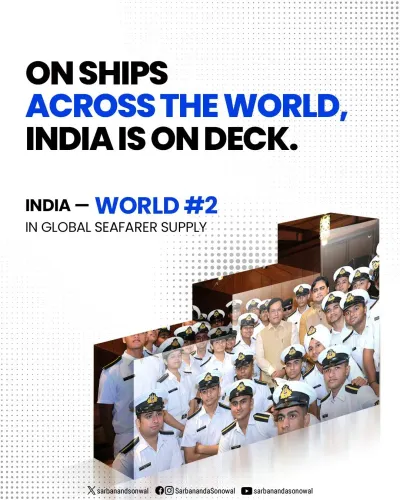
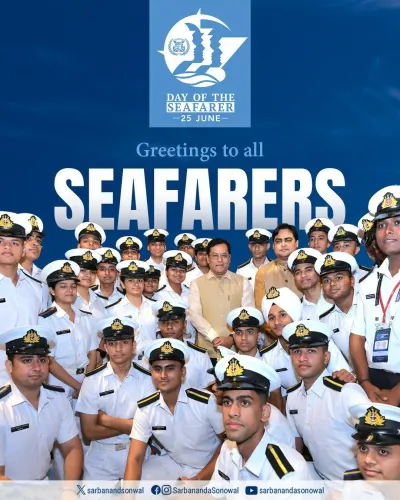
India has set a target for one in five seafarers globally to be Indian, framing workforce scale as a lever for international maritime influence.
The government is upskilling maritime workers in alternative green fuels and advanced technologies , with training modules expected via the Directorate General of Shipping .
India endorsed the IMO Initial GHG Strategy at MEPC 72 in 2018 and has aligned domestic plans with IMO emission-reduction timelines through Maritime India Vision 2030 .
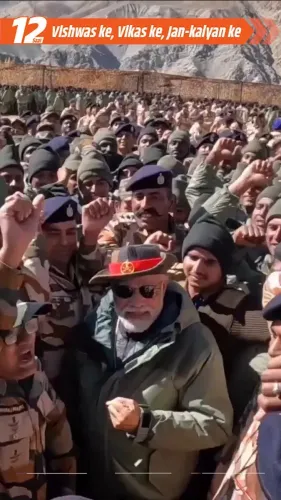
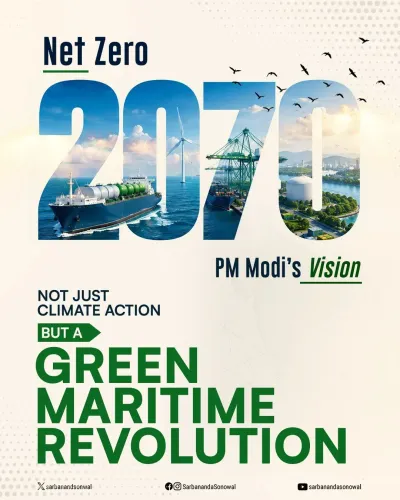
Sonowal cited PM Narendra Modi 's vision as the guiding framework for India's push toward sustainable and smart shipping.
The Busan appearance positions India as a prospective agenda-setter at upcoming MEPC sessions on mid-term fuel and carbon-levy standards.
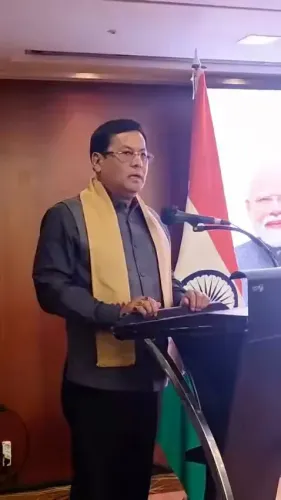
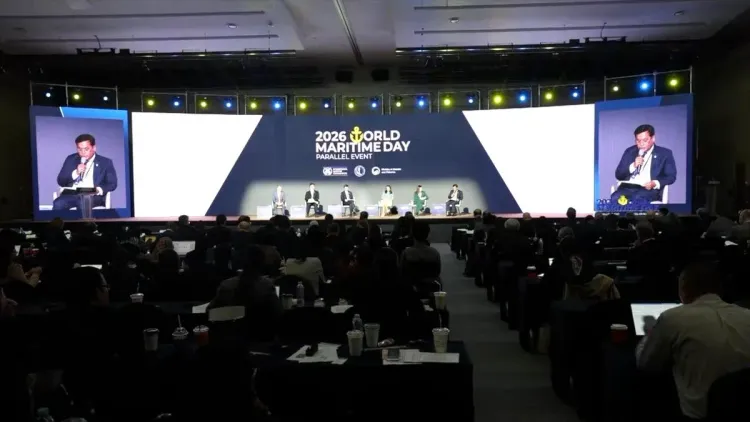
On the global stage of maritime governance, Union Minister of Ports, Shipping and Waterways Sarbananda Sonowal took India's decarbonisation and digitalisation ambitions directly to world decision-makers — speaking at the Government: High-Level Roundtable during the IMO 2026 World Maritime Day Parallel Event in Busan, South Korea, on Monday, October 26, 2026.
Sonowal anchored India's positioning firmly to Prime Minister Narendra Modi's vision, telling delegates that India is 'playing a key role in driving global transition toward sustainable and smart shipping.' The message was pointed and numerical: India aims to ensure that one in every five seafarers globally is Indian — a target that doubles as both a workforce ambition and a claim on international rule-setting influence.
Skilling India's seafarers for a low-carbon fleet
At the heart of Sonowal's address was a workforce argument. India is actively upskilling its maritime workforce in alternative green fuels — think ammonia, methanol, and hydrogen — and advanced digital navigation technologies. With Indian seafarers already among the most widely deployed globally, re-tooling that pipeline for the next generation of low-emission vessels gives India structural leverage inside IMO deliberations.
The Directorate General of Shipping is expected to roll out dedicated green-fuel training modules to back this up. Analysts will watch whether these modules translate skilling rhetoric into certified competencies recognised under IMO's Standards of Training, Certification and Watchkeeping (STCW) framework — because that is where workforce ambition becomes regulatory currency.
India's IMO journey: from endorsement to agenda-setting
India's engagement at the International Maritime Organization — the UN's specialist agency for shipping safety and environmental standards — stretches back at least to 2018, when New Delhi endorsed the IMO's Initial GHG Strategy at the Marine Environment Protection Committee (MEPC) 72 session. That endorsement committed India to the broad arc of halving shipping emissions by 2050 from 2008 levels — a target since revised upward to net-zero 'by or around' 2050.
The domestic scaffolding is Maritime India Vision 2030, the national roadmap launched in 2021 covering port modernisation, green shipping corridors, and digital infrastructure. Sonowal's Busan appearance signals that India now wants to move from signatory to shaper — leveraging its technology capabilities and sheer workforce scale to build 'practical international cooperation,' as he put it, rather than merely comply with standards written by others.
Why Busan, and why now
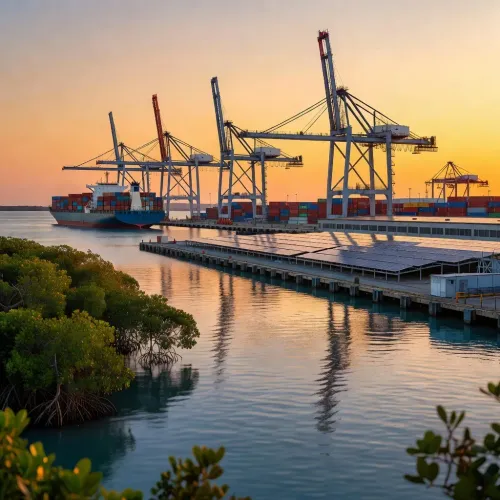
Busan is not an incidental venue. South Korea is one of the world's three dominant shipbuilding nations, alongside China and Japan, and Busan is its shipbuilding heartland. Holding this parallel event in Busan places maritime decarbonisation squarely inside the industry's own backyard — where new-fuel propulsion systems, LNG bunkering infrastructure, and digital port ecosystems are not future concepts but current commercial realities.
For India, showing up at ministerial level in Busan signals seriousness to shipowners, classification societies, and fuel suppliers who will ultimately decide which nations earn contracts and partnerships in the green-shipping transition. The forum's high-level government roundtable format also gives participants direct face time with IMO leadership ahead of the next MEPC sessions, where mid-term emission-reduction measures — including a potential global carbon levy on shipping — are actively being negotiated.
India has one of the world's largest pools of trained mariners and an expanding shipbuilding order book. The question Sonowal has put on the table is whether that combination can make India indispensable — not just a supplier of crew, but an architect of the rules governing the seas.
Point of View
Using its seafarer demographic and Maritime India Vision 2030 as bargaining chips. The 'one-in-five seafarers' framing is politically astute: it links a domestic jobs and skilling narrative directly to a claim on international regulatory influence. With mid-term IMO emission measures and a potential global shipping carbon levy on the table at upcoming MEPC sessions, India's credibility at these forums will depend on whether the green-fuel training pledge translates into STCW-certified competencies. The BJP government is also using multilateral maritime diplomacy to demonstrate global leadership credentials on climate, a space where it has historically received mixed reviews.
NationPress
26 Oct 2026
Frequently Asked Questions
What did Sarbananda Sonowal say at the IMO 2026 World Maritime Day event?
Sonowal highlighted India's maritime decarbonisation and digitalisation efforts, announced the goal of making one in five global seafarers Indian, and called for practical international cooperation in building a sustainable, smart shipping ecosystem.
What is the IMO World Maritime Day Parallel Event?
It is an annual high-level gathering organised by the International Maritime Organization (IMO), the UN's specialist shipping agency, that brings together governments, industry and civil society to discuss maritime policy priorities; the 2026 edition was held in Busan, South Korea.
What is Maritime India Vision 2030?
Maritime India Vision 2030 is a national roadmap launched in 2021 covering port modernisation, green shipping corridors, digital infrastructure, and workforce development — the domestic framework underpinning India's IMO commitments.
Why does India want one in five global seafarers to be Indian?
India already supplies a large share of the global mariner workforce; the one-in-five target reinforces that demographic advantage, creates leverage inside IMO standard-setting negotiations, and supports domestic employment and skilling goals in the maritime sector.
What are alternative green fuels in shipping?
Alternative green fuels for ships include ammonia, green methanol, liquefied hydrogen, and bio-LNG — fuels that produce significantly lower or zero greenhouse-gas emissions compared to conventional heavy fuel oil, and which the IMO's revised GHG strategy is pushing the industry to adopt.