Sonowal Flags Green Maritime Push on World Environment Day
Synopsis
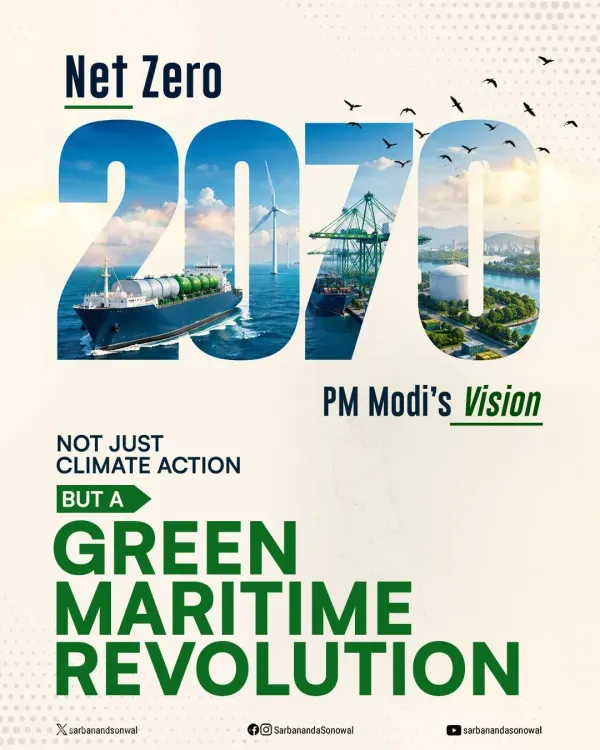
On World Environment Day 2026, Union Minister Sarbananda Sonowal highlighted India's maritime decarbonisation journey, linking port and waterway policy to PM Modi's Net Zero 2070 pledge and outlining milestones under the Sagarmala Project and Maritime India Vision 2030.
Key Takeaways
Union Minister Sarbananda Sonowal posted a thread on World Environment Day, 5 June 2026 , on India's green maritime transformation.
The drive is anchored to PM Modi 's Net Zero 2070 commitment, announced at COP26 in Glasgow in November 2021 .
The Sagarmala Project (launched March 2015 ) and Maritime India Vision 2030 (released March 2021 ) form the core policy backbone.
India's approach aligns with International Maritime Organization shipping-emission reduction targets for 2030 and 2050 .
Green hydrogen pilots at major ports under the National Green Hydrogen Mission are among the next milestones to watch.
The ministry's focus on inland waterways supports a modal shift from road freight, cutting overall transport-sector emissions.
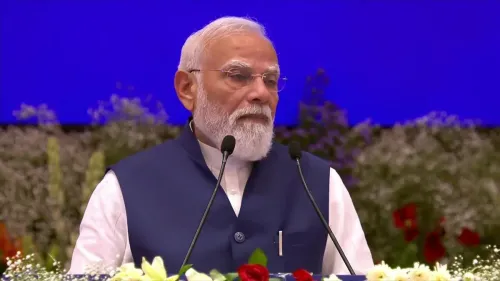
Union Minister of Ports, Shipping and Waterways Sarbananda Sonowal used World Environment Day, 5 June 2026, to highlight India's ongoing maritime decarbonisation drive, framing it as a thread of major milestones under Prime Minister Narendra Modi's Net Zero 2070 vision.
Context
Posting on X, Sonowal wrote: 'India's maritime sector and water transport networks are 12 years deep into a massive green transformation, guided by the Net Zero 2070 vision of Hon'ble PM Shri Narendra Modi Ji.' The post opened a thread timed to the United Nations observance of World Environment Day, an annual event established in 1972 to promote global awareness and action on environmental protection.
The minister's framing positions India's ports-and-waterways portfolio at the centre of the country's broader climate commitments, linking day-to-day shipping policy directly to the net-zero pledge PM Modi made at the COP26 summit in Glasgow in November 2021.
Policy Backdrop
India's green maritime agenda draws on several overlapping policy frameworks. The Sagarmala Project, launched in March 2015, set the foundation for sustainable port infrastructure and coastal development. Maritime India Vision 2030, released in March 2021, built on that base by setting explicit targets for green ports, alternative fuels, and reduced logistics-sector emissions.
These domestic frameworks align with the International Maritime Organization's targets for cutting shipping emissions by 2030 and 2050, and with India's obligations under the Paris Agreement. The emphasis on inland waterways also supports a broader modal shift away from road transport, reducing the carbon intensity of freight movement across the country.
Stakeholders and Impact
Port operators, shipping companies, and inland waterway users stand to be most directly affected by the green transition Sonowal described. For operators, the shift implies capital investment in shore power, waste management, and eventually alternative-fuel bunkering infrastructure at major ports.
Shipping companies face pressure to accelerate fleet upgrades toward low-emission vessels, a trend already visible in global programmes in Singapore, Rotterdam, and China. Inland waterway users — particularly freight operators on national waterways — could benefit from lower-emission vessel incentives that may be announced in upcoming policy updates or the next Union Budget.
What's Next
Attention will now turn to the specific milestones Sonowal's thread promised to detail, as well as to the rollout of green hydrogen pilot projects at major ports under the National Green Hydrogen Mission. Any new incentives for low-carbon vessels in the next Union Budget or a dedicated shipping policy update will be closely watched by the industry.
Sonowal's World Environment Day post signals that the ministry intends to keep maritime decarbonisation in the public spotlight through 2026, reinforcing India's positioning ahead of future international climate negotiations where transport-sector progress will be a key metric.
Point of View
Using a high-visibility UN observance to showcase the ports portfolio's climate credentials ahead of potential international scrutiny. By anchoring the narrative to PM Modi's Net Zero 2070 pledge, the ministry reinforces the BJP government's messaging that economic development and decarbonisation are complementary, not competing, goals. The move also signals that the Shipping and Waterways ministry is staking a larger claim within India's broader green transition story, a space traditionally dominated by the power and renewable energy sectors. Sustained follow-through on green hydrogen pilots and low-carbon vessel incentives will ultimately determine whether the ministerial framing translates into measurable emissions reductions.
NationPress
16 Sept 2026
Frequently Asked Questions
What is India's Net Zero 2070 target and how does it relate to shipping?
India committed to achieving net-zero carbon emissions by 2070, announced by PM Modi at COP26 in Glasgow in November 2021. The shipping and ports sector is being aligned to this goal through green port standards, alternative fuel adoption, and inland waterway development under frameworks like Maritime India Vision 2030.
What is the Sagarmala Project?
The Sagarmala Project is a Government of India port-led development initiative launched in March 2015. It aims to modernise ports, promote coastal shipping, and develop inland waterways while incorporating environmental safeguards to reduce logistics emissions.
What did Sonowal post on World Environment Day 2026?
Minister Sonowal posted a thread on X on 5 June 2026 highlighting India's green maritime transformation, describing it as part of PM Modi's Net Zero 2070 vision and promising details of major milestones in the sector.
What is Maritime India Vision 2030?
Maritime India Vision 2030 is a policy document released in March 2021 that sets targets for green ports, adoption of alternative fuels, and reduction of emissions from India's logistics and shipping sectors.
What are the next steps for India's green maritime push?
Key milestones to watch include the rollout of green hydrogen pilot projects at major ports under the National Green Hydrogen Mission and potential new incentives for low-carbon vessels in upcoming Union Budget or shipping policy announcements.