Sonowal backs Modi's vision for Aatmanirbhar maritime sector
Synopsis
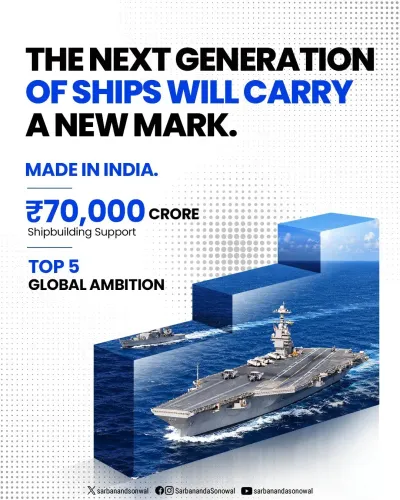
Union Ports and Shipping Minister Sarbananda Sonowal credited PM Modi's leadership for a vision of a self-reliant maritime sector, highlighting India's ambition to lead globally in shipbuilding, maintenance, repair and scrapping under the Aatmanirbhar Bharat framework.
Key Takeaways
Minister Sarbananda Sonowal publicly backed PM Modi's vision for an Aatmanirbhar maritime sector on June 10, 2026 .
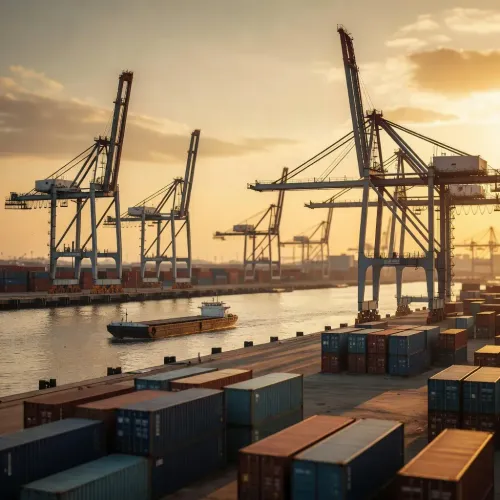
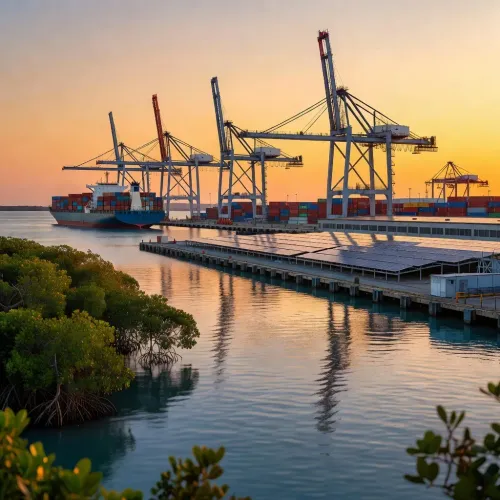
The government's stated goal covers the full maritime value chain: shipbuilding, maintenance, repair and scrapping .
India's maritime policy rests on three pillars: the Sagarmala Project (2015) , Maritime India Vision 2030 (2021) , and Aatmanirbhar Bharat Abhiyan (2020) .
India's Alang ship-recycling facility in Gujarat is already among the world's largest, giving India a base to build on in the scrapping segment.
The sectors highlighted — shipbuilding and repair — are currently dominated by China, South Korea and Japan , making indigenisation a significant long-term challenge.
Concrete policy follow-through is expected at future Maritime India Summits and in Union Budget allocations.
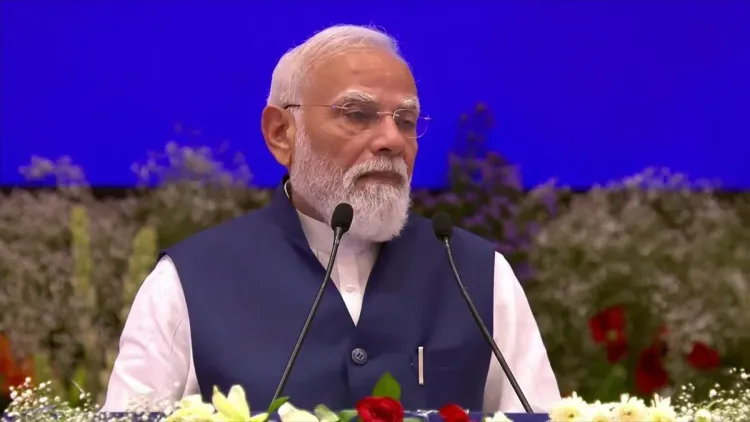
Union Ports and Shipping Minister Sarbananda Sonowal on Wednesday, June 10, 2026, expressed gratitude to Prime Minister Narendra Modi for articulating a vision for a self-reliant maritime sector, saying India is now poised to become a global hub spanning shipbuilding, maintenance, repair, and scrapping.
Context
Sonowal's post, tagged under #12YearsOfSeva, comes as the BJP marks a milestone in its governance record. The minister credited PM Modi's leadership for setting a course 'towards a future defined by Made in India ships and containers,' framing the maritime sector as a centrepiece of India's self-reliance agenda.
The hashtag signals the occasion is tied to a broader party-level communication exercise, with senior ministers amplifying the government's sectoral achievements and forward roadmap across platforms.
Policy Backdrop
India's maritime ambitions have been built on a succession of policy frameworks. The Sagarmala Project, launched in 2015, set the foundation for port-led development and coastal connectivity. This was followed by Maritime India Vision 2030, unveiled in 2021, which laid out specific targets for expanding shipbuilding capacity and port throughput to position India among the world's leading maritime nations.
The Aatmanirbhar Bharat Abhiyan, announced in May 2020, brought shipbuilding and maritime logistics explicitly into the self-reliance framework, with policy incentives aimed at reducing India's dependence on imports of vessels and related equipment. Sonowal's statement — 'From shipbuilding to complete maintenance, repair and scrapping services' — mirrors the full-service maritime cluster model that successive policy documents have promoted.
The sectors Sonowal highlights — shipbuilding, maintenance, repair, and scrapping — are areas historically dominated by China, South Korea, and Japan. India's share of global shipbuilding output has remained marginal, making the government's ambition to build domestic capacity a long-term structural challenge as much as a policy priority.
Stakeholders and Impact
Domestic shipbuilders, port operators, and the broader maritime services industry stand to benefit most directly if the policy vision translates into financial incentives, infrastructure investment, and regulatory support. The push for Made in India vessels also has implications for the defence shipbuilding sector, where indigenisation has been a parallel priority.
For coastal communities and logistics-dependent industries, a stronger domestic maritime cluster could mean lower freight costs and greater supply-chain resilience. The emphasis on scrapping services also aligns with global environmental norms around responsible ship recycling, an area where India — through facilities at Alang in Gujarat — already holds a significant position.
What's Next
Attention will now turn to whether the vision Sonowal references translates into concrete announcements — new shipbuilding clusters, production-linked incentive schemes for vessel manufacturing, or expanded capacity at ship repair yards. Subsequent Maritime India Summits and the annual Union Budget are the most likely venues for such rollouts.
The government's ability to close the gap with established shipbuilding nations will depend on sustained capital allocation, skilled workforce development, and competitive financing for domestic shipowners to order Indian-built vessels — factors that will be watched closely by industry stakeholders and international partners alike.
Point of View
Using the maritime sector as a showcase for the self-reliance narrative. The framing — 'setting sail towards Made in India ships' — signals that the ministry intends to keep shipbuilding front and centre as a flagship manufacturing story, comparable to the defence and semiconductor indigenisation drives. However, India's single-digit share of global shipbuilding output means the gap between stated ambition and industrial reality remains wide, and the post stops short of citing specific targets or timelines. The broader pattern suggests the government is building a policy narrative ahead of expected announcements, likely in the next budget cycle or at a forthcoming maritime summit.
NationPress
26 Oct 2026
Frequently Asked Questions
What is Aatmanirbhar Bharat in the context of the maritime sector?
Aatmanirbhar Bharat, or 'self-reliant India,' is a government campaign launched in 2020 that includes building domestic capacity in shipbuilding, ship repair and scrapping to reduce India's dependence on foreign-built vessels and maritime services.
What is the Sagarmala Project?
The Sagarmala Project is a port-led development initiative launched by the Indian government in 2015 to modernise ports, improve coastal connectivity and unlock the economic potential of India's coastline.
What is Maritime India Vision 2030?
Maritime India Vision 2030 is a strategic roadmap unveiled in 2021 that sets targets for expanding India's shipbuilding capacity, port throughput and shipping fleet to make India a leading global maritime nation by 2030.
Why is India trying to build its own shipbuilding industry?
India currently has a very small share of global shipbuilding, a sector dominated by China, South Korea and Japan. Building domestic capacity is seen as key to reducing import dependence, supporting the defence sector and strengthening India's role in global trade logistics.
What is Alang and why is it significant for India's maritime sector?
Alang, located in Gujarat, is one of the world's largest ship-recycling yards. It gives India an existing industrial base in the scrapping segment of the maritime value chain, which the government aims to expand as part of its full-service maritime hub ambition.